 Save to Pinterest
 I'll never forget the first time I visited a Moroccan riad in Marrakech, stepping into a courtyard where the afternoon light danced across intricate tilework. That evening, we gathered around a low table laden with countless small bowls of dips, pickled vegetables, and warm bread—each one a different color, a different flavor. It felt like edible art, and I realized that this wasn't just a meal; it was an invitation to slow down and savor every texture and taste. That moment inspired me to recreate this beautiful mosaic platter at home, and now it's become my favorite way to welcome people into my kitchen.
I made this platter for my sister's birthday last spring, and something magical happened. As people gathered around, reaching for different bowls, trying combinations they'd never thought of, the whole room became animated with conversation. That's when I understood—this wasn't about feeding people; it was about creating a moment where everyone felt welcome to explore and enjoy at their own pace.
Ingredients
- Classic hummus: Silky, creamy hummus is the anchor of this platter—make it yourself if you can, or choose one that's been made that morning.
- Baba ganoush: This smoky, velvety dip made from roasted eggplant brings an earthy depth that surprises people who taste it for the first time.
- Muhammara: Red peppers and walnuts blend into this warm, slightly sweet dip that feels luxurious despite being so simple.
- Labneh or Greek yogurt: Thick, tangy, and creamy—drizzle it generously with olive oil and a pinch of zaatar to create a beautiful, inviting surface.
- Roasted red peppers: Sweet, silky strips that add color and can be torn into larger pieces or left whole, depending on your mood.
- Marinated artichoke hearts: Tender and briny, they add sophistication and a pleasant bite to the platter.
- Moroccan carrot salad: Shredded carrots tossed with fresh lemon juice, cumin, and parsley—a bright, refreshing element that awakens the palate.
- Preserved lemon slices: These are the secret weapon—their salty, intensely lemony flavor anchors everything around them and adds a sophisticated touch.
- Mixed Moroccan olives: Choose a mix of green and black olives if possible; their brininess is essential to the whole arrangement.
- Quick-pickled red onions: Thinly sliced onions soaked in vinegar and salt for just a few hours become crisp, tangy, and addictively good.
- Cornichons or baby gherkins: Their crunch and sharpness contrast beautifully with the creamy dips.
- Roasted almonds: Use unsalted so you can taste their delicate, slightly sweet flavor; the crunch is essential.
- Pistachios: Their vibrant green color adds visual excitement, and their buttery flavor complements the warm spices.
- Toasted sesame seeds: A sprinkle of these tiny seeds adds nutty depth and textural contrast.
- Baguette or gluten-free crackers: Toasted until just crispy, they become the perfect vehicle for the dips and vegetables.
- Mini pita breads: Warm and soft, they welcome every flavor you pile onto them.
- Pomegranate seeds: These jewel-like seeds add pops of tartness and color that feel celebratory.
- Fresh mint and cilantro: These herbs bring brightness and a whisper of garden freshness to every bite.
- Sumac: A pinch of this tangy spice adds both color and a subtle citrus note that ties everything together.
- Extra virgin olive oil: The best you can afford—it's the final brushstroke on this edible painting.
Tired of Takeout? 🥡
Get 10 meals you can make faster than delivery arrives. Seriously.
One email. No spam. Unsubscribe anytime.
Instructions
- Gather your vessels:
- Set out 8 to 12 small colorful bowls, ramekins, or small plates. The more varied and vibrant they are, the more your platter will look like an actual Moroccan mosaic. I use everything from mismatched pottery to small brass bowls—the eclectic nature is part of the charm.
- Prepare the dips:
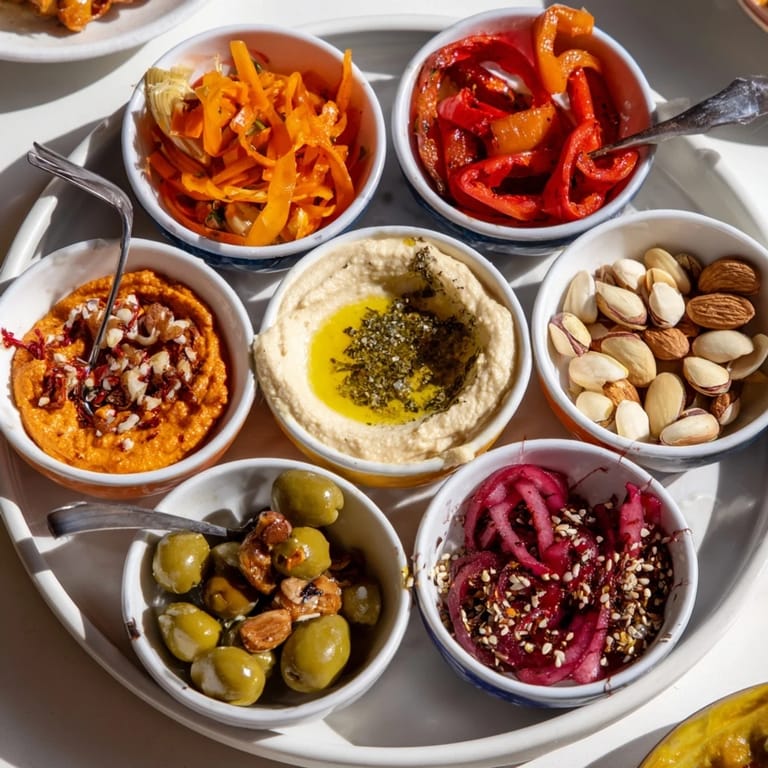
- If you're making them from scratch, wonderful—but store-bought versions are absolutely fine here. Spoon each dip into its own bowl: hummus in one, baba ganoush in another, muhammara in a third. For the labneh or yogurt, dollop it gently, then create a small well in the center with the back of a spoon and drizzle olive oil into it, finishing with a pinch of zaatar. These dips are your foundation; treat them with care.
- Arrange the marinated vegetables:
- Place roasted red peppers in one bowl, artichoke hearts in another, your fresh Moroccan carrot salad in a third, and preserved lemon slices in their own special spot. As you do this, you'll start to see the color story emerging—these vegetables are the heart of the platter's visual appeal.
- Set out the pickles and olives:
- Mix your olives together in one bowl—the combination of green and black creates movement. Put the quick-pickled red onions in their own bowl so their vibrant magenta doesn't bleed into other elements, and give the cornichons their own space too. The brine from these pickled items is liquid gold—don't discard it.
- Portion the nuts and seeds:
- Roasted almonds in one bowl, pistachios in another, and toasted sesame seeds in a small dish. These aren't just flavor elements; they're texture bombs that make every bite interesting.
- Toast the bread:
- While everything else is being arranged, slice your baguette at an angle into thin pieces and toast them in a 400°F oven for about 5 minutes until they're golden and crisp but not hard. Quarter your mini pitas and warm them briefly so they're still soft inside. Bread is the bridge between the dips and the vegetables—don't neglect this step.
- Build your mosaic:
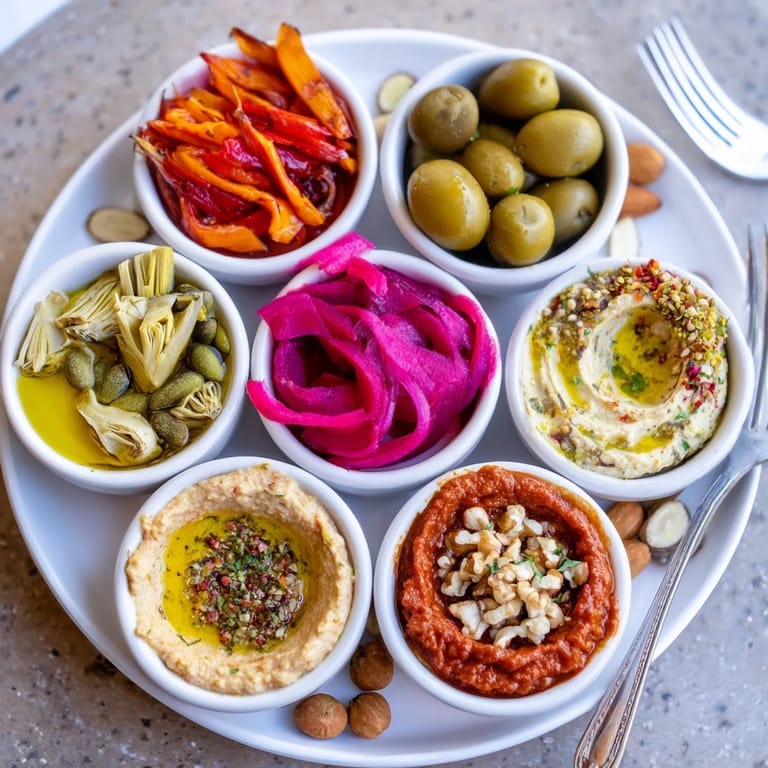
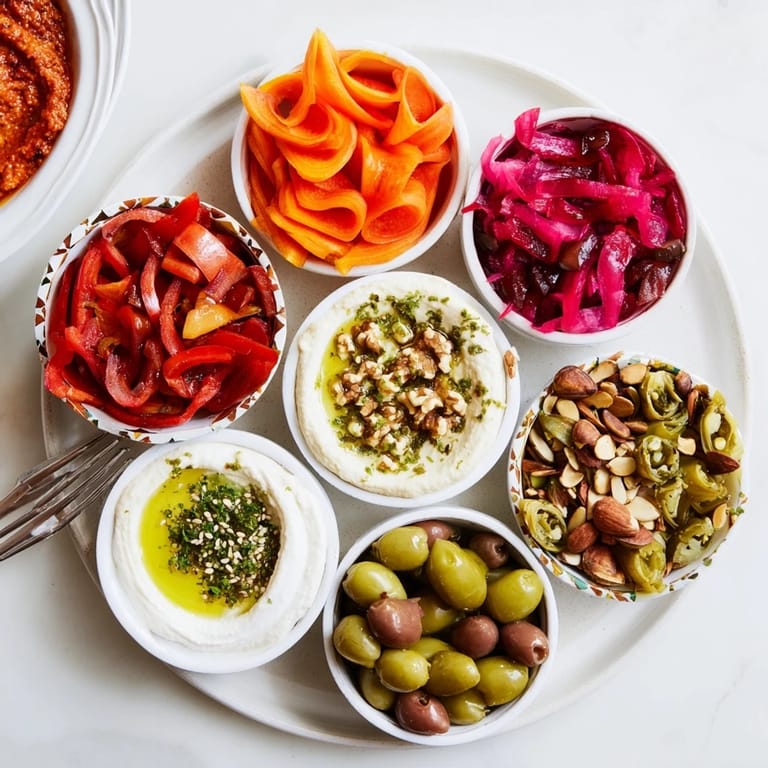
- On a large serving tray or wooden board, begin arranging your bowls. Work intuitively—there's no right or wrong pattern, just like there's no single way to arrange a mosaic. Start by placing your largest or most visually striking bowls first, then fill in around them with smaller bowls. Leave small gaps between bowls; these negative spaces are part of the design.
- Fill the gaps:
- Now comes the artistic part. Scatter fresh mint leaves, cilantro leaves, and pomegranate seeds into the spaces between bowls. A pinch of sumac here and there adds both color and intrigue. These garnishes create visual pathways that guide your guests' eyes and hands around the platter.
- Add the finishing touches:
- Arrange your toasted bread and warm pita around the edges, propped up at different angles so they're easy to reach. Drizzle a little extra virgin olive oil over the dips and the vegetables, letting it pool slightly in the well you created in the yogurt. Step back and admire what you've created—it should look like something too beautiful to eat.
- Serve with intention:
- Bring the platter to the table while the bread is still warm. Set out small spoons for the dips and encourage your guests to mix flavors in ways that excite them. This is the magic moment—watching people discover their own favorite combinations.
 Save to Pinterest
 What touched me most was watching my eight-year-old nephew discover that he actually loved baba ganoush when presented this way—not as "eggplant dip" that sounded strange, but as part of a beautiful spread where he felt like he was exploring a market in Marrakech. That's when food becomes memory.
The Art of Assembly
The beauty of this platter lies in treating it like a canvas rather than just a food arrangement. I've learned that the most successful platters are those where colors flow into each other, where warm tones (reds, oranges, golds) dance with cool tones (greens, purples, whites). Think about how a Moroccan tile artist might balance patterns—sometimes repeating colors in different corners, sometimes creating focal points with the most visually striking elements. Your platter should feel intentional but not stiff, beautiful but approachable.
Preparing Components in Advance
One of the greatest gifts of this recipe is that almost everything can be made a day ahead. The dips can be prepared, covered, and refrigerated; the vegetables are already preserved or marinated; the onions are quick-pickled ahead of time. The only things that need to happen close to serving time are toasting the bread and arranging everything on the board. This makes it a stress-free entertaining solution—you can be present with your guests instead of hidden away in the kitchen. I once spent the entire evening before a dinner party worried I'd forgotten something, only to realize that by the time guests arrived, there was nothing left to do but arrange and serve.
Variations and Personal Touches
This platter is a living, breathing thing that should change with the seasons and your whims. In summer, add grilled zucchini and heirloom tomatoes; in autumn, throw in roasted beets and pomegranate arils. Some of my favorite versions have included crumbled halloumi cheese (for a non-vegetarian twist), dried apricots, roasted chickpeas, or even a small bowl of muhammara made with roasted walnuts instead of just red peppers. The beauty is that once you understand the structure, you can swap ingredients freely—the only rule is that everything should be colorful, flavorful, and easy to eat. I once had guests bring their favorite homemade dips, and it became this wonderful collaborative mosaic where everyone contributed their own story.
- Consider adding seasonal vegetables like roasted fennel, pickled mushrooms, or charred eggplant to keep the platter feeling fresh.
- If you're serving this to people with allergies, keep nuts and seeds in clearly labeled separate bowls so guests can avoid them if needed.
- Don't be afraid to add unexpected elements—candied orange peel, dried figs, or even a drizzle of pomegranate molasses over a dip can elevate the whole experience.
 Save to Pinterest
 Every time I make this platter, I'm transported back to that courtyard in Marrakech, but also to every table where it's been served since. It reminds me that the best meals are those where everyone feels welcomed to take exactly what brings them joy.
Recipe FAQs
- → What dips are included in the platter?
The platter features classic hummus, baba ganoush, muhammara (red pepper and walnut dip), and labneh drizzled with olive oil and zaatar.
- → Can this platter be made vegan?
Yes, replace labneh with plant-based yogurt or omit it to make the platter fully vegan.
- → How should the platter be served?
Arrange all dips, marinated vegetables, olives, nuts, and garnishes in separate small bowls on a large tray to create a mosaic pattern. Serve with toasted bread or gluten-free crackers.
- → What are some good beverage pairings?
Moroccan mint tea or a crisp white wine beautifully complement the platter’s flavors.
- → Are there nut allergens in this dish?
Yes, the platter contains walnuts, almonds, pistachios, and sesame seeds. Check ingredient labels if allergens are a concern.
- → Can I add protein to the platter?
For non-vegetarian options, consider grilled halloumi or merguez sausage to enhance the platter.