 Save to Pinterest
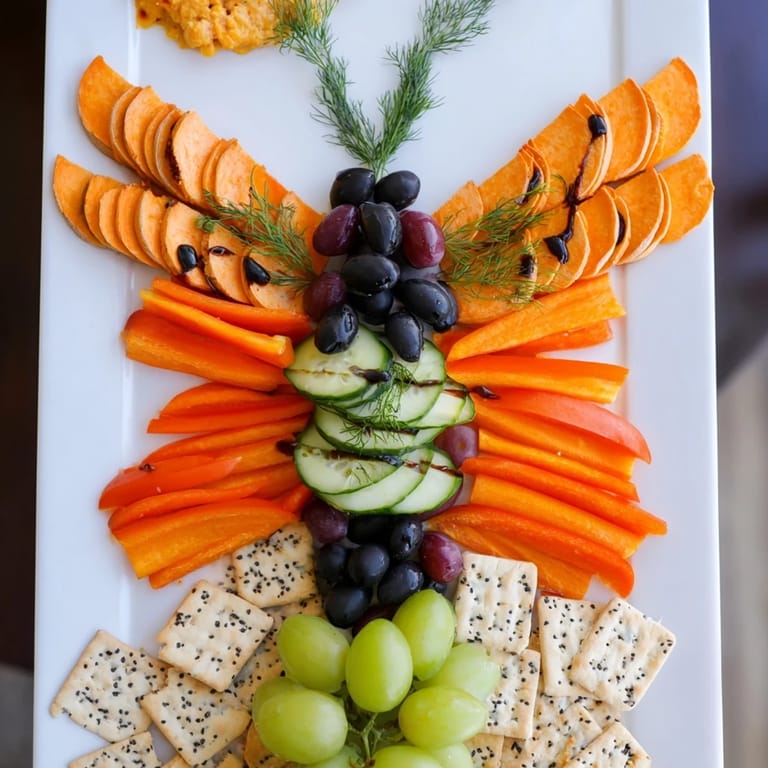
 I'll never forget the moment my daughter brought home a monarch butterfly from her school's nature walk, still in that magical chrysalis stage. She was mesmerized by the orange and black wings, and I found myself thinking about how to capture that same sense of wonder on a plate. That's when I created this Monarch Butterfly Wings platter—a celebration of nature's artistry that transforms simple vegetables into something breathtaking. It's become our signature dish for garden parties and special gatherings, where everyone pauses before eating to admire it first.
I remember the first time I made this for my sister's garden party last summer. People literally gathered around the platter before touching anything else, and I watched my eight-year-old niece carefully explain to her friends how the arrangement mimicked the monarch's wing pattern. That's when I knew I'd created something special—food that teaches, delights, and tells a story all at once.
Ingredients
- Sweet potato: Roasted until just tender, these golden discs form the warm orange foundation of the upper wings. The natural sweetness plays beautifully against savory elements, and roasting brings out a subtle caramelization that raw vegetables simply can't match.
- Carrot: Thin rounds of bright orange create the perfect transitional color between the deep sweet potato and lighter bell pepper. They're crisp enough to stand up to gentle handling but tender enough to slice easily with a sharp knife.
- Orange bell pepper: Raw and vibrant, these strips maintain their crispness throughout serving. The natural shine and brightness make them the jewels of your orange wing sections, catching light beautifully on the platter.
- Cheddar cheese: Cubed rather than sliced, the cheese adds creamy richness and textural contrast. Its golden hue blends seamlessly into the orange palette while providing protein and satisfaction to each bite.
- Black olives: Pitted and halved, they form the dramatic black edges and spots that define a monarch's wings. Their briny depth anchors the entire composition, preventing it from feeling too light or vegetable-forward.
- Black grapes: Halved lengthwise, grapes add a touch of natural sweetness and jewel-like appearance to your black elements. They're unexpected but work beautifully alongside olives and crackers.
- Black sesame or rice crackers: These provide textural contrast and help fill the visual spaces between softer elements. They stay crisp throughout service if you add them last, creating a satisfying crunch.
- Balsamic glaze: A light drizzle highlights the veining and adds sophisticated depth. Use sparingly—a little goes a long way, and too much can muddy your beautiful orange and black contrast.
- Cucumber: The pale green center line becomes your butterfly's body, creating visual separation and serving as an anchoring element. Its neutral flavor and crisp texture ground the platter beautifully.
- Cream cheese: Softened to a pipeable consistency, small dots create the white accent spots found on real monarch wings. This is where you get to play artist and add personality to your creation.
- Fresh dill or microgreens: These delicate garnishes crown the cucumber body as antennae, adding a final touch of elegance and edibility. They're optional but transform the piece from appetizer to edible art.
Tired of Takeout? 🥡
Get 10 meals you can make faster than delivery arrives. Seriously.
One email. No spam. Unsubscribe anytime.
Instructions
- Gather and prepare your canvas:
- Begin by arranging your workspace so all components are prepped and ready—roasted sweet potato slices cooled on a clean plate, carrot rounds stacked and ready, bell pepper strips fanned out, cheese cubes in a small bowl, olives and grapes halved and waiting. This is your mise en place, and having everything ready means you can focus on the artistry rather than rushing through preparations. Set your large platter out where you'll be working, ideally on a stable surface at a comfortable height.
- Create the butterfly's spine:
- Arrange your cucumber sticks down the absolute center of the platter, creating a clean vertical line that will serve as your butterfly's body. These pale green sticks should be evenly spaced and perfectly parallel, creating a visual guide for your symmetrical wing arrangement. Take a moment to step back and ensure this line feels centered and intentional—it's the foundation everything else builds from.
- Establish the warm wing foundation:
- Working outward from the cucumber line, begin laying down your orange elements in a fanned, symmetrical pattern on both sides. Start with sweet potato slices in the upper sections, slightly overlapping them like roof tiles to suggest dimension and movement. The overlapping creates visual depth and mimics how monarch wings actually fold. Ensure both sides mirror each other—if you place a sweet potato slice at a certain angle on the left, do the same on the right.
- Build color gradation and depth:
- Layer carrot rounds around the sweet potato, allowing some overlap for richness and visual texture. These warmer orange tones create a beautiful transition zone. Add your bell pepper strips in the outer sections, where the lightest orange elements catch the most light. You're creating a gradient of warmth that draws the eye outward, just like a monarch's natural coloring.
- Add dimension with cheddar:
- Distribute cheddar cheese cubes throughout your orange sections, nestling them between the vegetables. They catch light differently and add textural variety. Think of them as jewels scattered across the wings—placed thoughtfully rather than randomly.
- Define the dramatic black edges and spots:
- Now it's time for contrast. Fill the outer edges and spaces between your orange elements with black olives and black grapes, halved side down so their flat surfaces create clean visual lines. Use crackers to fill any remaining gaps, creating the distinctive black spotting pattern of a monarch wing. Step back frequently and compare to photos of monarch wings—you're creating a recognizable silhouette.
- Add white accent details:
- Using a small spoon, dot softened cream cheese in strategic locations along the black wing edges, mimicking the white spots found on real monarchs. These dots are where your artistry truly shines—place them with intention, perhaps creating subtle patterns or following the natural veining of a butterfly wing.
- Enhance with subtle elegance:
- If using balsamic glaze, drizzle it very sparingly across parts of the wings to suggest depth and shadowing. A few strategic lines are far more elegant than coverage. Remember, less is more with glaze—you're highlighting, not repainting.
- Crown with delicate antennae:
- Finish by arranging fresh dill or microgreens atop the cucumber body to create graceful antennae. These final touches add the last element of recognizable butterfly anatomy and bring living color to your centerpiece.
- Present with intention:
- Step back and admire your creation before guests arrive. The platter should evoke a real monarch butterfly and feel like edible art. Serve it proudly, encouraging guests to appreciate the presentation before creating their own flavor combinations with the components you've so carefully arranged.
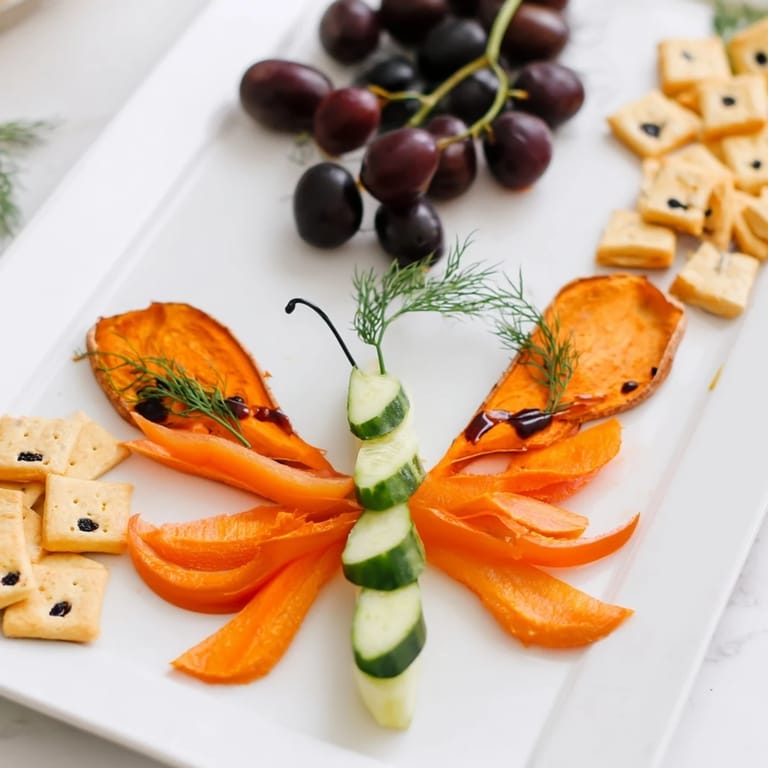 Save to Pinterest
 The most memorable moment came when my grandmother saw this platter for the first time. She's ninety-two and has watched countless family gatherings, and she actually teared up, saying it reminded her of monarch migrations she'd seen in her childhood. That's the magic of this dish—it connects us to nature and memory in ways that extend far beyond flavor. Food became a bridge between generations, and I realized that beauty on a plate is just as nourishing as what we actually eat.
Making It Your Own
Once you understand the basic framework of monarch wing colors and patterns, this platter becomes a canvas for your own creative expression and what you have on hand. I've experimented with roasted butternut squash in place of sweet potato for a deeper, richer orange, and it created an entirely different mood—more autumnal and sophisticated. Orange cherry tomatoes halved lengthwise add brightness and a different texture. Purple carrot slices or thin beet rounds layered throughout add unexpected color contrast that makes the orange pop even more dramatically. The skeleton of the design remains the same, but these variations let you adapt it to your season, your garden, and what feels fresh to you.
Serving and Pairing Wisdom
This platter truly shines as part of a larger spread rather than as a standalone dish. I've found that guests appreciate a light wine pairing—crisp whites like Sauvignon Blanc or Pinot Grigio complement the fresh vegetables beautifully, and sparkling water with fresh citrus works perfectly for non-drinkers. Position the platter on your table at eye level if possible, perhaps on a slightly elevated surface, so guests immediately see it and can admire the presentation. This isn't food meant to be rushed; it's food meant to start conversations, create moments of delight, and make people feel celebrated just by the care you've taken in its creation.
Timing and Make-Ahead Magic
The beauty of this appetizer is that it respects your schedule and celebrates preparation rather than stressing you out on the day of your event. You can prep all your vegetables the day before—roasting the sweet potato, peeling carrots, cutting bell pepper, halving olives and grapes—and store everything separately in airtight containers in the refrigerator. The morning of your gathering, you simply need thirty minutes of uninterrupted time to arrange everything beautifully on your platter. I actually find this assembly time meditative and centering, a moment to slow down before guests arrive and my energy gets pulled in multiple directions.
- Prepare all vegetables the day before and store them in separate sealed containers to prevent flavor transfer and maintain color vibrancy
- Assemble the platter no more than two to three hours before serving to keep everything crisp and colors bright and true
- Keep the finished platter covered loosely with plastic wrap in the refrigerator until guests arrive, which helps maintain freshness without damaging the arrangement
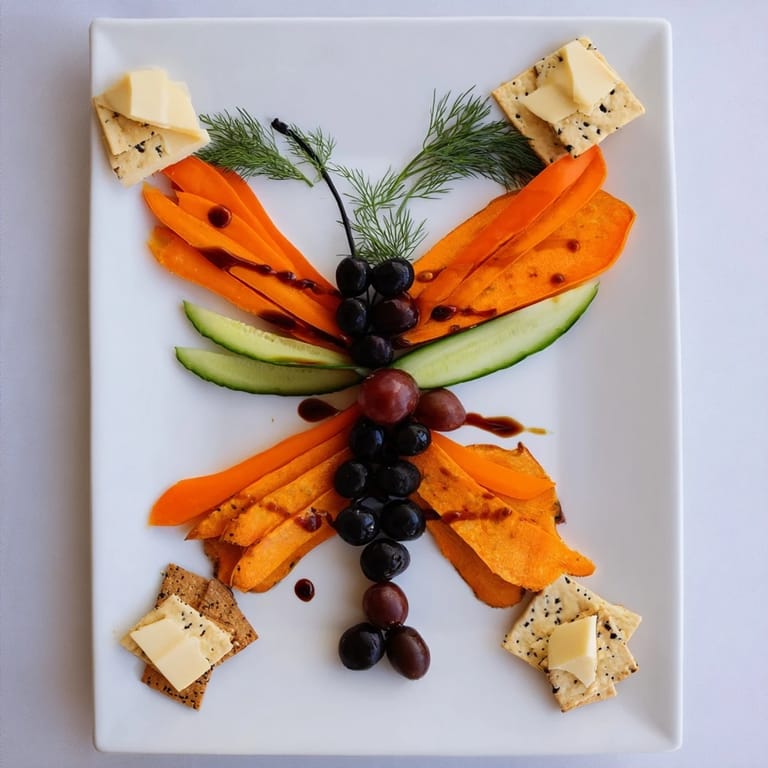 Save to Pinterest
 This Monarch Butterfly Wings platter has taught me that the most meaningful dishes aren't always the most complicated—sometimes they're the ones that blend artistry with simplicity, that invite people to slow down and truly see what's in front of them. It's become my answer to the question of how to make a gathering feel special without spending hours in the kitchen.
Recipe FAQs
- → What ingredients create the orange sections of the wings?
Roasted sweet potato slices, carrot rounds, orange bell pepper strips, and cubed cheddar cheese form the bright orange wing sections.
- → How are the black wing details achieved?
Black olives, halved black grapes, and black sesame or rice crackers provide the contrasting black edges and spots.
- → What is the purpose of the cucumber slices?
Thin cucumber sticks create the winged insect’s central body line for structure and visual effect.
- → How are the white spots along the wings made?
Small dots of softened cream cheese are placed along the black edges to replicate authentic white markings.
- → Can this platter accommodate dietary needs?
Yes, it’s vegetarian and can be gluten-free by selecting appropriate crackers. Check dairy and cracker ingredients if allergens are a concern.
- → What are some suggested garnishes or variations?
Fresh dill or microgreens can simulate butterfly antennae, and roasted butternut squash or orange cherry tomatoes can replace orange elements for variety.