 Save to Pinterest
 There's something about watching people's eyes light up when they see a slate board laden with meats and cheeses arranged in perfect lines. It happened at a dinner party where I wanted to make a statement without fussing over a hot stove—just pure, unapologetic ingredients speaking for themselves. The Industrial Slate was born from that moment, a dish that whispers elegance through its restraint and bold geometry.
I remember my friend leaning over the slate before anyone touched it, just pausing to take a photo. That pause—that moment of appreciation before eating—told me the presentation had worked exactly as intended. The meats and cheeses caught the light differently in their orderly rows, each ingredient confident in its own space.
Ingredients
- Smoked prosciutto: Paper-thin, almost translucent slices bring a delicate smoke and salt that anchors the entire board.
- Soppressata: Its fine marbling and subtle spice add depth without overwhelming the other players.
- Coppa: Rich and marbled, this one bridges the gap between delicate and bold flavors on your palate.
- Mortadella: Silky and studded with fat, it's the luxe moment in your lineup of meats.
- Aged cheddar: Sharp and crystalline, this cheese cuts through the richness of the meats with its bright acidity.
- Manchego: Nutty and slightly firm, it adds a Spanish note of caramel and depth.
- Gruyère: Complex and subtly sweet, it's the sophisticated bridge between the other cheeses.
- Blue cheese: The wild card—its peppery, funky intensity makes every other ingredient taste more like itself.
- Seedless red grapes: Their gentle sweetness and crisp texture provide essential palate relief between bites of salt and funk.
- Cornichons: These tiny pickles pack a vinegary punch that resets your mouth and keeps you reaching for another bite.
- Whole grain mustard: The grainy texture and controlled heat offer a condiment moment without stealing the show.
- Mixed olives: Their briny, meaty character echoes the cured meats while their firm snap keeps things textually interesting.
- Freshly cracked black pepper: Applied last, it adds aroma and a whisper of heat that ties everything together.
Tired of Takeout? 🥡
Get 10 meals you can make faster than delivery arrives. Seriously.
One email. No spam. Unsubscribe anytime.
Instructions
- Find your canvas:
- Set your slate board front and center on your workspace—this is theater, so position it where light catches its unpolished surface. If you have time, chill it in the freezer for 15 minutes so every ingredient stays cool and crisp longer.
- Lay down the meats:
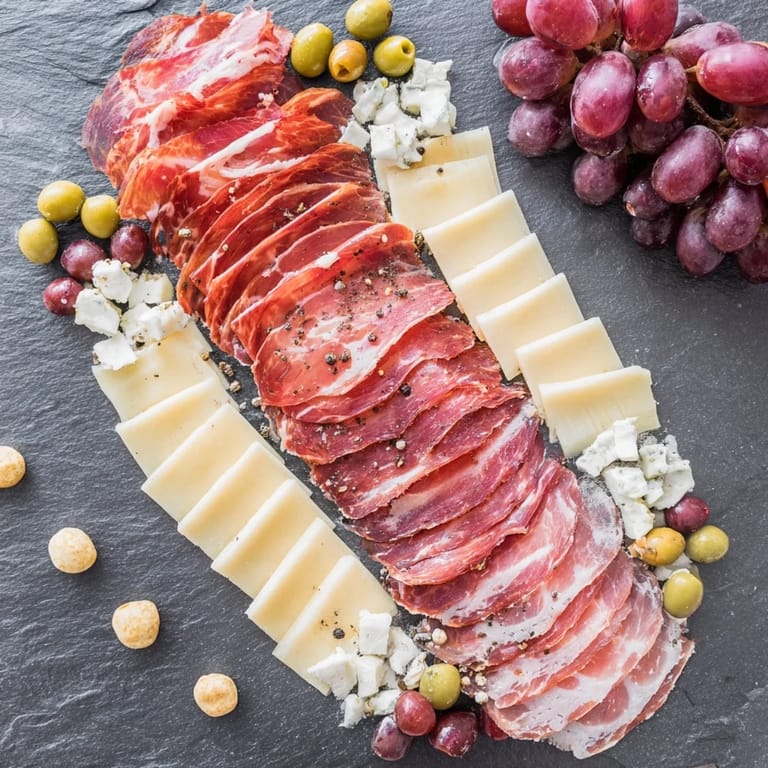
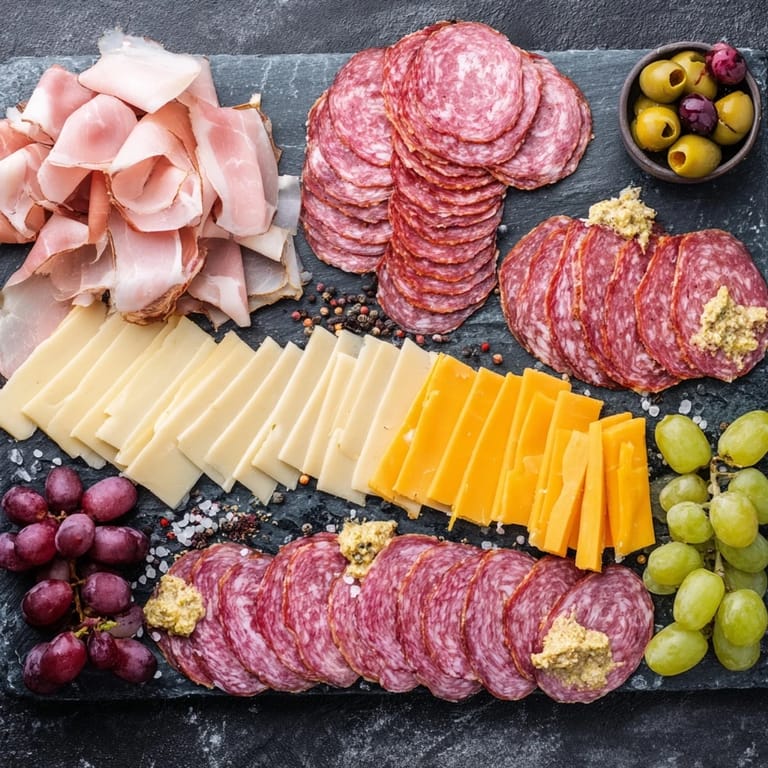
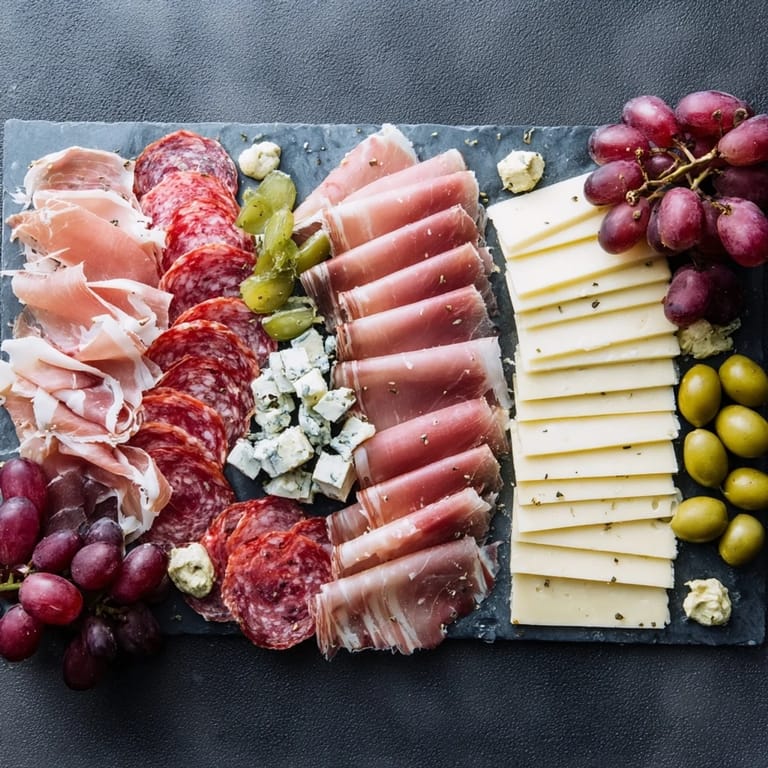
- Arrange each type of cured meat in its own parallel line along one half of the board, creating clear visual separation. Let each slice overlap just slightly, so you can see the color variations and individual character of each meat.
- Line up the cheeses:
- Mirror the meat arrangement on the opposite half with your cheese selections, keeping each type distinct. Slice cheeses just before serving so they don't dry out or sweat under the weight of their own flavor.
- Fill the spaces:
- Scatter small grape clusters and cornichons between the lines of meats and cheeses, treating them as visual punctuation. Nestle the olives into any remaining gaps, creating a rhythm that feels planned but not rigid.
- Add the mustard:
- Dollop whole grain mustard in small lines or place it in a small ramekin at one corner so guests know it's an invitation, not a requirement. The visual clarity of where things go matters as much as the taste.
- Finish with black pepper:
- A light sprinkle of freshly cracked pepper over the meats and cheeses adds aroma and signals that this board is finalized. Don't overdo it—you want people to notice the pepper's presence, not its dominance.
 Save to Pinterest
 What surprised me most was how quiet the table got when the board arrived. People didn't immediately dig in—they admired first, which is the whole point of a dish built on visual architecture. It's rare that something this simple creates that moment of pause before the feast begins.
The Geometry of Appetite
The straight lines on this board aren't just aesthetics; they're a promise of order and intentionality. When everything is arranged this deliberately, guests feel like they've stepped into something curated, something designed for their pleasure. There's power in that simplicity—no sauce to hide behind, no technique to lean on, just excellent ingredients and the confidence to let them shine.
Wine Pairing as Conversation
I've learned that the wine you choose becomes part of the board's story. A crisp Sauvignon Blanc plays interrogative, asking sharp questions of the aged cheddar and blue cheese, while a bold Cabernet Sauvignon wraps its tannins around the richness of mortadella and coppa like a warm embrace. Either way, the wine isn't an afterthought—it's the final ingredient that transforms the board from a beautiful arrangement into a complete experience.
Variations That Honor the Original
The Industrial Slate doesn't demand meat to exist, though that's where it naturally began. Roasted nuts, marinated artichoke hearts, crispy chickpeas, and good bread can stand in or alongside the cured meats without losing the board's essential character. What matters is that each element earns its space through either flavor, texture, or visual presence.
- For a vegetarian version, layer marinated artichoke hearts and roasted marcona almonds where the meats would go.
- Add aged gouda or smoked cheddar if you want the cheese selection to echo the depth of the cured meats.
- Always remember: every ingredient on this board should feel like a guest at a dinner party, not filler.
 Save to Pinterest
 This board is a reminder that hospitality sometimes means stepping back and letting good things speak for themselves. When you serve The Industrial Slate, you're offering more than food—you're offering a moment of shared appreciation for simple, excellent ingredients arranged with intention.
Recipe FAQs
- → What type of board should be used for this platter?
A heavy, unpolished stone or slate serving board works best to enhance the bold, modern presentation.
- → How are the meats and cheeses arranged on the platter?
They are laid out in straight, parallel lines with meats on one side and sharp cheeses on the other for visual distinction.
- → What accompaniments complement this platter?
Seedless red grapes, cornichons, mixed olives, and whole grain mustard balance the flavors and fill spaces attractively.
- → Can this platter be adapted for vegetarian diets?
Yes, by omitting the meats and adding ingredients like marinated artichoke hearts and roasted nuts for texture and variety.
- → How can I keep the platter fresh for longer serving?
Chilling the slate board before arranging ingredients helps keep the meats and cheeses cool during presentation.
- → What wine pairings work well with this appetizer?
Crisp dry white wines like Sauvignon Blanc or bold reds such as Cabernet Sauvignon complement the flavors beautifully.