 Save to Pinterest
 There's something about hummus that stops you mid-conversation. I discovered this particular version on a balmy evening when a friend arrived with a bag of vegetables from the farmer's market and challenged me to use them before they wilted. The hummus itself—silky, almost cloud-like—became the canvas, and those charred vegetables with their blistered skins and smoky edges turned what could have been a simple dip into something memorable. It's the kind of dish that feels both effortless and generous.
I made this for a small gathering once, and I remember standing in the kitchen listening to the vegetables hiss and pop in the oven while blending the hummus, and somehow the timing worked perfectly—everything came together warm, fragrant, and ready at the same moment. My neighbor took one bite and immediately asked for the recipe, then admitted she'd never made hummus before because she thought it required magic or professional training. Watching her realize it was actually simple was worth more than any compliment.
Ingredients
- Canned chickpeas: Drain and rinse them thoroughly—those starches wash away and make your hummus impossibly smooth instead of grainy.
- Tahini: This sesame paste is what lifts hummus from chickpeas-and-oil into something creamy and complex; stir it before measuring so you get the oil incorporated.
- Fresh lemon juice: Never bottled—the brightness matters more here than anywhere else, and fresh lemon makes the hummus taste alive.
- Garlic: One clove, minced fine, flavors the whole batch without overpowering it; this isn't a dish that needs your breath to announce what you ate.
- Extra-virgin olive oil: Use one you'd taste on its own, especially for the final drizzle, because it's not hidden in a sauce here.
- Ground cumin: A quiet spice that whispers through the creamy base, tying everything to that Mediterranean feeling.
- Red bell pepper: It sweetens as it roasts, its skin blistering and charring while the inside becomes soft and almost yielding.
- Zucchini: Slice it into half-moons so the pieces caramelize on their flat surfaces; whole rounds steam instead of roast.
- Red onion: The wedges soften into something silky once charred, their sharp bite mellowing into sweetness.
- Eggplant: Cut into cubes so they brown quickly and toast at their edges; larger pieces steam before they can char.
- Smoked paprika: This is what gives the vegetables their signature depth, almost a whisper of campfire and smoke.
- Pine nuts: Toast them yourself in a dry pan, watching closely, because they go from golden to bitter faster than you'd expect.
- Fresh parsley: The green brightens everything; a last-minute addition that keeps the dish from feeling heavy.
- Sumac or zaatar: Optional but worth seeking out—sumac brings tartness and a deep red color that makes the whole platter more beautiful.
Tired of Takeout? 🥡
Get 10 meals you can make faster than delivery arrives. Seriously.
One email. No spam. Unsubscribe anytime.
Instructions
- Heat your oven and prep the vegetables:
- Set the oven to 425°F and let it come fully up to temperature; this matters for that blistering char. While it warms, cut your vegetables into pieces roughly the same size so they cook evenly, then toss them with olive oil and spices, coating everything until it glistens.
- Roast until the edges know they've been roasted:
- Spread the vegetables in a single layer and let them sit for about ten minutes before stirring—this is how they develop those caramelized, charred edges instead of just softening. After 22 to 25 minutes, they should smell smoky and look darker at the edges, with the skins starting to collapse.
- Make the hummus the easy way:
- While vegetables roast, combine chickpeas, tahini, lemon juice, garlic, olive oil, cumin, and salt in your food processor. Blend until completely smooth, then add cold water a tablespoon at a time, watching it transform from thick to creamy; you're looking for the texture of soft whipped butter.
- Toast the pine nuts until they smell like the Mediterranean:
- In a dry skillet over medium heat, scatter the pine nuts and stir almost constantly for two or three minutes until they turn golden and fill the room with their smell. They toast faster than you think, so don't step away.
- Build your platter with intention:
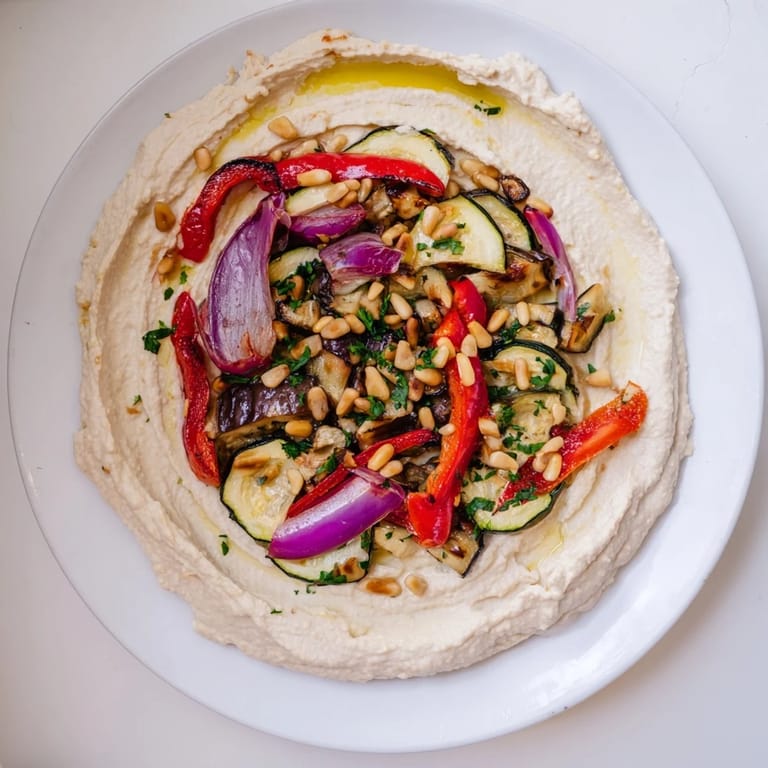
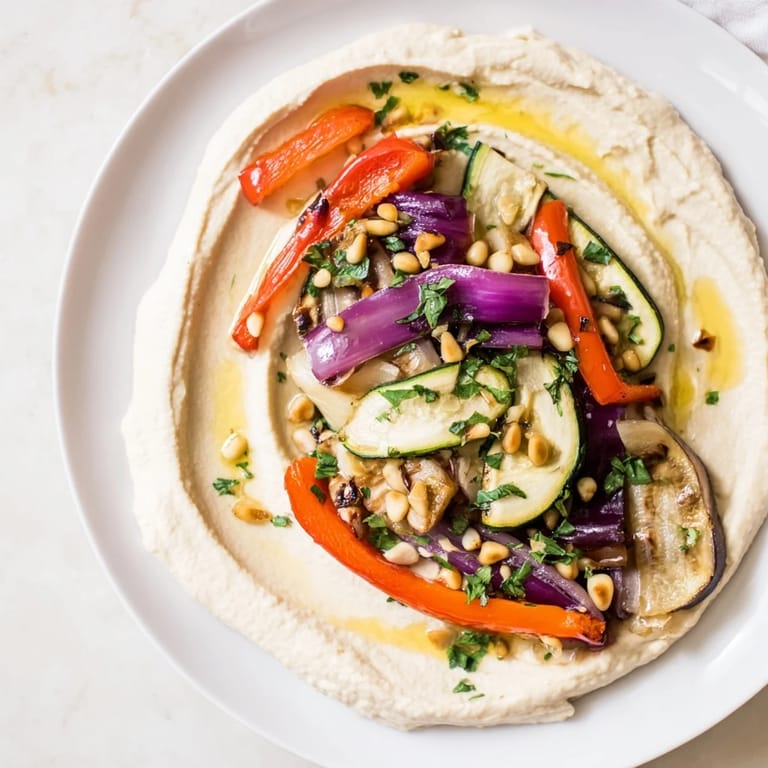
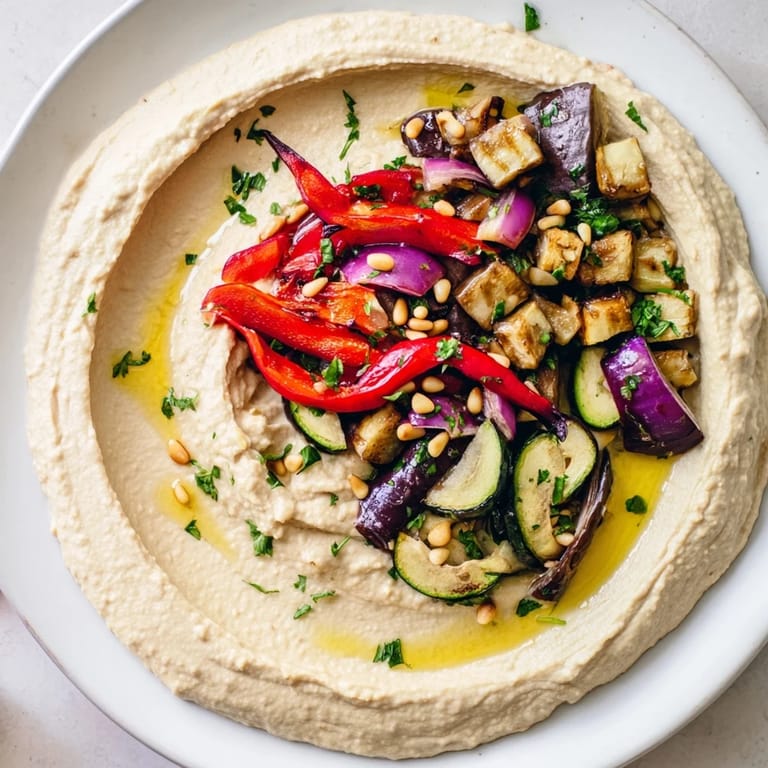
- Spread the hummus onto a shallow bowl or platter in a swoosh, using the back of a spoon to create gentle waves that catch the light. Scatter the warm roasted vegetables across the top, then sprinkle with the toasted pine nuts, fresh parsley, and sumac if you have it, finishing with a generous drizzle of olive oil that pools in the cracks.
 Save to Pinterest
 The moment I understood this dish was when someone told me it reminded them of a meal in Istanbul, eaten standing up at a counter with strangers who became friends over a shared plate. That's when I realized hummus with roasted vegetables isn't just food—it's an opening, an invitation, a reason for people to pause and pay attention to what they're eating.
When to Make This
This works perfectly in summer when you want something cold and refreshing but your oven warm, a beautiful contradiction that somehow makes sense. In cooler months, serve it warm from the pan, and the hummus becomes something almost soup-like, thick enough to scoop but pourable enough to pour. It's equally at home as an elegant appetizer before a proper dinner or as the entire dinner itself, stretched across a platter with bread and whatever else you feel like adding.
How to Adapt This to What You Have
The vegetables are genuinely flexible—carrots, cauliflower, cherry tomatoes, or mushrooms all take to roasting beautifully, each bringing their own character to the plate. If you don't have sumac, a squeeze of lemon zest works, and if pine nuts aren't in your budget or pantry, toasted almonds or walnuts become a different dish but still an excellent one. The hummus base stays the same, steady and forgiving, waiting for whatever vegetables your market or season offers.
The Small Details That Actually Matter
Tahini tends to separate, so give it a good stir before scooping; that floating oil is flavor you don't want to leave behind. Taste your hummus before you finish blending it, because lemon juice varies in strength and you might need more salt than expected. The vegetables are most beautiful served while still warm, when the steam rising off them carries their roasted smell straight to your nose, and that sensation is almost as important as the taste.
- Make hummus up to three days ahead and store it in a covered container; the flavors actually deepen as it sits.
- Roast vegetables the day before if you're planning ahead, but add them to the hummus just before serving so they don't soften into mush.
- If the hummus seems too thick when you serve it, a small splash of warm water and a quick stir brings it back to the right consistency.
 Save to Pinterest
 There's something deeply satisfying about offering someone hummus you made yourself, topped with vegetables you roasted with your own hands. It says you took time for them, and that matters.
Recipe FAQs
- → What vegetables work best for roasting?
Bell peppers, zucchini, red onion, and eggplant roast beautifully, becoming tender with a smoky char. Seasonal veggies like carrots or cauliflower also work well.
- → How can I achieve a creamy hummus base?
Blend drained chickpeas with tahini, fresh lemon juice, garlic, olive oil, cumin, and water until smooth and whipped to the desired consistency.
- → What is the best way to toast pine nuts?
Toast pine nuts in a dry skillet over medium heat, stirring frequently for 2–3 minutes until golden and fragrant to enhance their flavor.
- → Can I make this dish gluten-free?
Yes, the dish itself is gluten-free. Serve with gluten-free bread or crudités to maintain a gluten-free meal.
- → How can I add extra flavor to this dish?
Adding a spoonful of harissa or a pinch of chili flakes to the roasted vegetables or hummus base can bring a spicy kick and deepen flavor complexity.