 Save to Pinterest
 I first tried falafel from a street cart in Brooklyn, handed to me in a foil wrap so warm it steamed up the paper bag. The outside was crispy, the inside soft and herbaceous, and the tahini dripped down my wrist. I went home that night determined to recreate it, convinced I could never get it quite right. I was wrong.
The first time I made these for friends, I panicked halfway through because the mixture looked too wet. I almost gave up, but then I remembered to chill it. Those thirty minutes in the fridge saved everything. When the first batch hit the oil and puffed up golden and perfect, I knew I'd never buy frozen falafel again.
Ingredients
- Dried chickpeas: You must soak them overnight and never use canned, they turn the falafel mushy and it won't hold its shape when frying.
- Fresh parsley and cilantro: These bring the green, grassy flavor that makes falafel taste alive, not flat or earthy.
- Cumin and coriander: Together they create that warm, slightly citrusy backbone that smells incredible as soon as the falafel hit the oil.
- Baking powder: This tiny addition gives the falafel a lighter, airier texture inside without changing the flavor.
- Tahini: The base of the sauce, it should be thick and nutty, whisked smooth with cold water until it turns pale and creamy.
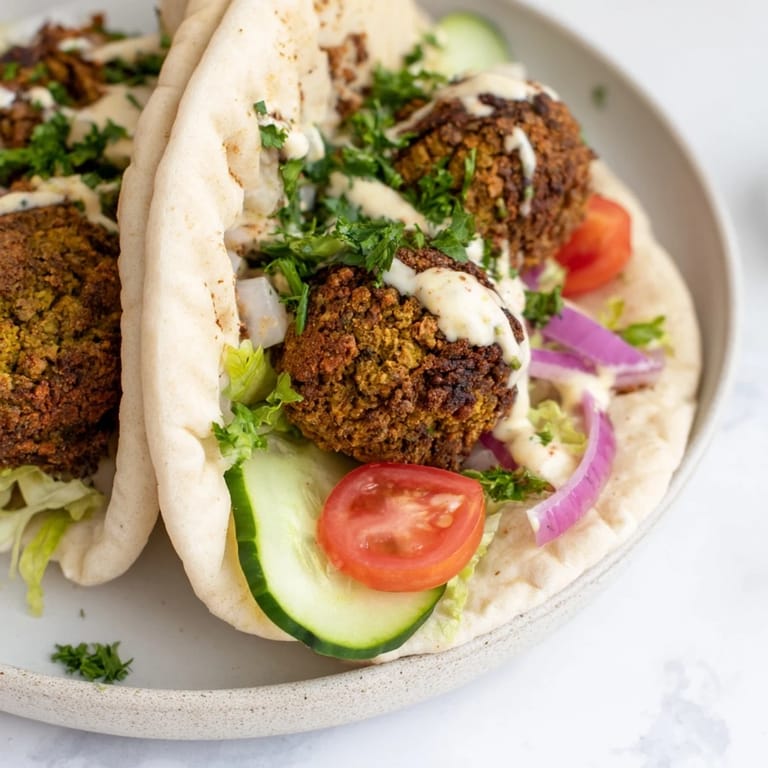
- Pita bread: Warm pita is essential, it becomes soft and pillowy and holds everything together without tearing.
Tired of Takeout? 🥡
Get 10 meals you can make faster than delivery arrives. Seriously.
One email. No spam. Unsubscribe anytime.
Instructions
- Blend the falafel mixture:
- Drain and dry the soaked chickpeas well, then pulse them with onion, garlic, herbs, and spices until the texture is coarse like wet sand. It should clump when you squeeze it but still have visible bits of chickpea and green flecks throughout.
- Chill the mixture:
- Stir in baking powder and flour, then cover and refrigerate for at least 30 minutes. This step firms everything up so the falafel hold their shape and don't fall apart in the oil.
- Heat the oil:
- Pour about 2 inches of oil into a deep skillet and heat to 350°F. Drop a tiny bit of mixture in to test, it should sizzle immediately and rise to the surface.
- Shape and fry:
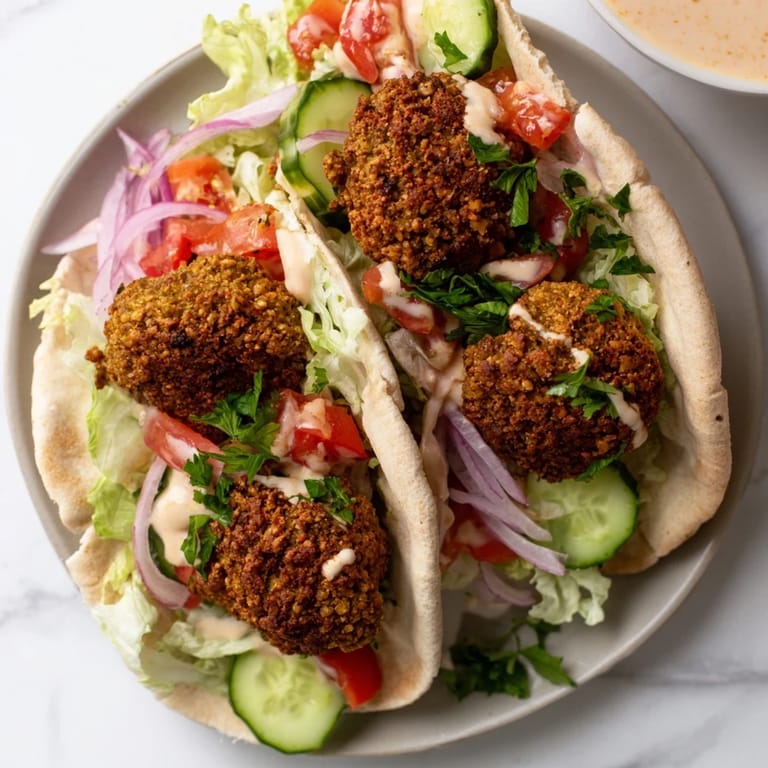
- With damp hands, form the mixture into small balls or flat patties about 1 ½ inches wide. Fry in batches without crowding, turning once, until deeply golden and crisp all over, about 2 to 3 minutes per side.
- Make the tahini sauce:
- Whisk tahini with lemon juice, garlic, and salt until thick, then slowly add cold water a tablespoon at a time. It will seize up at first, then suddenly turn smooth and pourable like cream.
- Assemble the pockets:
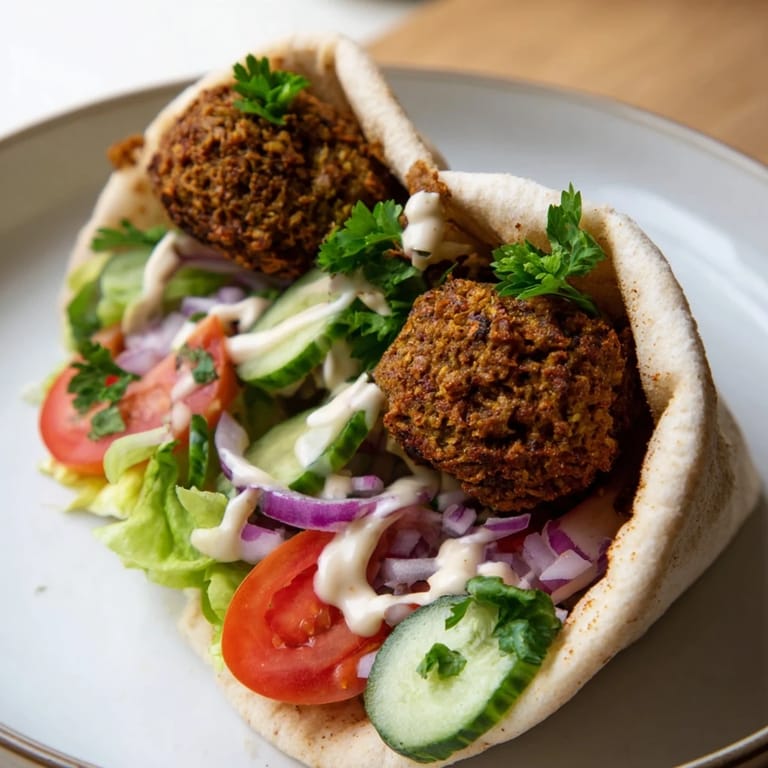
- Cut warm pitas in half and open the pockets gently. Stuff with lettuce, tomatoes, cucumber, onion, and 3 to 4 falafel, then drizzle generously with tahini sauce and scatter fresh parsley on top.
 Save to Pinterest
 One Saturday morning, my neighbor knocked on the door following the smell of frying falafel. I handed her a pita stuffed with the hot, golden rounds and she stood in my kitchen eating it over the sink, tahini running down her fingers. She told me it tasted like her childhood in Amman, and I realized food doesn't just fill you up, it brings people back to places they miss.
How to Get the Perfect Texture
The secret is in the pulse, not the puree. You want the chickpeas broken down but still rough, with small chunks visible so the inside stays light and airy instead of dense like a hockey puck. I learned this after making a batch so smooth they came out heavy and gummy, and I had to start over.
Baking Instead of Frying
You can bake these at 400°F for 20 to 25 minutes, flipping halfway through, and they'll still be delicious. They won't have that shattering crisp crust, but they're lighter and you don't have to stand over a pot of hot oil. I brush them with a little olive oil before baking and they come out golden and firm enough to hold up in the pita.
What to Serve on the Side
I always put out a plate of pickled turnips, sliced radishes, and a small bowl of hot sauce for people to customize their pockets. Sometimes I'll add a handful of fresh mint leaves or a squeeze of lemon juice right before serving. It's the little extras that make it feel like a real meal, not just a sandwich.
- Pickled vegetables add a sharp, tangy crunch that cuts through the richness of the tahini.
- A drizzle of hot sauce or a sprinkle of sumac brings a bright, spicy kick that wakes up every bite.
- Fresh herbs like mint or extra parsley scattered on top make the whole thing taste lighter and more vibrant.
 Save to Pinterest
 Once you've made falafel at home, the store-bought kind tastes like cardboard. This version is worth every minute of soaking, blending, and frying, and it fills your kitchen with the kind of smell that makes everyone wander in asking what's for dinner.
Recipe FAQs
- → How do you make falafel crispy?
To achieve crispiness, soak chickpeas overnight and drain well before blending. Fry falafel in hot vegetable oil at about 350°F until golden on all sides.
- → Can falafel be baked instead of fried?
Yes, falafel can be baked at 400°F for 20–25 minutes, turning halfway to ensure even cooking and a lighter texture.
- → What ingredients give falafel its flavor?
Fresh parsley, cilantro, garlic, cumin, coriander, and a touch of cayenne provide the classic aromatic and savory profile of falafel.
- → How is tahini sauce prepared?
Whisk tahini paste with lemon juice, minced garlic, salt, and gradually add cold water until the sauce reaches a smooth, pourable consistency.
- → What are good vegetable toppings for falafel pita?
Common toppings include shredded lettuce, diced tomatoes, sliced cucumber, and red onion, adding texture and freshness.
- → Are there any allergen considerations?
Yes, this dish contains sesame from tahini and wheat from pita and flour. Gluten-free alternatives can be used if needed.