 Save to Pinterest
 There's something about a pot of lentil stew simmering on the stove that stops the world for a moment. My neighbor caught the smell drifting across our shared hallway one October evening and knocked to ask what I was making, and I found myself ladling her a bowl right there in my kitchen while we talked about nothing important. That's when I realized this stew isn't just nourishing, it's the kind of dish that invites people closer, that makes them want to stay and talk longer than they planned.
I made this for a friend who'd recently gone vegetarian and wasn't sure what she was missing, and watching her expression shift from cautious to genuinely delighted was worth every dollar of vegetables. She asked for the recipe before she'd even finished her bowl, and now her version has evolved to include whatever she finds at the farmer's market that week. There's something beautiful about a recipe that gives people permission to make it their own.
Ingredients
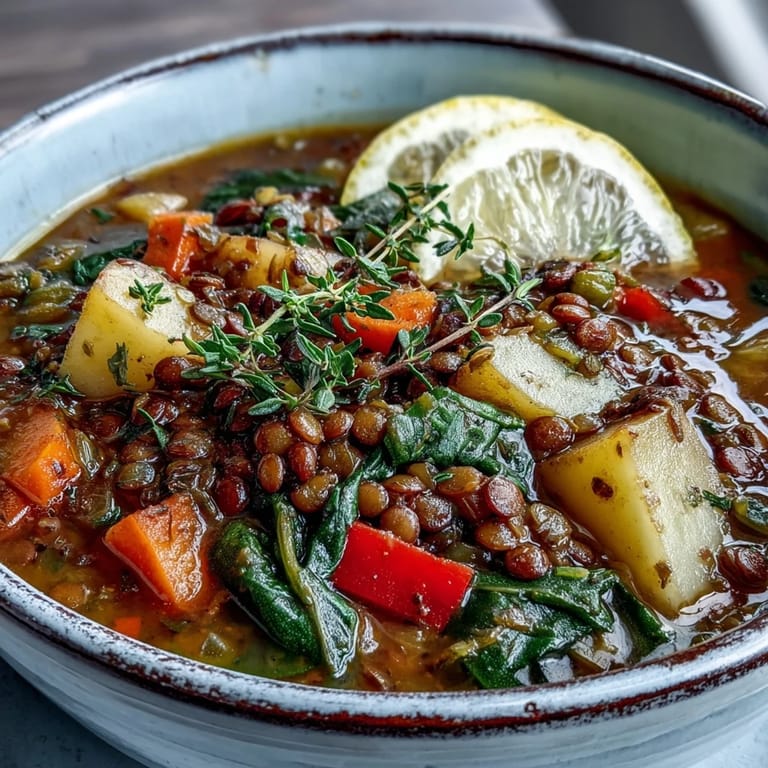
- Brown or green lentils: The backbone of this stew, holding their shape through the entire cooking time so you get distinct little nuggets of protein rather than mush; rinse them first to remove any dust or debris hiding between the dried legumes.
- Vegetable broth: This is where flavor lives, so use something you'd actually drink, not the cardboard-tasting kind hiding in the back of your pantry.
- Olive oil: Just enough to coat the bottom of the pot and give the vegetables room to soften and caramelize at the edges.
- Onion, carrots, celery: The classic trio that forms the flavor foundation, softened until they lose their sharp edges and start to sweeten.
- Red bell pepper: Adds brightness and a touch of sweetness that balances the earthy lentils perfectly.
- Garlic: Three cloves minced fine so they dissolve into the stew and whisper rather than shout.
- Potato: Adds body and a subtle starchiness that makes this feel like a proper meal rather than just vegetables in broth.
- Diced tomatoes: Canned is not a shortcut here, it's the right choice, giving you concentrated tomato flavor and acidity that brightens the whole pot.
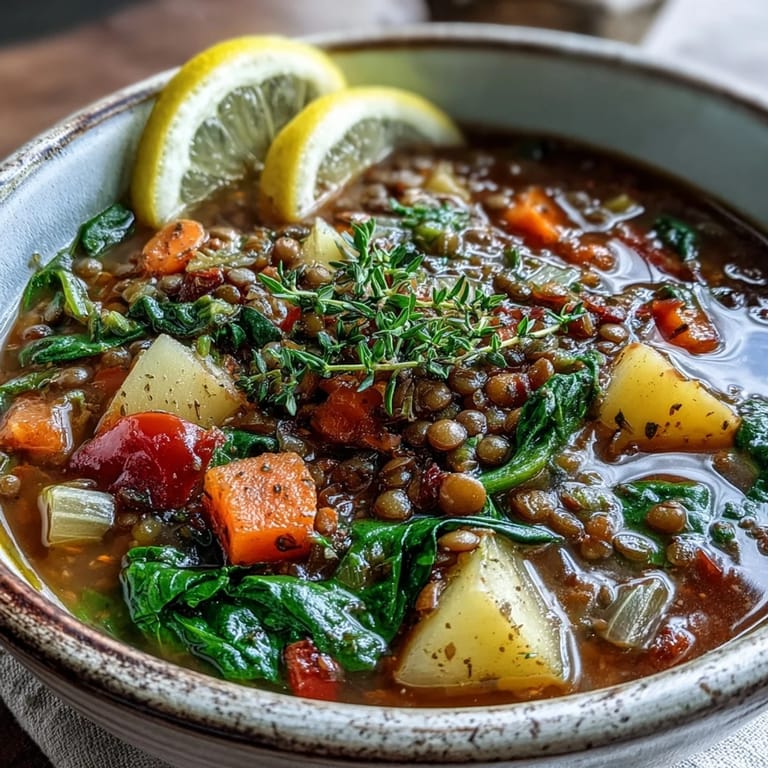
- Spinach or kale: Added at the very end so it wilts into the stew with a slight resistance, a whisper of green against the earthiness of the lentils.
- Cumin and smoked paprika: These spices don't just flavor the stew, they tell a story of cooking that's warm and intentional.
- Thyme and bay leaf: Herbal anchors that deepen the broth without overwhelming it.
Tired of Takeout? 🥡
Get 10 meals you can make faster than delivery arrives. Seriously.
One email. No spam. Unsubscribe anytime.
Instructions
- Start with heat and patience:
- Warm the olive oil in your pot over medium heat until it shimmers, then add your diced onion, carrots, celery, and bell pepper together. Let them sit and soften for 5 to 7 minutes, stirring every couple minutes so they caramelize gently at the edges instead of browning too fast.
- Let the garlic bloom:
- Once the vegetables have softened and turned translucent, scatter your minced garlic over top and stir constantly for just one minute, until the kitchen fills with that unmistakable toasted garlic smell. This single minute of cooking removes the raw sharpness and lets the garlic's sweetness shine through.
- Build the foundation:
- Add your potatoes, rinsed lentils, canned tomatoes with all their juice, cumin, smoked paprika, thyme, and bay leaf to the pot and stir everything together so nothing sticks to the bottom. Pour in your vegetable broth and give it a good stir, scraping up any flavorful bits clinging to the pot's surface.
- The long simmer:
- Bring the whole pot to a boil, which happens faster than you'd expect, then immediately turn the heat down to low and cover it with a lid. Let it bubble gently for 30 to 35 minutes, stirring occasionally, until the lentils are tender enough to crush between your tongue and the roof of your mouth and the potatoes yield without resistance.
- The final green addition:
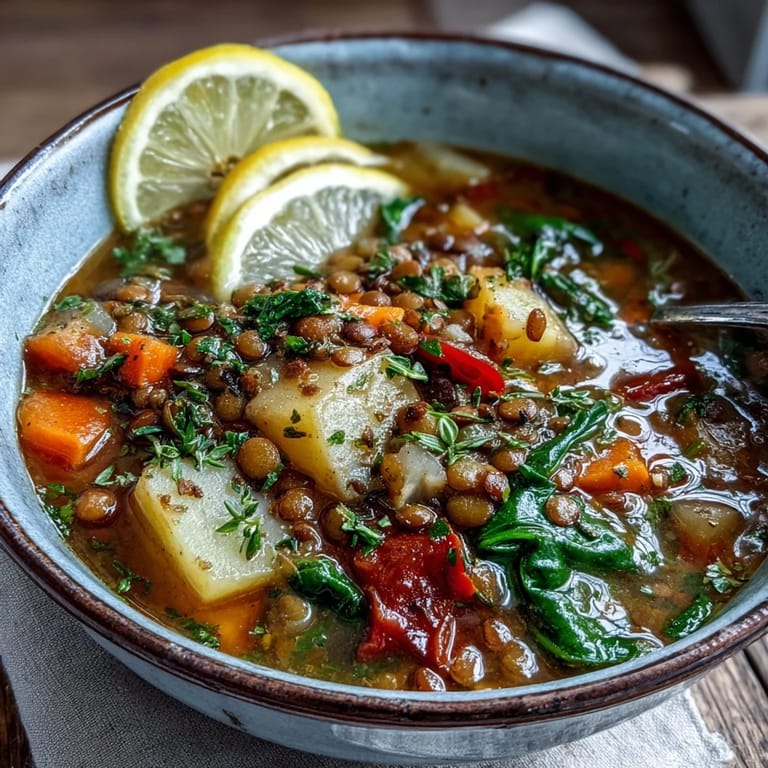
- Fish out the bay leaf, then stir in your chopped spinach or kale and let it cook for just 2 to 3 minutes until it softens and surrenders to the heat. The stew will go from mostly brown to flecked with green, signaling you're almost done.
- Season and adjust:
- Taste the stew carefully and add salt and pepper bit by bit, remembering that each addition is permanent. If it feels too thick, add broth or water a quarter cup at a time until the consistency feels right to you.
- Serve with intention:
- Ladle the stew into bowls and finish each one with a scatter of fresh parsley and a squeeze of lemon if you have it, which brightens everything and makes it feel more finished than it already is.
 Save to Pinterest
 My mother tasted this stew one afternoon and said it reminded her of winters she'd forgotten, not because the recipe was from her kitchen, but because it tasted like the kind of food that makes you slow down and breathe. That's the magic of a good vegetarian stew: it nourishes both the body and the part of us that's been moving too fast.
The Secret of Flavor Depth
What makes this stew taste like it's been simmering longer than 40 minutes is the combination of cooking techniques layered into the process. The vegetables soften first and develop sweet caramelized edges, the garlic blooms separately so it releases its most complex flavors, and the spices are added to a hot mixture so they wake up and distribute evenly. Each step is small, but together they create something that tastes intentional and deep.
Why This Stew Works for Every Diet
There's no meat here, no dairy, no gluten sneaking in, which means this stew welcomes people to the table without requiring anyone to explain their choices or feel like an afterthought. The protein from the lentils is complete and substantial enough that nobody leaves hungry, and the vegetables provide enough fiber and vitamins that you're not just eating comfort food, you're eating something genuinely nourishing.
Making It Your Own
The beauty of this stew is that it's a framework, not a rulebook. I've made it with sweet potato instead of regular, and the stew became warmer and slightly sweeter, which felt right on colder days. Someone added a splash of balsamic vinegar before serving and suddenly it had an unexpected tangy elegance. Another friend stirred in crushed red pepper flakes and served it over rice instead of with bread, and it became something entirely new while still being recognizably the same stew.
- A tablespoon of balsamic vinegar added at the very end brings a sophisticated depth that tastes like a secret ingredient.
- Serve it over grains like quinoa or rice for a different textural experience, or alongside crusty bread for scooping up every last bit.
- It keeps beautifully in the refrigerator for four days and actually tastes better the next day once all the flavors have had time to become friends with each other.
 Save to Pinterest
 This stew is the kind of food that makes you understand why people cook, why we gather around bowls of warm food and talk about things that matter. Make it once, and you'll make it again when someone needs comfort, or when you need to feed yourself something real on a tired evening.
Recipe FAQs
- → What type of lentils work best for this stew?
Brown or green lentils are ideal because they hold their shape during cooking while becoming tender. Red lentils tend to break down completely, resulting in a thicker, porridge-like consistency rather than a stew with distinct texture.
- → Can I make this ahead of time?
Absolutely. This actually improves after sitting in the refrigerator for a day or two as the flavors have time to develop and meld together. Store in an airtight container and reheat gently on the stove, adding a splash of broth or water if needed.
- → How do I adjust the consistency?
For a thicker stew, let it simmer uncovered for an additional 10-15 minutes to reduce the liquid. For a soupier version, simply add more vegetable broth or water until you reach your desired consistency. The lentils will continue absorbing liquid as they sit.
- → What can I serve with this?
Crusty bread or garlic bread is perfect for soaking up the flavorful broth. A side salad with tangy vinaigrette provides nice contrast. For extra protein, top with a dollop of yogurt or serve alongside quinoa or rice.
- → Can I freeze this?
Yes, this freezes exceptionally well for up to 3 months. Cool completely before transferring to freezer-safe containers, leaving some space for expansion. Thaw overnight in the refrigerator and reheat on the stove.
- → How do I add more protein?
Stir in a can of drained chickpeas or white beans during the last 10 minutes of cooking. You can also serve with a sprinkle of hemp seeds, chopped nuts, or a dollop of Greek yogurt if not following a strict vegan diet.