 Save to Pinterest
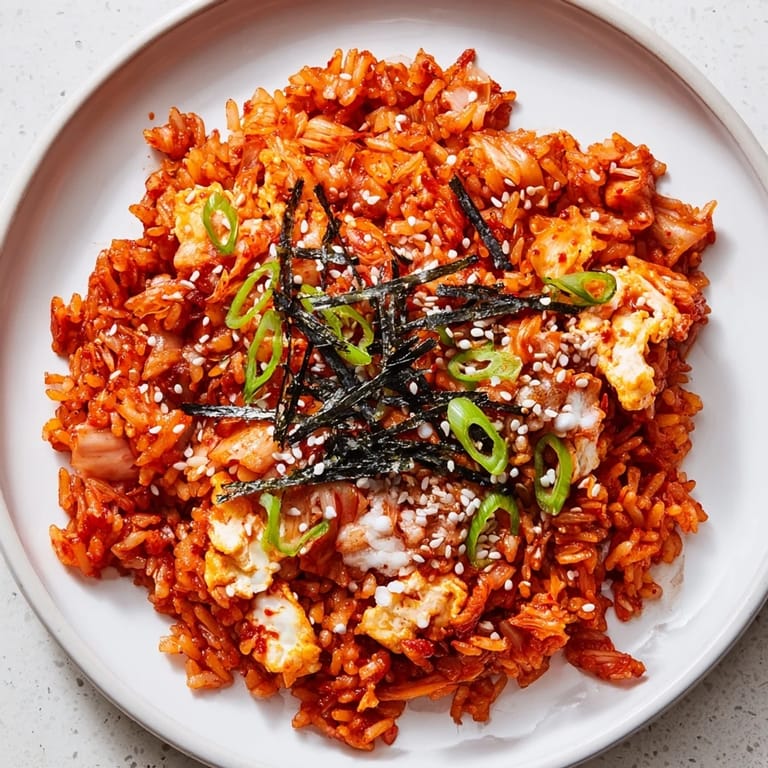
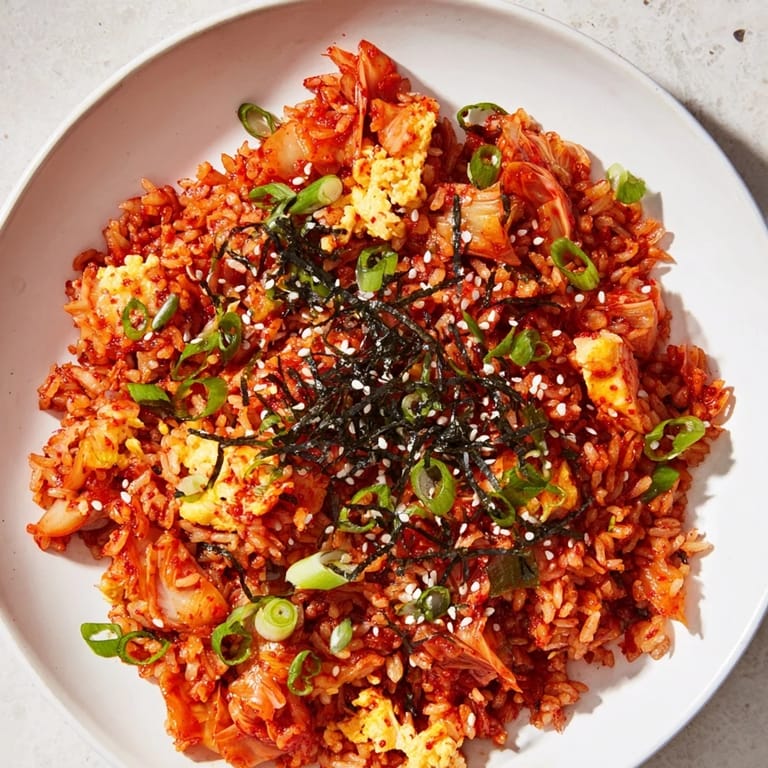
 My tiny apartment kitchen smelled like a sizzling Korean street stall the first time I made kimchi fried rice. I'd bought a jar of kimchi on impulse, drawn to that fermented tang without any real plan, and discovered it was about to turn leftover rice into something that made my entire building jealous.
My roommate wandered in, drawn by the unmistakable aroma of gochujang hitting hot oil, and hovered around the stove until I finally shoved a fork at her. We ended up eating straight from the wok, standing up, because waiting for bowls seemed ridiculous when the rice was perfectly crispy-edged and steaming hot.
Ingredients
- 2 cups cold cooked white rice: Dayold rice is nonnegotiable here—fresh rice turns into a gummy mess that breaks your heart
- 1 cup napa cabbage kimchi, chopped plus 2 tbsp kimchi juice: The juice is liquid gold, carrying all that fermented tang straight into every grain of rice
- 2 large eggs: Fried until just set in the pan, they become creamy pockets that soften the spicy edges
- 1/2 small onion, finely diced: Provides sweetness that balances the kimchis fierce acidity
- 2 green onions, sliced: White parts go in early for depth, green parts at the end for fresh bite
- 2 tbsp gochujang: This Korean chili paste brings earthy heat that lingers but doesnt overwhelm
- 1 tbsp soy sauce: Adds that savory umami foundation that makes everything taste complete
- 1 tsp toasted sesame oil: Finish with this—its intensely aromatic and a little goes a long way
- 1 tbsp vegetable oil: Neutral oil lets the kimchi shine without competing flavors
Tired of Takeout? 🥡
Get 10 meals you can make faster than delivery arrives. Seriously.
One email. No spam. Unsubscribe anytime.
Instructions
- Build your flavor foundation:
- Heat vegetable oil in a large skillet or wok over mediumhigh heat, then toss in onion, white parts of green onion, and carrot. Let them soften for 23 minutes until they're fragrant and starting to turn translucent.
- Wake up the kimchi:
- Add chopped kimchi and stirfry for 23 minutes until it smells incredible and develops slight caramelization—this is where the magic happens.
- Bring in the heat:
- Stir in gochujang, soy sauce, and sugar if using. Mix everything thoroughly until the vegetables are evenly coated in that gorgeous red paste.
- Create space for eggs:
- Push the mixture to one side of the pan and crack eggs into the empty space. Scramble them until just set, then let them marry with the rest.
- Introduce the rice:
- Add cold rice, breaking up any clumps with your spatula. Combine everything thoroughly, then pour in kimchi juice. Stirfry for 34 minutes until rice is heated through and evenly coated.
- Finish with finesse:
- Drizzle with sesame oil and fold in green parts of green onion. Taste and adjust seasoning if needed—some kimchi is saltier than others.
 Save to Pinterest
 This recipe became my go-to for nights when takeout feels like too much effort but I refuse to settle for toast. Something about the combination of spicy, tangy, and comforting satisfies a primal hunger that plain rice never touches.
Making It Your Own
Ive learned that kimchi fried rice forgives almost any addition or substitution. Leftover roast chicken, spam, or even crumbled tofu work beautifully, and Ive made it with brown rice when I needed to feel virtuous without sacrificing flavor.
The Perfect Crunch
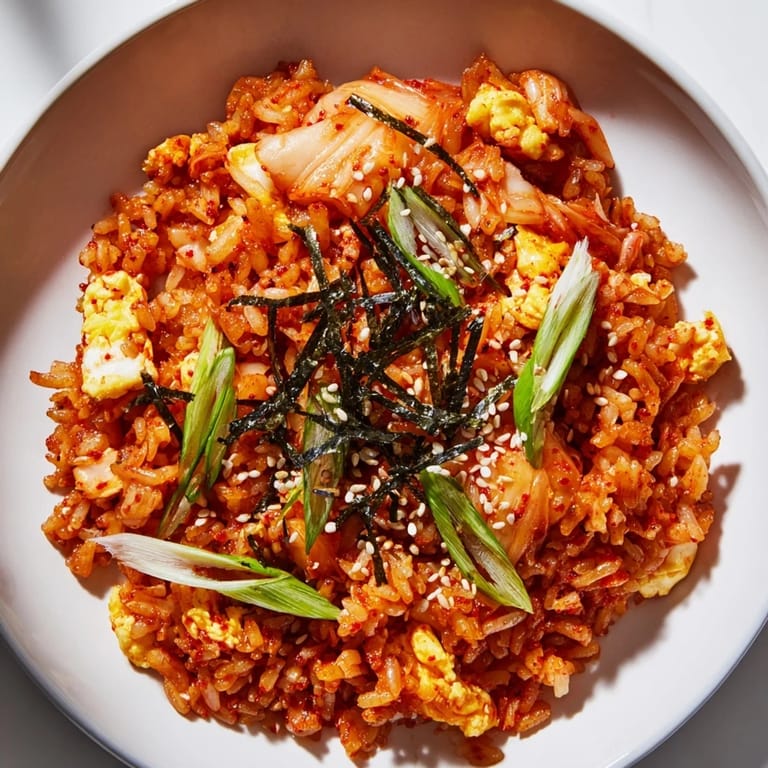
My favorite discovery was pressing the rice against the hot pan for a minute before stirring—those crispy, goldenbottomed grains become the best bites, carrying the most concentrated flavor and creating texture that keeps every forkful interesting.
Serving Suggestions
A cold Korean lager cuts through the spice beautifully, but Ive also served it alongside a simple cucumber salad dressed in rice vinegar. The contrast between hot, bold rice and cool, crisp refreshment makes the whole meal feel complete and intentional.
- Top with a fried egg instead of scrambling if you want that runny yolk situation
- Keep roasted seaweed strips on hand for sprinkling over each bowl
- Extra kimchi on the side is never a bad decision
 Save to Pinterest
 The best meals are often the ones that come from cleaning out the fridge and trusting your instincts. This recipe taught me that leftovers, treated with respect and the right spices, can outshine anything youd order from a restaurant.
Recipe FAQs
- → What type of rice works best?
Cold, day-old white rice is ideal because its drier texture prevents clumping. Freshly cooked rice can become mushy. Brown rice or cauliflower rice work well for healthier variations.
- → Can I make it vegetarian?
Yes. Use vegetarian kimchi (check labels for fish sauce or shrimp paste) and omit meat additions. Substitute eggs with firm tofu for a vegan version.
- → How spicy is this dish?
The spice level depends on your gochujang amount. Start with 2 tablespoons for medium heat, then adjust to taste. Kimchi also adds varying levels of fermentation tang and warmth.
- → What can I serve with it?
Pair with a cold Korean lager, green tea, or add a simple cucumber salad. Roasted seaweed strips and extra green onions make excellent fresh garnishes.
- → How long does it keep?
Store leftovers in an airtight container for up to 3 days. Reheat in a skillet over medium heat, adding a splash of water or oil to refresh the texture.