 Save to Pinterest
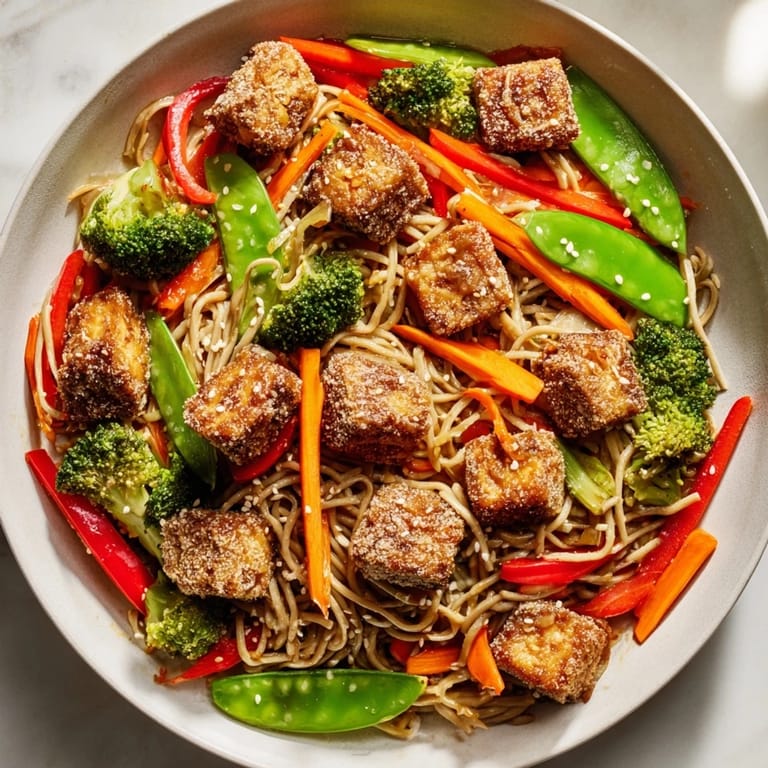
 There's something magical about the moment when a wok gets hot enough that you can feel the heat radiating before you even lean in close. That's when I knew I'd finally nailed this sesame ginger tofu stir-fry—not from a recipe, but from standing in my kitchen on a Thursday night, utterly exhausted, needing something that tasted like it took hours but actually didn't. The ginger hit the pan first, and that sharp, clean smell cut through the fatigue like nothing else could. It became my go-to when I wanted to feed myself something that felt special without the fuss.
I remember making this for my roommate who'd just come back from a terrible day at work, saying she didn't want anything complicated. I threw together whatever vegetables were in the crisper drawer, got the noodles boiling, and ten minutes later we were sitting on the kitchen counter eating straight from the pan, passing around lime wedges and not saying much of anything. That's when I realized this dish had become more than just dinner—it was the kind of meal that says 'I'm here, I care, and also this is delicious.'
Ingredients
- Firm tofu, 400 g, drained and pressed: Pressing out the excess moisture is the secret to getting it crispy rather than soggy—I learned this the hard way after a few soggy attempts.
- Cornstarch, 1 tbsp: This creates that golden, crispy exterior when the tofu hits the hot oil; it's a game-changer compared to skipping this step.
- Vegetable oil, 2 tbsp: Use something with a high smoke point like canola or peanut oil so it doesn't break down in the heat.
- Red bell pepper, 1, thinly sliced: The color is as important as the flavor here—it brightens the whole dish and adds natural sweetness.
- Carrot, 1 medium, julienned: Cut them thin so they cook quickly while staying crisp; thick chunks will make you wait.
- Sugar snap peas, 100 g, trimmed: I love these because they stay snappy and add a subtle crunch that holds up during tossing.
- Broccoli florets, 100 g: Cut them small so they cook evenly and finish with a tender-crisp texture.
- Spring onions, 2, sliced: These go in at the very end to keep their fresh bite alive.
- Dried wheat or rice noodles, 250 g: Either works, though rice noodles are naturally gluten-free if that matters to you.
- Soy sauce, 3 tbsp: This is the backbone of your sauce, so don't skimp on quality.
- Toasted sesame oil, 1 tbsp: The toasted version has so much more character than the regular kind; it's worth seeking out.
- Rice vinegar, 2 tbsp: This adds brightness without the harsh bite of other vinegars.
- Honey or maple syrup, 1 tbsp: A touch of sweetness balances the salty and tangy notes perfectly.
- Fresh ginger, 2 tbsp, grated: Peel it with a spoon instead of a knife—less waste, more flavor.
- Garlic, 2 cloves, minced: Mince it fine so it disperses throughout the sauce rather than sitting in chunks.
- Sesame seeds, 1 tbsp (plus extra for garnish): Toast them lightly in a dry pan first if you have time; it intensifies their nutty flavor.
- Fresh coriander or cilantro (optional): Adds a finishing touch of freshness that makes people ask for the recipe.
- Lime wedges (optional): A squeeze at the end brightens everything up.
Tired of Takeout? 🥡
Get 10 meals you can make faster than delivery arrives. Seriously.
One email. No spam. Unsubscribe anytime.
Instructions
- Start the noodles first:
- Get them cooking according to package directions so they're ready when everything else is. While they boil, drain and rinse them under cold water the moment they're done—this stops the cooking and prevents them from turning into mush.
- Prep and coat the tofu:
- Cut your pressed tofu into bite-sized cubes and toss them gently with cornstarch until every piece is dusted. This coating is what creates that golden, crispy exterior.
- Get the tofu golden:
- Heat vegetable oil in your wok or large skillet over medium-high heat until it shimmers. Once it's hot, add the tofu cubes carefully—you'll hear them sizzle, which is exactly what you want. Let them sit undisturbed for a few minutes so they develop a golden crust on one side, then turn them to crisp all sides, about 6-8 minutes total.
- Stir-fry your vegetables:
- Remove the tofu to a plate and add a splash more oil to the pan if needed. Add your bell peppers, carrots, snap peas, and broccoli, keeping the heat high and stirring constantly for 3-4 minutes until they're tender but still snappy. You want to hear them hitting the hot pan with that satisfying sizzle.
- Make your sauce while you go:
- While the vegetables are cooking, whisk together soy sauce, sesame oil, rice vinegar, honey, ginger, garlic, and 1 tbsp sesame seeds in a small bowl. This should taste bright and balanced—not too salty, not too sweet, with that warm ginger note cutting through everything.
- Bring it all together:
- Return the tofu to the pan with the vegetables, add your cooked noodles, and pour the sauce over everything. Toss gently but thoroughly for 2-3 minutes until the sauce coats every piece and everything is heated through.
- Finish and serve:
- Top with sliced spring onions, extra sesame seeds, and fresh coriander if you have it. Serve immediately with lime wedges on the side for squeezing.
 Save to Pinterest
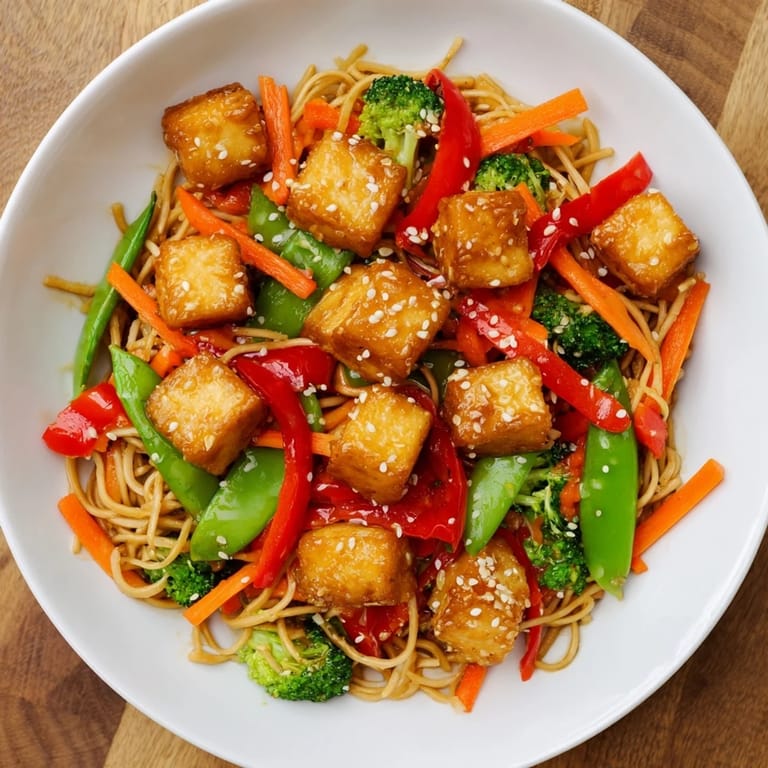
 One night, a friend who usually avoids tofu came back for thirds and asked if I'd somehow hidden chicken in there. I hadn't, and watching their surprise turn into genuine appreciation reminded me that good cooking isn't about fancy ingredients—it's about treating what you have with respect and a little bit of heat.
The Magic of Pressed Tofu
The difference between tofu that tastes amazing and tofu that tastes like sadness comes down to one step: pressing. I used to skip this, thinking it was fussy, and ended up with bland, waterlogged cubes that absorbed nothing and disappointed everyone. Now I wrap my block in a clean kitchen towel, set it on a plate, and weight it down with something heavy—a cast iron pan, a few books, whatever—for at least 30 minutes. This simple act removes moisture that prevents crisping and seasoning. It's the kind of thing that feels like cheating when you finally understand why it works.
Building Flavor in a Wok
A wok is just a curved pan, but it becomes something else entirely when you understand how to use the heat. High heat is your friend here—it's what creates that signature wok flavor, that slight char and energy in every bite. The curved sides mean you can toss ingredients easily, keeping them moving so they cook evenly and stay crisp. If you don't have a wok, a large non-stick skillet works fine, though you'll need to be a bit more deliberate with your stirring.
Variations That Work
This recipe is forgiving in the best way. The core technique stays the same, but the vegetables can shift with the seasons and whatever's in your kitchen. In winter, I swap in mushrooms and baby corn; in summer, a handful of bok choy or snap peas. The sauce is flexible too—if you want more heat, a pinch of chili flakes or a dash of sriracha transforms it without overwhelming the ginger. Even swapping the noodles for rice or quinoa works if that's what you have on hand.
- For gluten-free, use tamari instead of soy sauce and stick with rice noodles to keep everything safe.
- If you're meal prepping, assemble the sauce ahead of time and store it separately—it keeps for days.
- Leftovers actually taste better the next day when the flavors have had time to meld together.
 Save to Pinterest
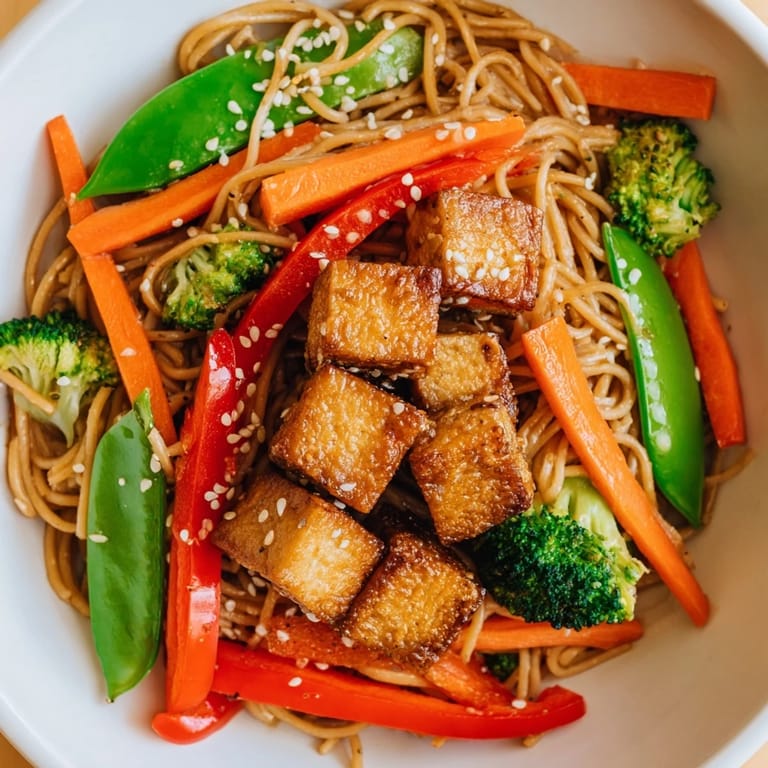
 This is the kind of meal that proves you don't need complicated techniques or obscure ingredients to cook something memorable. It's fast, it's honest, and it tastes like care.
Recipe FAQs
- → How to achieve crispy tofu in this dish?
Press the tofu to remove excess moisture, toss with cornstarch, and fry in hot oil until golden on all sides for extra crispiness.
- → Which noodles work best for this stir-fry?
Both dried wheat and rice noodles are suitable. Cook according to package instructions, then rinse under cold water to prevent sticking.
- → Can I add other vegetables to this stir-fry?
Yes, vegetables like mushrooms, baby corn, or bok choy can be added to enhance flavor and texture.
- → How to make this dish gluten-free?
Use tamari instead of soy sauce and opt for certified gluten-free rice noodles to keep it gluten-free.
- → What can I pair this dish with?
This dish pairs well with a crisp white wine or a fragrant jasmine tea for a balanced meal experience.