 Save to Pinterest
 The first time I encountered okonomiyaki was in a tiny Osaka restaurant where the cook flipped these massive cabbage pancakes with such casual confidence I thought it must be easy. Three failed attempts later, standing in my kitchen with cabbage everywhere and a sad, burnt mess in the pan, I realized this humble street food deserved more respect than I'd given it. Now, after years of practice and many Sunday evening experiments, I've finally cracked the code to making these fluffy, savory pancakes at home. There's something deeply satisfying about transforming a head of cabbage into such an incredibly comforting meal.
Last winter, during that particularly bleak stretch of February when everyone seemed slightly depressed, I made a double batch of okonomiyaki for my roommates. We stood around the stove, taking turns flipping pancakes and arguing about whether mayonnaise should go on before or after the sauce, and for the first time in weeks, the apartment felt warm and alive again. Food has this way of gathering people, of creating moments that stick in your memory long after the dishes are done.
Ingredients
- All-purpose flour: Creates the light, binding structure that holds all those vegetables together without becoming doughy or heavy
- Dashi stock: This umami-rich Japanese stock is the secret ingredient that elevates the flavor beyond a simple vegetable pancake, though water works in a pinch
- Green cabbage: The backbone of okonomiyaki, providing sweetness, crunch, and that signature fluffy texture when shredded properly
- Eggs: Essential for structure and richness, helping create that pillow-like interior while keeping edges crispy
- Bacon or pork belly: renders its fat directly into the pancake as it cooks, infusing every bite with smoky depth
- Okonomiyaki sauce: A sweet, tangy, umami-packed condiment that ties everything together with its complex flavor profile
- Japanese mayonnaise: Creamier and richer than American mayo, providing a cool contrast to the warm, savory pancake
- Bonito flakes: These smoky, cured fish shavings dance on top of the hot pancake, adding visual drama and incredible depth of flavor
Tired of Takeout? 🥡
Get 10 meals you can make faster than delivery arrives. Seriously.
One email. No spam. Unsubscribe anytime.
Instructions
- Whisk the batter foundation:
- Combine flour, dashi, eggs, salt, and baking powder in a large bowl until completely smooth, with no lumps remaining to ensure even cooking
- Fold in the vegetables:
- Gently mix the shredded cabbage, green onions, carrot, and bean sprouts until every piece is lightly coated in batter but still retains some texture
- Heat your pan properly:
- Warm a nonstick skillet over medium heat until a drop of water sizzles and dances across the surface, then add just enough oil to coat
- Shape and top your pancake:
- Pour one-quarter of the mixture onto the pan, use your spatula to gently shape it into a round about half an inch thick, and arrange bacon pieces across the top
- Cook to golden perfection:
- Let it cook undisturbed for 4-5 minutes until deep golden brown, then carefully flip and cook another 4-5 minutes until the bacon is crispy and the pancake is cooked through
- Add the signature toppings:
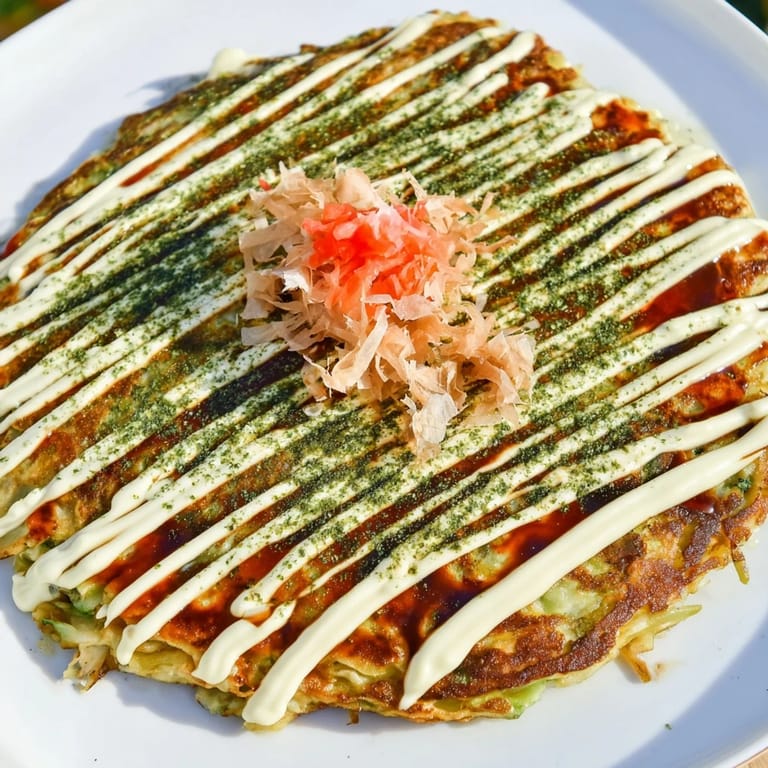
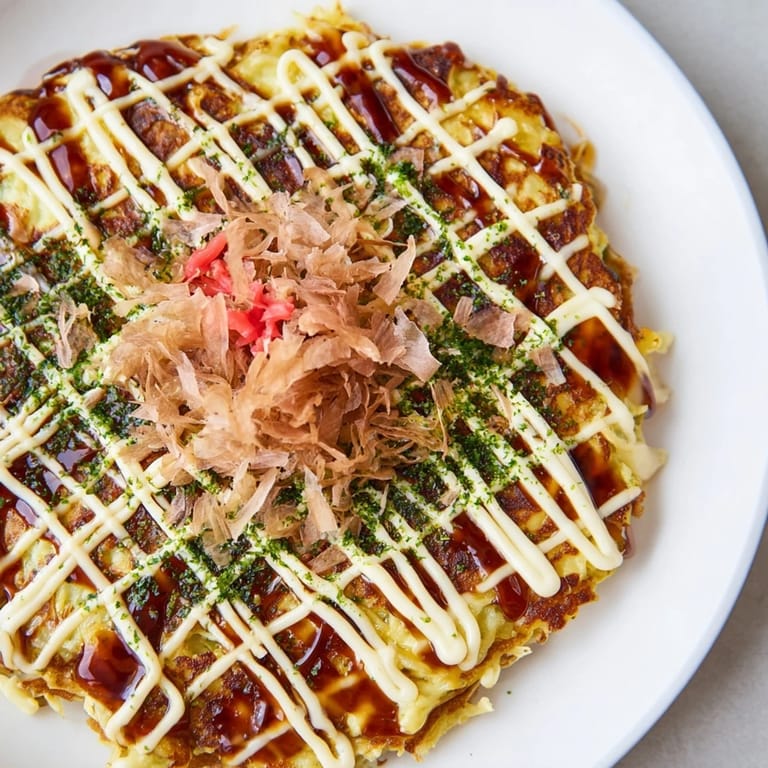
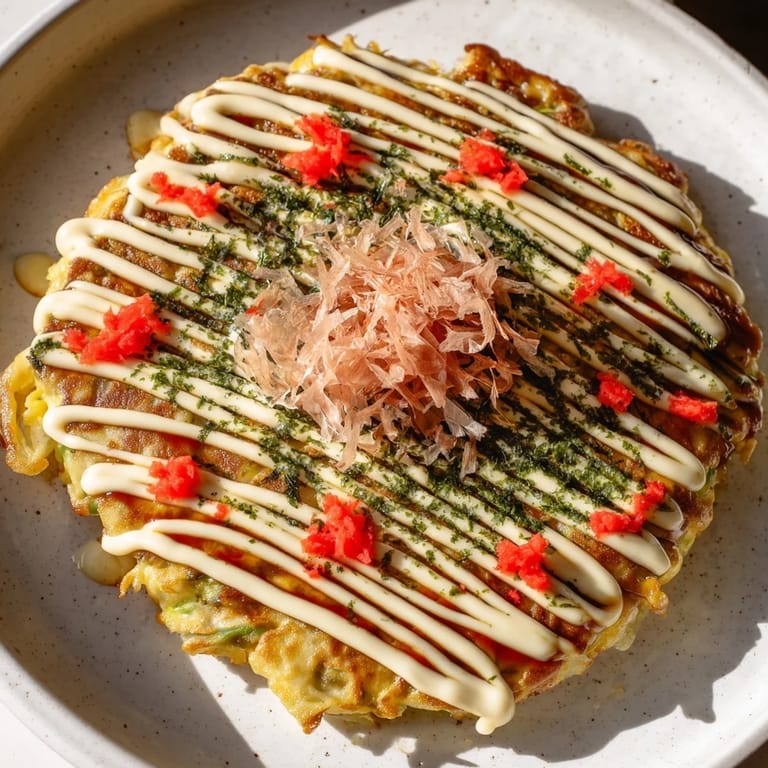
- Transfer to a plate and drizzle with okonomiyaki sauce and mayonnaise in a crisscross pattern, then sprinkle with bonito flakes, aonori, and pickled ginger while still hot
 Save to Pinterest
 My friend Hiroshi's grandmother makes the best okonomiyaki I've ever tasted, and she told me the secret is patience. She says the batter needs time to rest, the pan needs time to heat, and the cook needs time to learn the feel of the flip. I think about her every time I stand at the stove, waiting for that perfect golden color to develop.
Getting the Flip Right
The moment of truth comes when you need to flip that partially cooked, bacon-topped pancake without disaster striking. I've developed a technique where I slide the pancake onto a large plate, then invert the pan over the plate and flip everything together in one confident motion. It took some practice (and some cleaning), but now I can flip these like a pro.
Make It Your Own
The beauty of okonomiyaki is in the name itself, which roughly translates to 'how you like' or 'what you want.' I've made versions with corn and cheese, leftover roasted vegetables, even kimchi for a spicy Korean-Japanese fusion. The batter structure remains the same, but the fillings can change with your mood, your season, or whatever needs using up in your refrigerator.
The Art of Toppings
Those beautiful toppings aren't just garnish, they're essential to the experience. Watch as the bonito flakes wave and curl from the heat, creating that mesmerizing dancing effect that makes okonomiyaki so Instagram-worthy. The mayo should be applied in a precise crosshatch pattern, while the sauce needs to cover enough surface area without overwhelming the delicate flavors beneath. Take your time with this final step, it's what transforms a simple pancake into something special.
- Warm your okonomiyaki sauce slightly if it's too thick to drizzle easily
- Use a squeeze bottle or piping bag for that professional mayonnaise pattern
- Add the bonito flakes last so you can watch them dance on the hot pancake
 Save to Pinterest
 There's something profoundly satisfying about sitting down to a plate of okonomiyaki you've made yourself, crispy edges still warm, toppings perfectly arranged, knowing that with a little practice and patience, you've mastered a dish from across the world in your own kitchen. Grab a cold beer, call some friends over, and enjoy the beautiful mess that is homemade okonomiyaki.
Recipe FAQs
- → What makes okonomiyaki different from regular pancakes?
Okonomiyaki is a savory Japanese pancake loaded with shredded cabbage as the main ingredient, unlike sweet breakfast pancakes. The texture is fluffy yet substantial, with vegetables comprising most of the batter. Traditional toppings include a special tangy sauce, Japanese mayonnaise, bonito flakes, and seaweed, creating a perfect balance of flavors ranging from rich and creamy to umami-packed and slightly sweet.
- → Can I make okonomiyaki vegetarian?
Absolutely. Simply omit the bacon, pork, shrimp, and bonito flakes. The cabbage-based batter is naturally vegetarian and deeply flavorful. Substitute the meat with additional vegetables like corn, cheese, or more mushrooms. For the toppings, you can skip bonito flakes or replace them with nori strips for a similar visual appeal without the fish component.
- → What can I use instead of okonomiyaki sauce?
You can make a quick homemade version by mixing equal parts Worcestershire sauce, ketchup, and a splash of soy sauce with a teaspoon of sugar. Some home cooks also add oyster sauce for depth. This combination mimics the sweet-tangy-umami profile of traditional okonomiyaki sauce remarkably well and uses pantry staples you likely have on hand.
- → Why is my okonomiyaki falling apart?
The most common cause is using too much batter relative to cabbage. The mixture should be barely held together by the batter—you want a high ratio of vegetables to flour mixture. Also, let the batter rest for a few minutes after mixing to allow the flour to hydrate fully. Cook on medium heat and wait until the bottom is properly set and golden before flipping. Using a well-oiled nonstick pan helps prevent sticking and breaking.
- → How do I store and reheat leftover okonomiyaki?
Store cooled okonomiyaki in an airtight container in the refrigerator for up to 2 days. For best results, reheat in a dry skillet over medium-low heat to restore the crispy exterior, about 3-4 minutes per side. Avoid microwaving as it makes the texture soggy. Add fresh toppings after reheating since the sauce and mayonnaise don't store well on the pancakes.