 Save to Pinterest
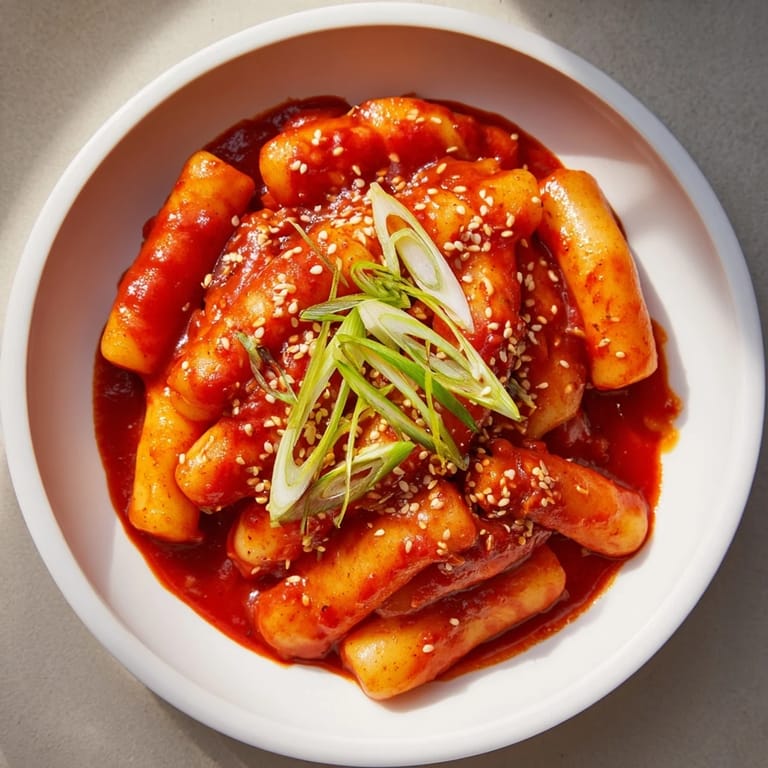
 The first time I had tteokbokki was at a tiny street stall in Seoul during winter, steam rising into the freezing air while everyone huddled together with paper cups. The rice cakes were impossibly chewy, that sauce hit every note at once sweet, spicy, savory and I found myself going back three times that week. It is one of those dishes that feels like a warm hug even on the coldest days, and now my apartment fills with the same intoxicating aroma whenever I make it.
Last winter my friend came over after a terrible breakup, and I made tteokbokki while she sat at my counter. We ate straight from the pot with wooden spoons, talking and crying and eating until the rice cakes were gone. She told me later that those chewy little tubes of rice in that fiery red sauce were exactly what she needed to feel something real again.
Ingredients
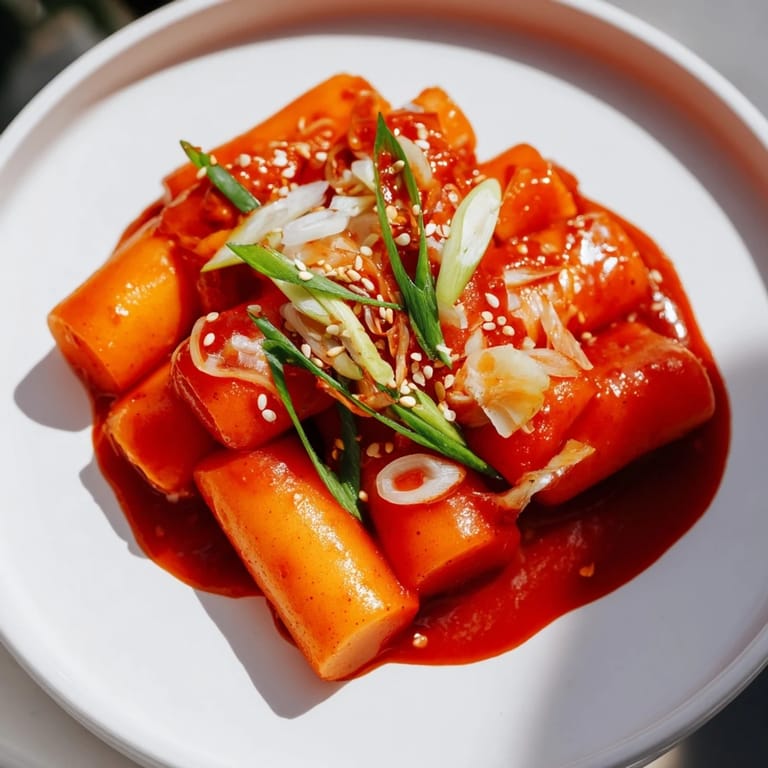
- 500 g Korean rice cakes: Cylindrical tteok works best here, and if they have been refrigerated, give them a quick warm soak to wake up that signature chewy texture
- 3 tbsp gochujang: This fermented chili paste is the heart of the dish, bringing depth and heat that fresh chili just cannot replicate
- 1 tbsp gochugaru: Korean chili flakes add a different kind of heat, brighter and more forward than gochujang
- 2 tbsp soy sauce: Use a good quality brand here because it provides the salty foundation that balances all that sweetness
- 1 tbsp sugar plus 1 tbsp honey: The combination of both creates a more rounded sweetness, with sugar dissolving quickly and honey adding floral notes
- 2 cloves garlic: Minced fresh, never powdered, because the sharp bite mellows beautifully into the sauce
- 3 cups broth: Whether you use anchovy and kelp or keep it vegetarian with just kelp, this liquid becomes the flavorful base
- 2 green onions: Sliced diagonally they add freshness and a mild onion bite that cuts through the rich sauce
- 1 small onion plus optional cabbage: These vegetables soak up the sauce while cooking and become little flavor bombs
Tired of Takeout? 🥡
Get 10 meals you can make faster than delivery arrives. Seriously.
One email. No spam. Unsubscribe anytime.
Instructions
- Soften the rice cakes:
- If your tteok has been sitting in the fridge, drop them into warm water for 10 minutes while you prep everything else
- Build the broth base:
- Combine water with kelp and anchovies if you are using them, bringing it to a gentle simmer for 10 minutes before removing the solids
- Make the magic sauce:
- Whisk in the gochujang, gochugaru, soy sauce, sugar, honey and garlic until the paste fully dissolves into the broth
- Add the heart of the dish:
- Drop in the rice cakes, sliced onion and any cabbage you are using, then bring everything to a gentle boil while stirring
- Let it transform:
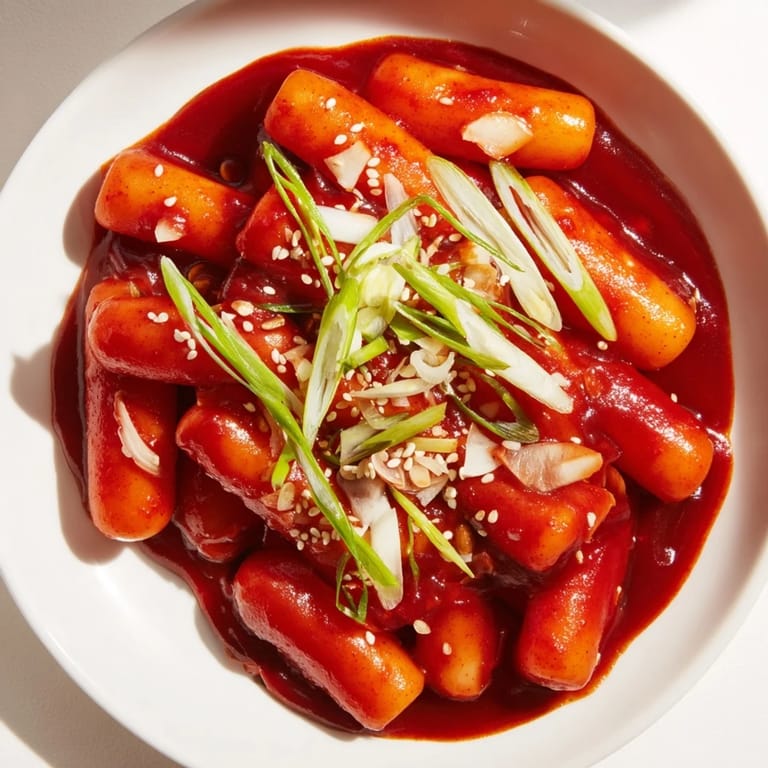
- Simmer for 10 to 15 minutes until the sauce coats the back of a spoon and the rice cakes bounce back when you poke them
- Finish with freshness:
- Toss in the green onions and boiled eggs during the last 2 minutes, letting them warm through without overcooking
 Save to Pinterest
  Save to Pinterest
 My daughter now requests tteokbokki for her birthday dinner every year, and watching her skillfully maneuver those slippery rice cakes with chopsticks makes me smile every single time. It has become our comfort food for bad days, good days, and every day in between.
Making It Your Own
The beauty of tteokbokki is how it welcomes additions while staying true to itself. Fish cakes, mozzarella cheese that melts into strings, even ramen noodles thrown in during the last few minutes all work beautifully here.
The Rice Cake Situation
Fresh rice cakes need no soaking, but if you can only find refrigerated ones, that warm water bath makes all the difference between tough and toothsome. I have learned the hard way that skipping this step results in disappointingly dense centers.
Perfecting The Sauce Balance
Every brand of gochujang has different sweetness and heat levels, so taste as you go and trust your palate. The final sauce should hit spicy first, then sweet, then savory, with all three notes lingering equally.
- Start with less gochugaru if you are sensitive to heat
- Add a splash of rice vinegar if you want brightness cutting through the richness
- Remember the sauce intensifies as it reduces, so under season slightly at first
 Save to Pinterest
  Save to Pinterest
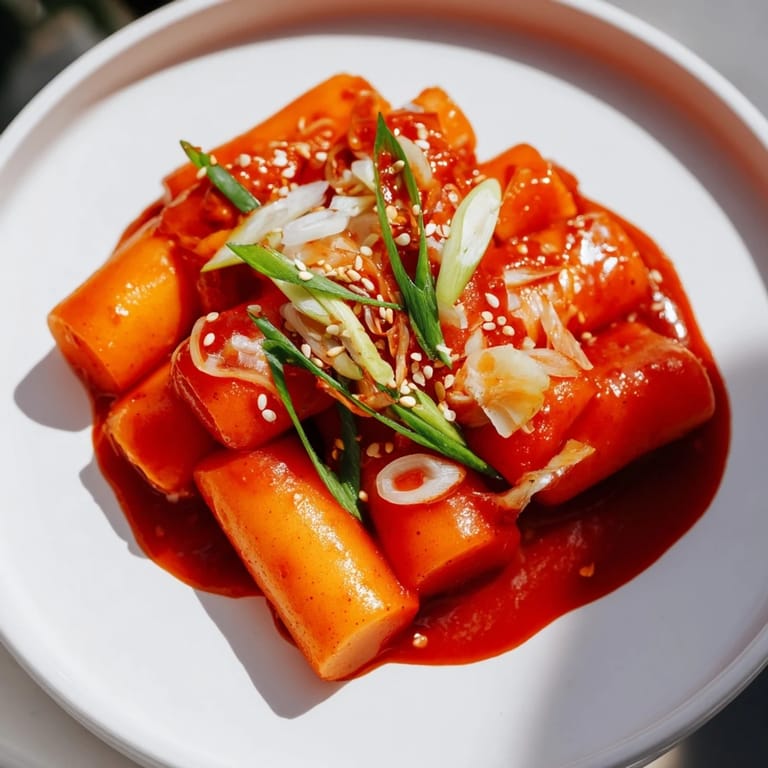
 There is something profoundly satisfying about transforming simple ingredients into something that feels like pure comfort in a bowl. Enjoy every chewy, spicy bite.
Recipe FAQs
- → What makes tteokbokki sauce authentic?
Authentic tteokbokki sauce relies on gochujang (Korean chili paste) and gochugaru (Korean chili flakes) as the primary flavor base, balanced with soy sauce, sugar, and honey for that characteristic sweet-spicy profile.
- → How do I prevent rice cakes from sticking?
Stir frequently while simmering and ensure there's enough liquid in the pot. The sauce naturally thickens as it cooks, creating that glossy coating texture.
- → Can I make tteokbokki vegetarian?
Yes! Simply omit the dried anchovies from the broth and use only kelp (kombu) for the umami base. Double-check that your gochujang brand is vegetarian-friendly.
- → What can I add to enhance the dish?
Fish cakes (eomuk) are a classic addition, added with the rice cakes. You can also incorporate ramen noodles, mozzarella cheese for fusion style, or extra vegetables like cabbage and carrots.
- → How should I store leftovers?
Store in an airtight container in the refrigerator for up to 2 days. Reheat gently with a splash of water, as the sauce thickens considerably when chilled and the rice cakes become firmer.
- → Why soak the rice cakes first?
Soaking hard or refrigerated rice cakes in warm water for 10 minutes softens them and ensures even cooking. Fresh, room-temperature rice cakes may not require soaking.