 Save to Pinterest
 The first time I arranged a champagne waterfall board, I was scrambling to impress guests arriving in twenty minutes. I'd seen one at a friend's wedding and became obsessed with recreating that cascading magic—the way fruit tumbles from a tilted coupe glass like a luxurious accident. My kitchen counter suddenly transformed into a still life, and I realized that this wasn't really cooking; it was storytelling with food, arranged in real time.
I made this board for my sister's engagement party, and honestly, it became more famous than the actual appetizers. People lingered around it, taking photos, debating whether they should eat the raspberries or admire them first. That's when I understood: grazing boards aren't just food—they're permission to slow down and enjoy with your hands and your eyes at the same time.
Ingredients
- Brie, sliced: The soft, creamy anchor that everything else seems to celebrate around.
- Aged cheddar, cubed: Sharp enough to wake up your palate between bites of sweetness.
- Goat cheese, crumbled: Tangy and elegant, it bridges the gap between cheese and something almost floral.
- Prosciutto, folded: Optional, but if using, let it cascade like fabric for drama.
- Salami, sliced: Add texture and a salty note that makes every fruit bite feel sophisticated.
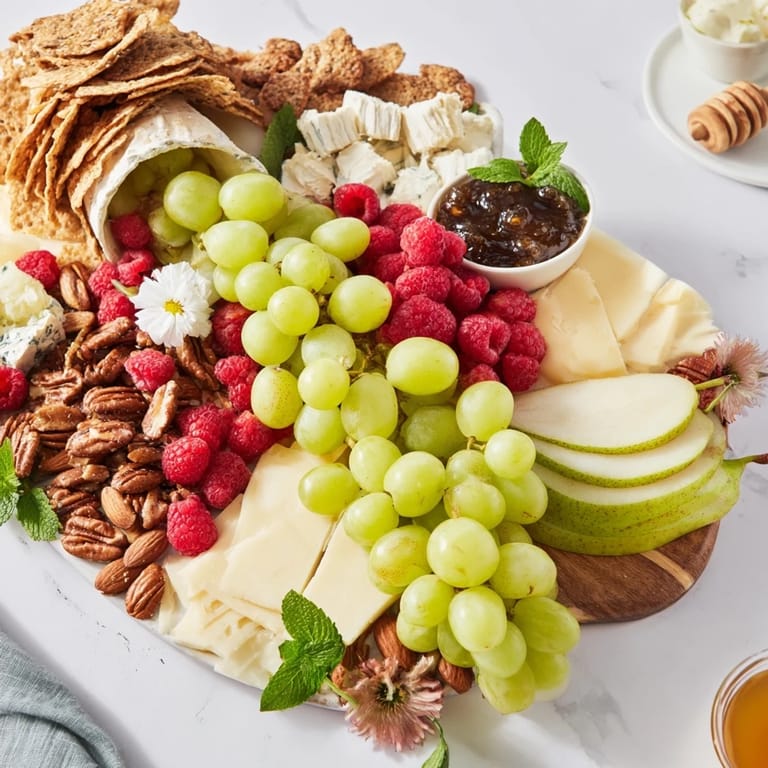
- Green and red grapes: These are your waterfall—choose firm ones so they roll beautifully and don't roll away.
- Pear and apple slices: Slice them just before serving to prevent browning, or toss lightly in lemon juice as insurance.
- Fresh raspberries: Delicate little jewels that catch the light and taste like the season itself.
- Candied pecans: Sweet, crunchy, and they anchor the whole composition with warmth.
- Roasted almonds: Salty contrast that keeps you reaching for one more handful.
- Assorted crackers: Choose a mix of textures—some thin and crisp, some with seeds—so every bite feels different.
- Baguette, sliced: Toast these lightly if you want them to last longer, but room temperature is more relaxed.
- Honey: Drizzle over cheese or crackers for warmth and richness.
- Fig jam: Slightly earthy, it transforms something simple into something you'd find at a wine bar.
- Edible flowers and fresh mint: These are the finishing touches that make people say "wow" before they even taste anything.
Tired of Takeout? 🥡
Get 10 meals you can make faster than delivery arrives. Seriously.
One email. No spam. Unsubscribe anytime.
Instructions
- Set your stage:
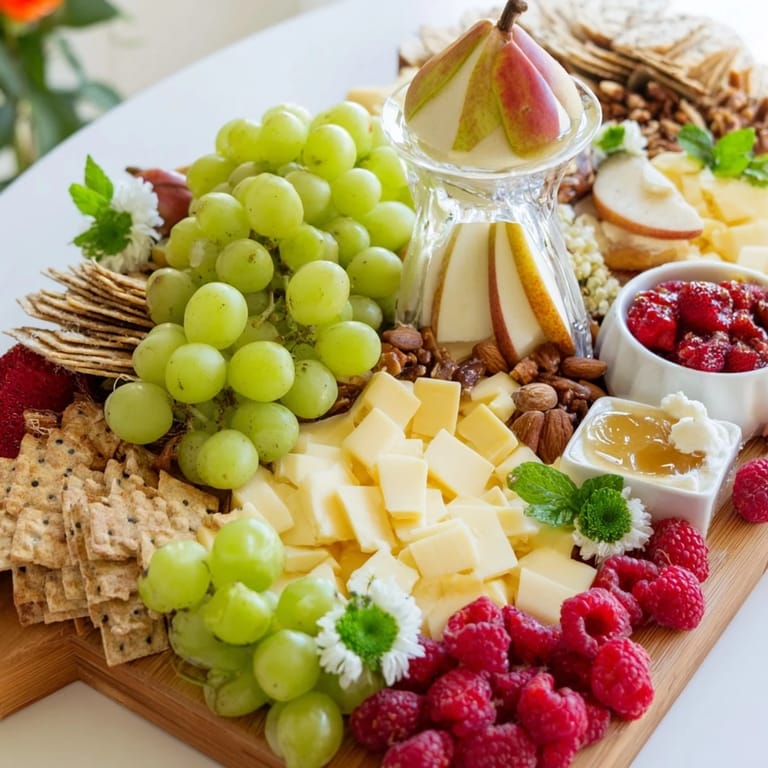
- Place the champagne coupe glass at the center of your board, tilting it gently to one side so it rests stably but looks artfully off-balance. This is the anchor point—everything else flows from here, so take a breath and make sure it won't tip.
- Begin the waterfall:
- Arrange green and red grapes as if they're spilling directly from the glass, creating a cascade down the board. The grapes should look surprised and delighted to be tumbling, not carefully placed—this is where the magic starts.
- Add the fruit flow:
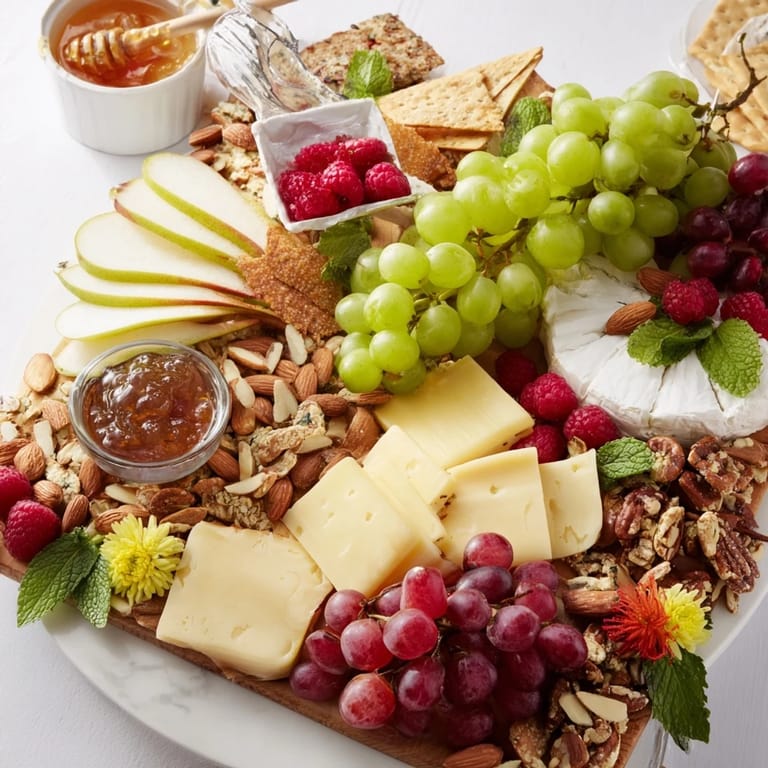
- Fan out your pear and apple slices next to the grapes, overlapping them slightly to enhance that waterfall effect. The colors should complement each other here, creating a visual rhythm that guides your eye across the board.
- Anchor with cheese:
- Nestle your three cheeses in small clusters around the base of the glass and along the path of the fruit cascade. Think of them as natural stopping points where the eye and hand both want to pause.
- Layer in protein:
- If using prosciutto and salami, fold and arrange them in decorative piles beside the cheese clusters. They should look relaxed and inviting, not stiff or formal.
- Scatter texture:
- Distribute candied pecans, roasted almonds, and fresh raspberries throughout the board in no particular pattern. These are the surprise elements that make people discover something new every time they reach for something.
- Frame the board:
- Position crackers and baguette slices around the edges of the board where they're easy to grab. They're the infrastructure that lets people actually enjoy everything else without getting their hands messy.
- Add the finishes:
- Fill small bowls with honey and fig jam, then nestle them among the other ingredients like little treasures. Top everything with edible flowers and mint sprigs for that final moment of elegance.
- Serve and celebrate:
- Bring the board to the table with chilled champagne, and watch people pause before they eat because it's too beautiful to disturb. That hesitation lasts about two seconds before everyone dives in.
 Save to Pinterest
 My brother watched me arrange one of these boards and said, "Wait, is this actually food or are you just showing off?" I realized he'd never seen eating and art intersect so directly. Once he tasted the combination of brie with honeyed cracker and cascading grapes, he became a believer—and more importantly, he understood why this matters.
The Secret to Making It Look Effortless
The best grazing boards look like they assembled themselves, but the truth is there's intention behind every placement. I learned this the hard way when my first attempt looked chaotic rather than artistic. Now I use a simple rule: start with your focal point (the champagne glass), create your main flow (the grapes), and then fill in the gaps with intention rather than panic. The board should have rhythm—repeating colors, alternating textures, and natural pauses for the eye to rest.
Seasonal Variations and Flexibility
There's something beautiful about adapting this board to what's in season. In summer, I pile on fresh berries and apricots; in winter, I lean toward pomegranate seeds, dried figs, and candied citrus. The core structure stays the same, but the personality changes. This flexibility means I can make the board feel fresh no matter when I'm reaching for it, and it teaches me to cook with the seasons rather than against them.
Making It Yours
This board is a template, not a law—your version should reflect what you love and what your guests actually eat. I've made it vegetarian dozens of times, swapped cheeses based on what the local market had, and once used a coupe glass from my grandmother's wedding set, which somehow made the whole thing feel more personal.
- Try plant-based cheeses and skip the charcuterie entirely for a vegan-friendly version that's just as showstopping.
- Pair this with prosecco, sparkling water with fresh berries, or even a light white wine if champagne isn't your thing.
- Remember that the most impressive grazing boards are the ones that reflect the people eating from them, not the ones that follow rules perfectly.
 Save to Pinterest
 This board taught me that entertaining doesn't need to be complicated or stressful. In twenty minutes, you create something that feels like celebration itself. That's the real magic.
Recipe FAQs
- → What cheeses are best for this board?
Soft brie, aged cheddar cubes, and crumbly goat cheese create a balanced variety of textures and flavors that complement the fresh fruits.
- → Can I prepare the board in advance?
It's best to assemble the board just before serving to keep fruits fresh and prevent browning, preserving the visual appeal and taste.
- → Are there vegetarian options available?
Yes, simply omit the charcuterie and consider using plant-based cheeses to suit vegetarian or vegan preferences.
- → What pairs well as a drink with this board?
This grazing board pairs wonderfully with chilled brut Champagne or sparkling wine that complements the creamy cheeses and fresh fruit.
- → How do I arrange the cascading effect?
Place a champagne coupe glass on its side in the center of the board, then arrange grapes spilling from it, followed by layered fruit slices and cheese clusters to mimic a waterfall.