 Save to Pinterest
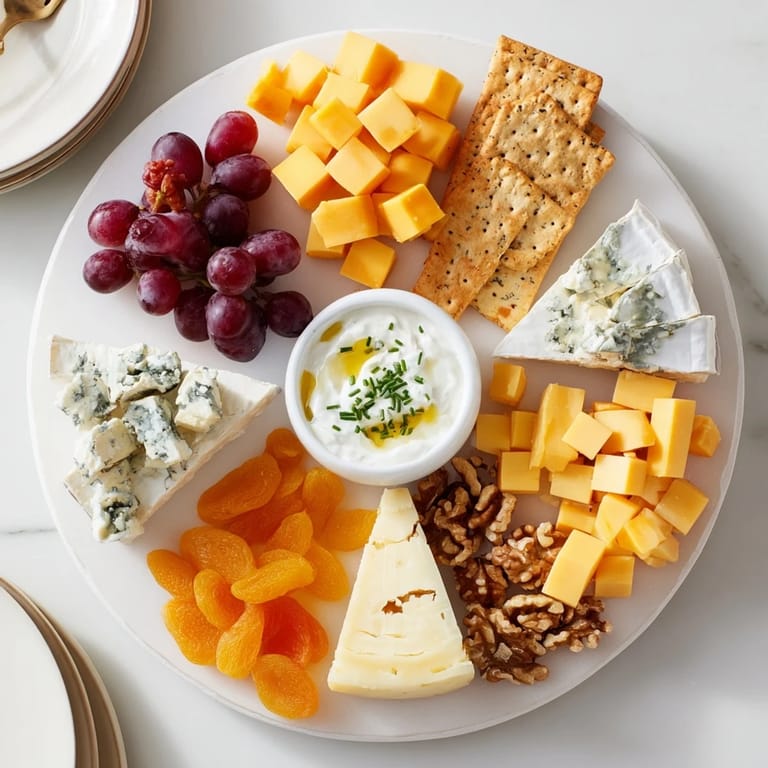
 There's something magical about assembling a cheese board that actually stops people mid-conversation. I discovered the Celtic cross arrangement by accident one evening when I was rotating cheeses around a central dip and realized the pattern looked intentional, geometric, almost sacred. My guests that night didn't just eat from it—they admired it first, and that moment of pause before the feast began felt special. That's when I understood: a beautiful platter isn't just about feeding people, it's about creating a moment of discovery on the table.
I made this for my sister's book club and watched eight women spend twenty minutes just arranging and rearranging pieces on their own plates before talking about the novel. By the end of the night, the platter was licked clean but it was the conversation about why the blue cheese with honey tasted like autumn that stayed with everyone. Food does that sometimes—it becomes the backdrop for connection rather than the main event.
Ingredients
- Irish cheddar: The sharp backbone of this platter; its nutty bite anchors all the delicate cheeses around it.
- Brie: Soft, creamy, the crowd-pleaser that makes everyone feel like they're eating something luxurious.
- Blue cheese: The brave choice; it divides a room beautifully, but those who love it will find the honey drizzle transformative.
- Manchego: Slightly firm with a caramel sweetness, it bridges the gap between adventurous and approachable.
- Sour cream or Greek yogurt: The dip base that carries chives and lemon without overpowering the subtle flavors of cheese.
- Fresh chives: A whisper of onion that wakes up every bite without shouting.
- Lemon juice: A single teaspoon cuts through richness and keeps the dip tasting fresh, not heavy.
- Seedless red grapes: Their burst of juice between bites of cheese is essential; they're not just decoration.
- Dried apricots: The unexpected sweetness that makes people say "oh" when they taste it with blue cheese.
- Walnuts: Toasted or raw, they add texture and anchor the visual geometry of the cross.
- Honey: A drizzle that transforms the blue cheese quadrant into something almost dessert-like.
- Crackers and baguette: The vessels, chosen for sturdiness so they don't crumble under the weight of cheese and dip.
Tired of Takeout? 🥡
Get 10 meals you can make faster than delivery arrives. Seriously.
One email. No spam. Unsubscribe anytime.
Instructions
- Build your dip:
- Stir the sour cream, chives, lemon juice, salt, and pepper together until it's smooth and pale green with flecks of herb throughout. Taste and adjust seasoning—this dip should taste bright and alive, not bland. Spoon it into a small bowl.
- Center and anchor:
- Place that bowl of dip in the middle of your largest round platter, centering it carefully. This becomes your compass point for everything else that radiates outward.
- Create the four quadrants:
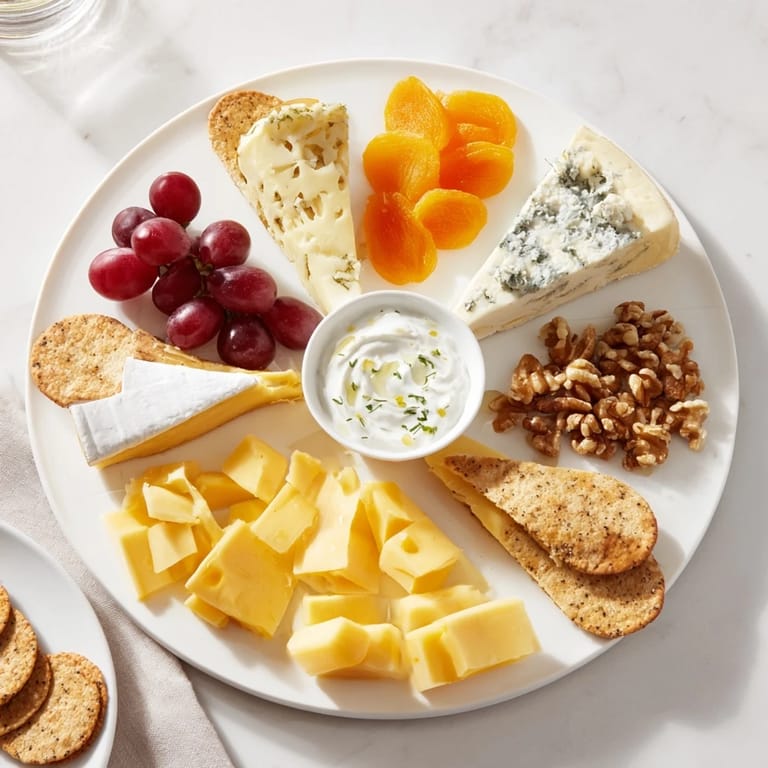
- Imagine the platter divided into four quarters by invisible lines through the center bowl. Arrange each cheese in its own section, fanning slices or grouping cubes so they look intentional, not scattered. The cheddar can be more casual; the Brie should overlap slightly like roof tiles.
- Fill the spaces strategically:
- Nestle grapes, apricots, and walnuts between the four cheese sections, creating visual lines that emphasize the cross pattern. This is where color contrast matters—a red grape against blue cheese, a golden apricot against pale Brie.
- Crown the blue cheese:
- Drizzle honey lightly over the blue cheese quadrant just before serving, letting it catch the light slightly. It should look intentional, like you're offering something special.
- Frame with crackers:
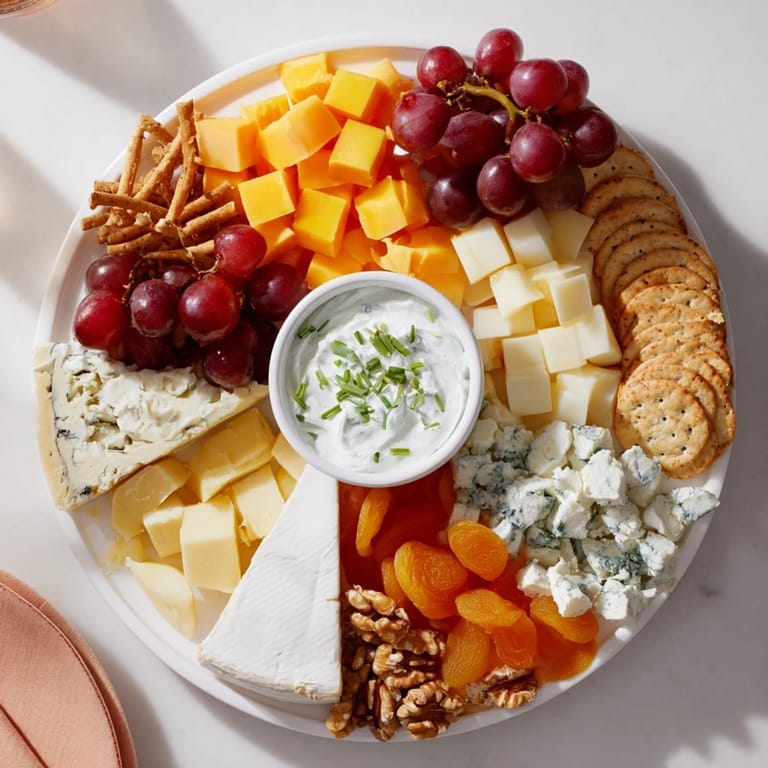
- Arrange crackers and baguette slices around the outer edge of the platter like a border. Lean them at angles so guests can grab them easily.
- Serve at room temperature:
- Take the platter out of the fridge 15 minutes before guests arrive so the cheeses can soften and release their full flavors. Cold cheese is muted cheese.
 Save to Pinterest
 Someone once asked me why I fussed so much over a cheese board, and I realized it's because food arranged with intention tells people they're worth the effort. That night, the Celtic cross meant something beyond symmetry—it meant I'd thought about them while planning, considered what they might enjoy, arranged it carefully. The platter became a small gesture of care disguised as appetizer.
The Art of Cheese Board Composition
A successful cheese board balances contrast in every dimension: soft against firm, sharp against mild, sweet against savory, vibrant color against neutral. When you understand these tensions, you stop thinking of a board as a collection of items and start seeing it as a conversation between flavors. The Celtic cross structure forces this balance naturally—each quadrant gets its own voice, but they're all equal in prominence, all equally inviting.
Wine Pairings and Serving Suggestions
A crisp Sauvignon Blanc cuts through the richness of Brie and plays beautifully with the sharp cheddar, while its acidity cleanses your palate between bites. If red wine is preferred, a light Pinot Noir doesn't overpower the delicate Manchego and has enough tannin to stand up to the blue cheese. The beauty of offering multiple wines is watching guests discover their own favorite pairing and taste something they might not have ordered at a restaurant.
Variations and Seasonal Swaps
The four-quadrant structure means you can adapt this platter infinitely—swap the Irish cheddar for a smoked gouda in autumn, replace Manchego with a creamy Camembert in spring, or bold an entirely different blue cheese depending on what you find. I've made versions using local cheeses from farmers markets, and each one felt completely different while maintaining that elegant cross geometry. The beauty is in the framework, not the specific ingredients, which means this platter grows with you as your palate develops.
- Spring: Substitute Manchego for fresh goat cheese and add fresh strawberries instead of dried apricots.
- Autumn: Use darker crackers, swap grapes for apple slices, and add candied pecans for deeper color contrast.
- Winter: Introduce fig jam alongside the honey, add dried cranberries, and choose cheeses with more assertive flavors.
 Save to Pinterest
 The Celtic cross cheese platter teaches you that elegance isn't complicated—it's about thoughtful arrangement and letting each ingredient speak clearly. Every time you make it, people will think you've spent hours on it, and that small gift of surprise is worth the 20 minutes of care.
Recipe FAQs
- → How do I arrange the cheeses to mimic the Celtic cross?
Divide your serving platter into four sections and place each cheese variety in a separate quadrant around the central dip bowl to reflect the cross shape visually.
- → What can I use as a central dip for this platter?
A smooth blend of sour cream or Greek yogurt mixed with fresh chives, lemon juice, salt, and pepper creates a flavorful and creamy central dip that complements the cheeses.
- → How should I handle the blue cheese for best flavor?
Let the blue cheese come to room temperature before serving and drizzle it lightly with honey to balance its sharpness with a touch of sweetness.
- → Can I substitute the accompaniments if I don't have grapes or apricots?
Yes, fresh apple or pear slices, dried figs, or other seasonal fruits can be used to add color and variety to the platter.
- → What type of crackers or bread pairs well with this platter?
Rustic crackers or a sliced baguette work well, providing a neutral base that complements the variety of cheeses without overpowering them.
- → Is this platter suitable for vegetarians?
Using vegetarian-friendly cheeses ensures the platter aligns with a vegetarian diet, but always check cheese labels for animal rennet.