 Save to Pinterest
 There's something about the smell of zaatar that takes me back to a tiny spice market in Istanbul where I first tasted focaccia with an unexpected twist. The vendor handed me a warm piece, still dimpled and glistening with olive oil, studded with briny olives that burst on my tongue. I came home determined to recreate that moment, and after a few attempts, I realized the magic wasn't just in the ingredients but in how they sang together on warm, pillowy bread. This focaccia became my answer to the question: what happens when Italian tradition meets Middle Eastern soul? Now it's the first thing friends ask me to make.
I made this for my neighbor once on a Tuesday afternoon when she'd had a rough day at work, and I watched her face change the moment she bit into a piece. She closed her eyes and didn't say anything for a moment, which somehow meant more than words. Since then, whenever I bake this focaccia, I think about how bread can be a small act of kindness that reminds people they're cared for.
Ingredients
- Bread flour (500 g): Use bread flour, not all-purpose, because it has higher protein content and creates that chewy, open crumb you want in focaccia.
- Active dry yeast (7 g): Fresh yeast works too, but make sure it's alive and foamy after dissolving or your dough won't rise.
- Fine sea salt (1½ tsp for dough): This goes in the dough to develop flavor from the start; don't skip it or add it all at once to the yeast.
- Warm water (325 ml): Warm to the touch but not hot—too hot kills the yeast, too cold and nothing happens.
- Extra virgin olive oil (60 ml for dough, 2 tbsp for topping): This is where flavor lives, so don't cheap out; good olive oil makes the difference between okay and unforgettable.
- Zaatar spice blend (2 tbsp): A fragrant mixture of dried thyme, sumac, and sesame that tastes brightly herbal and slightly tangy.
- Kalamata olives (100 g):
- Flaky sea salt (1 tsp): The finishing touch that catches light and adds bursts of salinity and texture.
Tired of Takeout? 🥡
Get 10 meals you can make faster than delivery arrives. Seriously.
One email. No spam. Unsubscribe anytime.
Instructions
- Bring your ingredients to life:
- In a large bowl, whisk together the bread flour and fine sea salt so it's evenly distributed. In another bowl, dissolve the yeast in warm water and wait 5 minutes until it's foamy and alive—this is your yeast saying it's ready to work.
- Unite the dough:
- Pour the yeast mixture and 60 ml of olive oil into the flour and stir until everything is shaggy and rough. Don't worry about smoothness yet; that comes with kneading.
- Build the gluten network:
- Turn the dough onto a lightly floured surface and knead for 8–10 minutes by hand, or use a stand mixer with the dough hook. You'll feel the transformation under your fingers—it goes from sticky and chaotic to smooth and elastic.
- Let it rise (first rise):
- Place the dough in a lightly oiled bowl, cover it with a kitchen towel or plastic wrap, and set it somewhere warm for 1 hour or until it's doubled in size. A sunny windowsill works beautifully.
- Stretch and settle (second rise):
- Oil a large baking sheet or 9x13 cm pan, punch down the dough gently, and press it evenly into the pan. Cover again and let it rise for another 30 minutes until puffy and ready for the oven.
- Create the dimpled landscape:
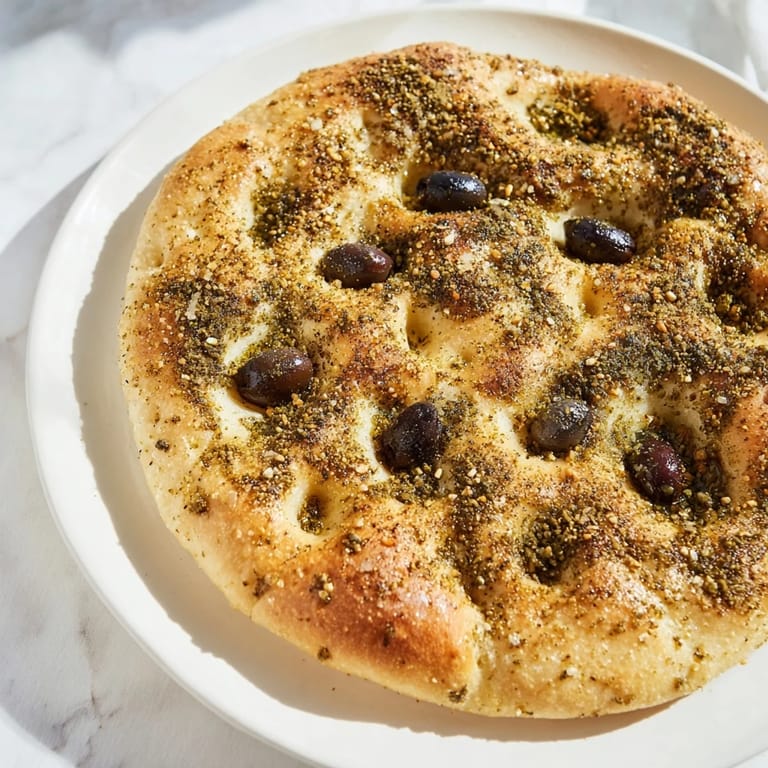
- Preheat your oven to 220°C (425°F). Using your fingertips, press deep dimples all over the dough—these aren't just pretty, they hold the toppings and oil. Don't be shy; go deep.
- Top with intention:
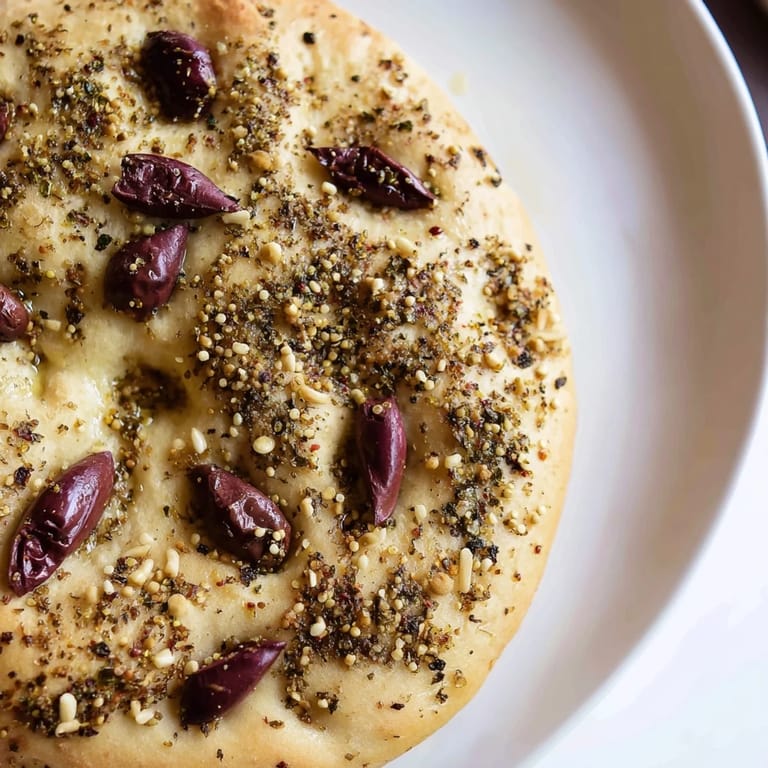
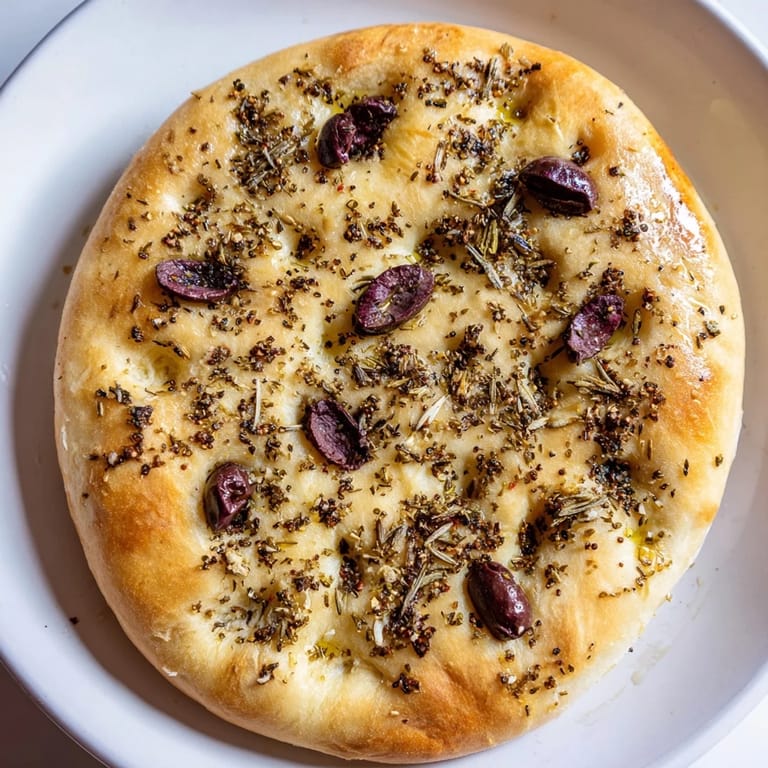
- Drizzle the 2 tbsp of olive oil evenly over the dimpled surface. Scatter the zaatar spice blend in an even layer, then distribute the halved Kalamata olives so every bite gets them, and finish with flaky sea salt.
- Bake until golden:
- Bake for 20–25 minutes until the edges are crisp and the top is golden brown. The smell at this point is almost unbearable in the best way.
- Rest and serve:
- Cool for a few minutes, slice into pieces, and serve warm or at room temperature. It's good hot, it's good cold, it's good tomorrow.
 Save to Pinterest
 I learned the real lesson about this bread when I brought a loaf to a friend's dinner party and watched everyone reach for third and fourth pieces without even realizing they were doing it. That's when I understood that focaccia is the kind of bread that people don't just eat—they experience. It became the centerpiece of the meal without trying.
Zaatar: The Secret Spice Blend
Zaatar is traditionally used across the Levantine region, and each family has their own ratio of dried thyme, sumac, and sesame seeds. Sumac gives it that beautiful brick-red color and a tangy, almost lemony brightness that wakes up your palate. When you scatter it over warm oil, it blooms and releases aromatic compounds that smell like you've opened a spice bazaar in your kitchen.
Kalamata Olives and the Art of the Salty Bite
Kalamata olives have this meaty texture and deep, briny flavor that doesn't get lost under the bread and oil. I learned to halve them instead of leaving them whole because they distribute better and every slice gets a taste of that salty punch. Some people substitute green olives for a milder, slightly more buttery flavor, and that works beautifully too if you prefer something less assertive.
Serving and Storage Wisdom
This focaccia is best eaten the day it's made, when it's still warm and the dimples are still crispy on the outside while the inside stays soft. If you have leftovers—which is rare—wrap them and reheat gently in a 160°C (320°F) oven for about 5 minutes to restore some of that just-baked magic. It also pairs beautifully with hummus, labneh, or just good olive oil for dipping if you want to turn it into a mezze spread.
- Toast leftover focaccia and crumble it over salads or soups for textural contrast.
- Make it ahead through the second rise, then cover and refrigerate overnight; bake directly from cold, adding just a few extra minutes.
- If you want to experiment, sun-dried tomatoes or roasted garlic fold seamlessly into the dough before the first rise.
 Save to Pinterest
 There's something grounding about making bread from scratch, about taking five simple ingredients and ending up with something that nourishes both hunger and spirit. This focaccia carries those two worlds—Mediterranean warmth and Middle Eastern soul—on every slice.
Recipe FAQs
- → How do I achieve a fluffy texture in focaccia?
Use bread flour for better gluten development, knead until smooth and elastic, and allow the dough to rise twice to build airiness.
- → Can I substitute Kalamata olives with another type?
Yes, green olives work well for a milder, less briny flavor while maintaining a pleasant texture.
- → What is the best way to apply zaatar on focaccia?
Drizzle olive oil over the dough surface and evenly scatter zaatar so the spices infuse during baking and enhance aroma.
- → How long should the dough rise before baking?
Allow the dough to rise for about 1 hour until doubled, then punch down and let it rise again for 30 minutes after shaping.
- → Can this bread be enjoyed the next day?
Best eaten fresh but can be gently reheated in a warm oven to restore softness and flavor.
- → Are there any suggested flavor variations?
Mix in sun-dried tomatoes or roasted garlic for extra depth and aromatic complexity.