 Save to Pinterest
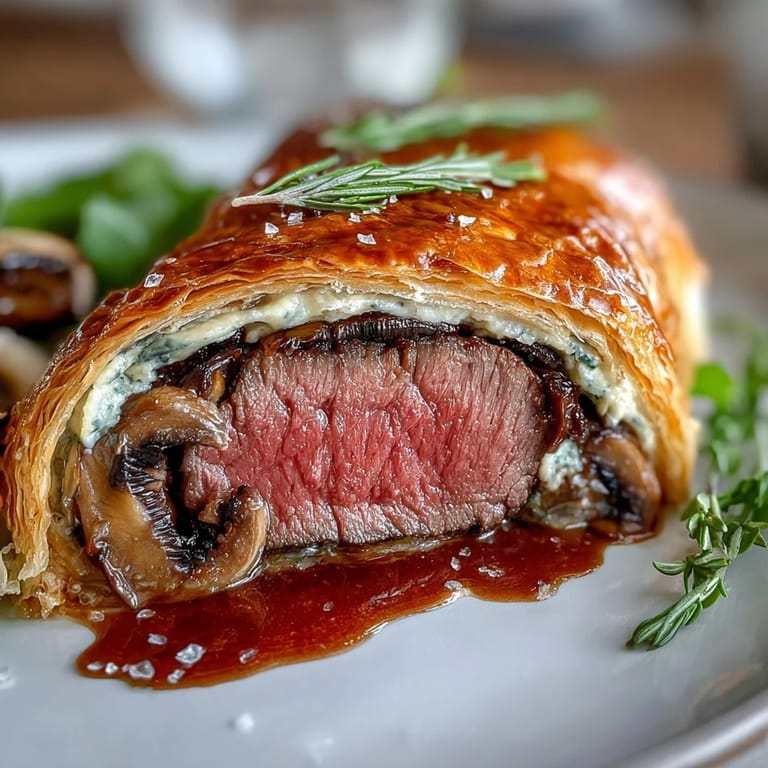
 My cousin showed up to Christmas dinner with a store-bought Wellington once, and I swore I could do better. The next year, I did. What surprised me most wasn't the technique—it was how quiet the table went when I sliced into that golden pastry and perfect pink center. Everyone leaned in, forks ready, and I realized this dish doesn't just feed people, it stops them in their tracks.
The first time I made this, I panicked when the pastry tore while I was wrapping it. I patched it with scraps, brushed on the egg wash, and prayed. It came out looking rustic and golden, and nobody noticed a thing. That's when I learned Wellington is more forgiving than its reputation suggests. It wants you to succeed, as long as you stay calm and keep the beef properly sealed.
Ingredients
- Beef tenderloin (2 lb): The star of the dish, this cut stays tender and rosy when cooked right, so buy the best you can afford and trim it well.
- Vegetable oil (2 tbsp): High smoke point means you can get a hard sear without burning, which locks in flavor.
- Cremini mushrooms (1 lb): Chop them fine and cook them down until they're almost dry, or your pastry will turn soggy.
- Shallots (2, minced): They add sweetness and depth to the duxelles without overpowering the mushrooms.
- Garlic (2 cloves, minced): Just enough to add warmth without making the filling sharp.
- Unsalted butter (2 tbsp): The fat that helps the mushrooms release their moisture and caramelize.
- Fresh thyme (2 tbsp, chopped): Earthy and aromatic, it ties the mushrooms and beef together beautifully.
- Prosciutto (10 slices): This thin layer adds salt and helps keep moisture away from the pastry.
- Dijon mustard (2 tbsp): Brushed on the beef, it adds a slight tang and helps the duxelles stick.
- Puff pastry (14 oz): Thaw it gently in the fridge, not on the counter, so it stays workable and bakes up crisp.
- Egg (1 large, beaten): The wash that turns the pastry into that shiny, golden shell everyone photographs.
Tired of Takeout? 🥡
Get 10 meals you can make faster than delivery arrives. Seriously.
One email. No spam. Unsubscribe anytime.
Instructions
- Preheat and Prep:
- Set your oven to 425°F (220°C) so it's screaming hot when the Wellington goes in. This high heat is what makes the pastry puff and crisp up fast.
- Sear the Beef:
- Season the tenderloin all over with salt and pepper, then heat oil in a heavy skillet until it shimmers. Sear the beef on all sides, about 2 minutes per side, until you get a deep brown crust, then set it aside to cool completely.
- Make the Duxelles:
- In the same skillet, melt butter over medium heat and sauté the shallots and garlic for a minute until fragrant. Add the finely chopped mushrooms and thyme, season with salt and pepper, and cook for about 10 minutes, stirring often, until the mixture is thick and paste-like with no liquid left.
- Lay Out the Prosciutto:
- Spread a large sheet of plastic wrap on your counter and arrange the prosciutto slices in a slightly overlapping rectangle, just bigger than your beef. This layer will wrap around everything and keep the pastry crisp.
- Spread the Duxelles:
- Spread the cooled mushroom mixture evenly over the prosciutto, leaving a small border around the edges.
- Coat and Wrap the Beef:
- Brush the cooled beef all over with Dijon mustard, then lay it along one edge of the duxelles-covered prosciutto. Use the plastic wrap to roll the prosciutto and mushrooms tightly around the beef, twist the ends to seal, and chill for 20 minutes.
- Roll Out the Pastry:
- On a lightly floured surface, roll out the puff pastry into a rectangle large enough to wrap around the beef log with a little overlap. Keep it even so it bakes uniformly.
- Wrap and Seal:
- Unwrap the beef from the plastic and place it in the center of the pastry. Fold the pastry over the beef, trim any excess, and press the edges to seal, then place it seam-side down on a parchment-lined baking sheet.
- Egg Wash and Decorate:
- Brush the entire surface with beaten egg, and if you're feeling fancy, cut shapes from pastry scraps and stick them on top. Chill for 10 minutes to firm up the pastry.
- Bake:
- Slide the Wellington into the oven and bake for 40 to 45 minutes, until the pastry is deeply golden and an instant-read thermometer inserted into the center reads 120°F for rare or 130°F for medium-rare.
- Rest and Slice:
- Let the Wellington rest on the counter for 10 to 15 minutes before slicing. This lets the juices settle so they don't run out when you cut into it.
 Save to Pinterest
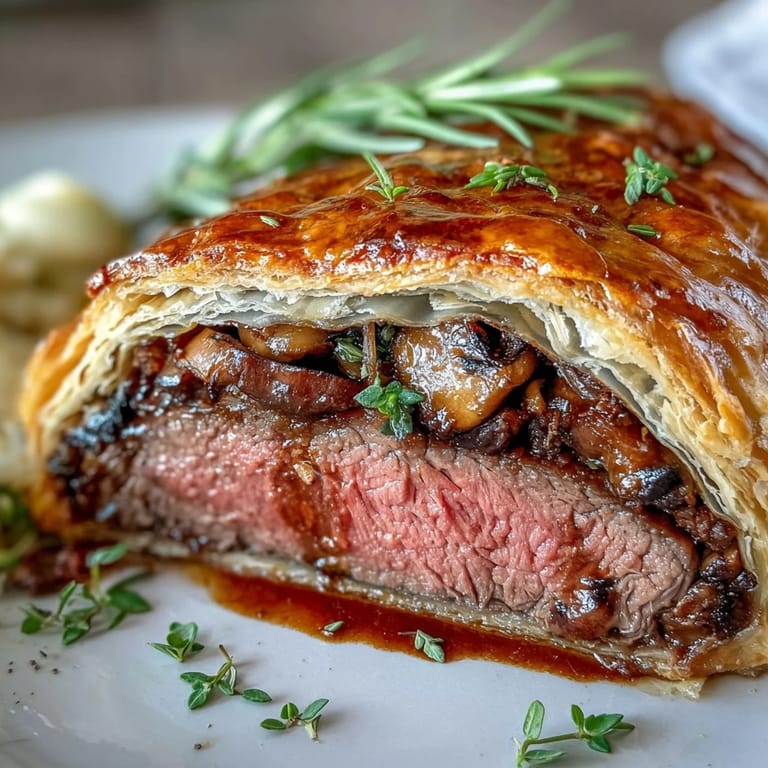
 I served this at a dinner party where half the guests were vegetarians, and they still sat there mesmerized watching me slice it. One of them said it looked like a painting, and honestly, that's how it feels every time. Even if you're not eating it, there's something magical about watching that cross-section reveal itself, the layers stacked just so, the beef blushing in the center.
Choosing Your Beef
Ask your butcher for center-cut tenderloin, the most even piece they have, because uniform thickness means even cooking. If one end is thinner, tuck it under and tie it with kitchen twine before searing. I once used a tapered piece and the thin end overcooked while the thick part stayed rare, so now I'm picky about shape. A little extra money on a good cut pays off when you slice into perfect pink all the way through.
Getting the Duxelles Right
Mushrooms hold a shocking amount of water, and if you don't cook it all out, your pastry will steam instead of crisp. I learned this the hard way when my first Wellington had a soggy bottom that tore when I tried to serve it. Now I cook the mushrooms until they look almost dry and stick to the pan a little, which takes longer than you think but makes all the difference. If you're impatient, spread the cooked duxelles on a plate to cool faster and let any remaining moisture evaporate.
Serving and Pairing
This dish begs for a rich red wine sauce or a simple pan jus made from the beef drippings. I like to serve it with roasted asparagus or garlic mashed potatoes, something that won't compete but will soak up any extra sauce. A bold red wine, like a Cabernet or Bordeaux, feels right alongside it. The richness of the beef and buttery pastry needs something with structure to cut through, and a good wine does that without trying too hard.
- Slice the Wellington with a sharp serrated knife to avoid crushing the pastry.
- Serve it on a warm platter so the slices don't cool down too fast.
- Leftover slices can be reheated gently in a low oven, though they're just as good cold the next day.
 Save to Pinterest
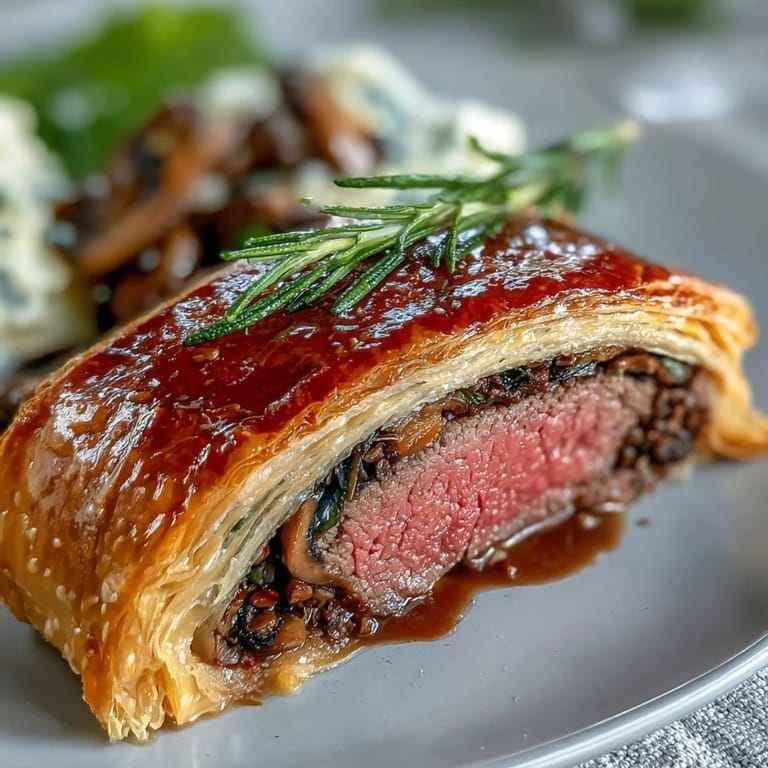
 Every time I make this, I remember that quiet moment at the table when I first sliced into it and realized I'd pulled it off. It's not just about the food, it's about the feeling of making something beautiful and watching people enjoy it without saying a word.
Recipe FAQs
- → Can I prepare Beef Wellington ahead of time?
Yes, you can assemble the Wellington up to 24 hours in advance. Wrap it tightly in plastic wrap and refrigerate. Add 5-10 minutes to the baking time if cooking straight from the refrigerator.
- → Why is my puff pastry soggy?
Soggy pastry usually results from excess moisture in the mushroom duxelles. Cook the mushrooms until completely dry and paste-like, and ensure the beef is completely cooled before wrapping to prevent steam from forming.
- → What cut of beef works best?
Beef tenderloin (filet mignon) is ideal due to its tenderness and uniform shape. Choose a center-cut piece with even thickness for consistent cooking. Avoid cuts with excessive fat or irregular shapes.
- → How do I know when it's cooked perfectly?
Use an instant-read thermometer inserted into the center of the beef. For medium-rare, aim for 130°F (54°C). The temperature will rise 5-10 degrees during resting, so remove it slightly before your target temperature.
- → Can I use a different type of mushroom?
Absolutely. While cremini or button mushrooms are traditional, you can use shiitake, portobello, or a mix of wild mushrooms for more complex, earthy flavors. Just ensure they're finely chopped and cooked until dry.
- → What should I serve alongside Beef Wellington?
Classic accompaniments include roasted vegetables, creamy mashed potatoes, green beans with almonds, or a fresh arugula salad. A rich red wine sauce or beef jus complements the dish beautifully.