 Save to Pinterest
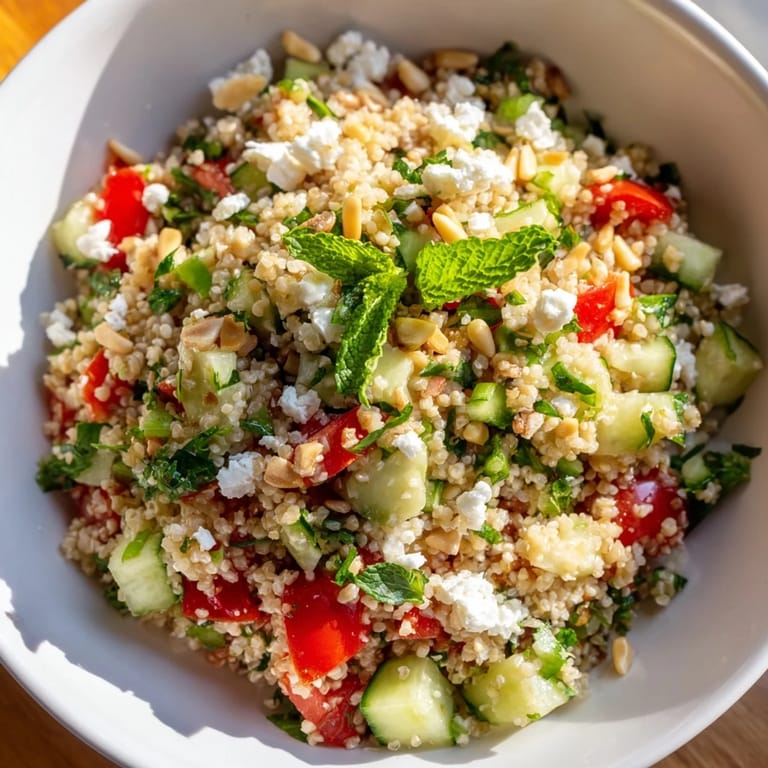
 There's something magical about the first warm day of spring when you realize you're tired of heavy foods and your body practically demands something bright and alive. That's when tabbouleh enters the picture, and honestly, I stumbled into making it properly by accident—oversalting the bulgur one afternoon and then being saved by the herb-forward approach that forgives those small mistakes. Now it's my go-to when I want something that tastes like the Mediterranean without leaving me in a food coma, and that lemony, herby freshness has a way of making even the simplest lunch feel like a celebration.
I made this for a potluck where everyone else brought heavy casseroles, and watching people come back for thirds of a salad was surprisingly satisfying. My friend Sarah, who's usually skeptical of anything green, kept asking what made it taste so different from regular salad—it was the warm bulgur soaking up all that lemon and garlic before the cool vegetables came in, creating this perfect balance of temperatures and textures.
Ingredients
- Fine bulgur wheat: This is the star, and using fine bulgur (not medium or coarse) matters because it hydrates quickly and has a tender bite. Don't skip the toasting step in your mind—it brings out a subtle nuttiness that lifts the whole dish.
- Boiling water: Exactly boiling, not just hot—it matters for even absorption and cooking time.
- Sea salt: Use it generously here because the bulgur will absorb it and distribute it throughout.
- Ripe tomatoes, diced: Pick tomatoes at peak ripeness; this isn't the place for pale supermarket versions. The juice becomes part of the dressing.
- English cucumber, diced: The thin skin means no peeling, and it stays crisp longer than regular cucumber varieties.
- Fresh flat-leaf parsley, finely chopped: This is your backbone, not a garnish—use at least a full bunch, and chop it just before mixing so it stays vibrant and doesn't oxidize.
- Fresh mint leaves, finely chopped: Mint adds coolness and a subtle sweetness that balances the lemon's sharpness.
- Scallions, thinly sliced: Don't skip these; they add a gentle onion bite that keeps the bowl from feeling one-dimensional.
- Extra virgin olive oil: Quality matters here since it's not being cooked—use something you'd actually drizzle on bread.
- Freshly squeezed lemon juice: Bottled juice will make this taste like a bottle; fresh lemon is non-negotiable.
- Garlic clove, minced: One clove is enough if it's fresh; older garlic gets bitter in dressings.
- Ground black pepper: Freshly cracked is better than pre-ground, which has lost its heat.
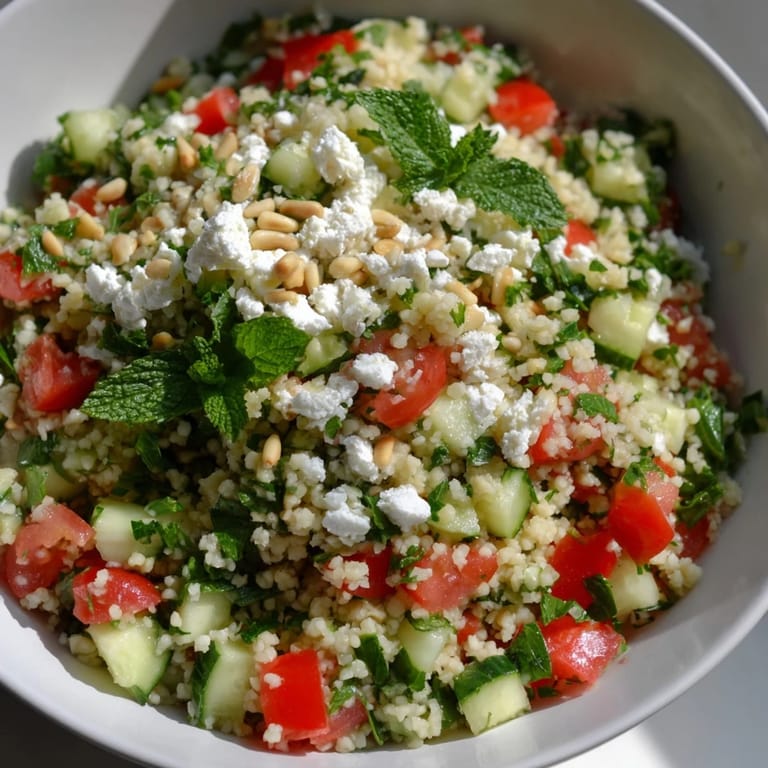
- Feta cheese, crumbled: Optional, but it adds a salty, tangy contrast that makes people who don't normally like salad suddenly interested.
- Toasted pine nuts: Toast them yourself if you can—the warmth brings out their buttery sweetness and makes them taste like a luxury addition instead of an afterthought.
Tired of Takeout? 🥡
Get 10 meals you can make faster than delivery arrives. Seriously.
One email. No spam. Unsubscribe anytime.
Instructions
- Prepare the bulgur base:
- Put your bulgur and salt in a large bowl and pour boiling water over it—you'll hear it sizzle slightly, which is exactly right. Cover it (even a plate works) and walk away for 10 minutes; the grains will plump up and become tender as they absorb all that water. When you fluff it with a fork, it should look light and separate, not mushy, and letting it cool to room temperature is important because warm bulgur will wilt your herbs.
- Whisk the dressing:
- In a small bowl, combine your olive oil, fresh lemon juice, minced garlic, and pepper, whisking until it emulsifies slightly. Taste it straight from the whisk—it should make your mouth pucker pleasantly with lemon and feel silky from the oil.
- Combine everything:
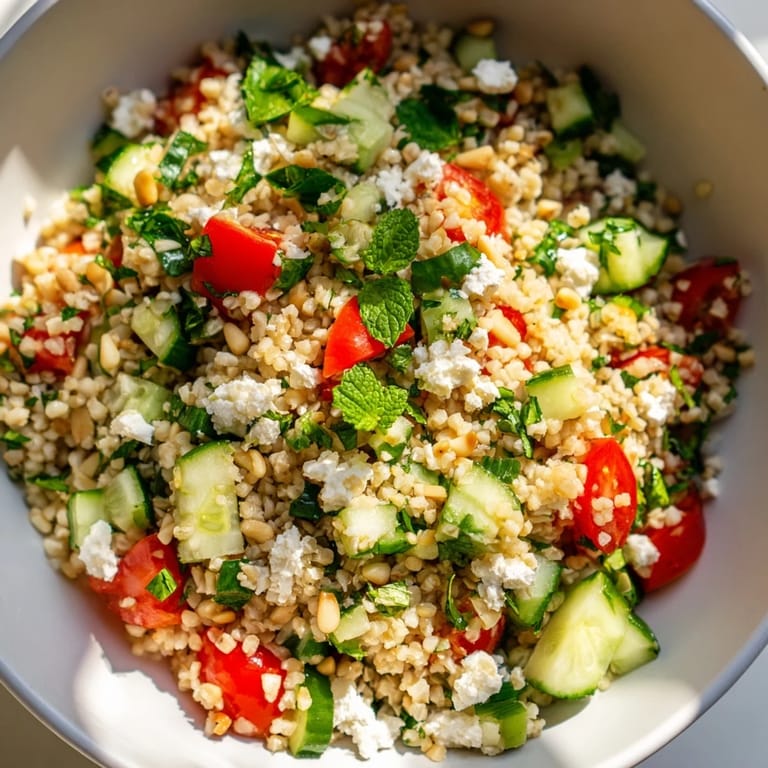
- Add the tomatoes, cucumber, parsley, mint, and scallions to your cooled bulgur, and toss gently but thoroughly so everything gets acquainted. Pour the dressing over top and mix again until every grain is coated and glistening.
- Taste and adjust:
- This is where your palate becomes the recipe—if it needs more salt or lemon, add it now because once it sits, the flavors will intensify. A 10-minute chill lets everything meld beautifully, though you can eat it immediately if you're hungry.
- Serve with toppings:
- Scatter feta and pine nuts over the top, add a lemon wedge, and watch people's faces light up when they taste how fresh and vibrant it is.
 Save to Pinterest
 There was a moment at a friend's backyard dinner when someone took a bite and immediately asked for the recipe, then kept coming back to refill their bowl while completely ignoring the grilled meat next to it. That's when I realized this salad had crossed over from healthy option to something people genuinely craved, not because they felt obligated to eat vegetables, but because it tasted alive.
Why This Becomes Your Summer Staple
Once you understand how this works, you'll find yourself making it constantly because it's one of those rare dishes that's healthy without feeling virtuous, filling without being heavy, and fancy enough to serve at dinner parties while still being casual enough for Tuesday lunch. The formula is simple—soft grain, bright herbs, crisp vegetables, sharp dressing—but the magic is in respecting each element and not rushing the process. I've made it in dozens of variations now, and the core version always wins.
Beyond the Basic Bowl
Start with this version exactly as written once, then you'll understand how to play with it. I've added chickpeas for protein without making it heavy, swapped in farro when I didn't have bulgur, added roasted beets for earthiness and color, and once even stirred in some grilled shrimp when I wanted to make it more of a main course. The point is that once you understand the balance—about a third grain, a third fresh vegetables and herbs, a third dressing—you can adapt freely.
Storage and Make-Ahead Wisdom
This keeps perfectly in the fridge for about two days, though the herbs will gradually lose their vibrancy and the bulgur will absorb more liquid, making it slightly softer and more salad-like. If you're meal prepping, keep the components separate and assemble it the morning you plan to eat it, or at least dress it no more than a few hours ahead. Some people like to set aside a portion of undressed bulgur and vegetables and dress it fresh just before serving, which honestly isn't a bad move if you're feeding different people with different tastes.
- Store in an airtight container and it'll keep for up to two days, though the texture and color degrade slightly after the first day.
- This travels better than most salads because the bulgur is sturdy and won't wilt, making it perfect for picnics or packing for lunch.
- If it seems dry after sitting, add another squeeze of fresh lemon juice and a drizzle of olive oil to refresh it.
 Save to Pinterest
 This bowl has become my answer to the question of what to bring to a potluck or what to make when I want to feel nourished but light. It's proof that simple ingredients treated with respect and combined with intention create something that tastes both comforting and exciting.
Recipe FAQs
- → What can I substitute for bulgur if gluten-free?
Quinoa is an excellent gluten-free substitute that maintains the grain bowl's texture and protein content.
- → How should I store the grain bowl to keep it fresh?
Store in an airtight container in the refrigerator for up to two days to maintain freshness and flavor.
- → Can I add protein to this dish?
Yes, adding chickpeas or grilled chicken enhances protein while complementing the fresh herbs and grains.
- → How is the dressing prepared?
The dressing combines extra virgin olive oil, freshly squeezed lemon juice, minced garlic, and ground black pepper whisked together for a bright, zesty finish.
- → Are there any common allergens in this dish?
This dish contains wheat from bulgur and may include dairy and tree nuts if feta cheese and pine nuts are added. Alternatives can be used to accommodate allergies.