 Save to Pinterest
 The first time I made spicy tuna crispy rice at home, the air was thick with anticipation and a faint hint of toasted sesame from the kitchen. Normally, I'd shy away from anything requiring delicate frying, but the thought of that crisp bite with spicy, creamy tuna was far too tempting to resist. The process demanded patience, especially waiting for the rice to chill, but hearing the satisfying sizzle as each rice square fried made it all worthwhile. It almost felt like cheating the sushi bar experience, yet there I was, plate piled high, grinning at each effort.
One rainy Saturday, I made these for friends during a casual movie night—we ended up gathered around the kitchen island, stealing sticky, golden rice squares as soon as they hit the plate. Our laughter mixed with the rhythmic chopping of green onions and the gentle hum of the vent, marking a surprisingly lively night fueled by this simple dish.
Ingredients
- Sushi Rice: Using true sushi rice is key for that perfect chew; rinse it well to prevent gumminess.
- Rice Vinegar: Balances out the richness and lends a subtle tang—warm gently for easier mixing.
- Sugar: Sweeter rice helps the spicy tuna pop; dissolve it thoroughly in the vinegar before adding.
- Salt: Just a touch enhances everything without overpowering delicate flavors.
- Sushi-grade Tuna: Freshness is everything here, so buy from a trusted fishmonger and keep it well-chilled until ready.
- Mayonnaise (preferably Japanese Kewpie): Adds creaminess and that umami depth—don’t swap with regular if you can help it.
- Sriracha or chili sauce: This gives the kick; taste and adjust for your preferred spice level.
- Soy Sauce: A splash brings salty, savory notes—low sodium versions keep flavors balanced.
- Sesame Oil: A single teaspoon adds intense aroma, so use sparingly and choose toasted.
- Green Onion: Sliced thin for crunch and freshness—save some for extra garnish.
- Toasted Sesame Seeds: A light sprinkle adds crunch and nuttiness to every bite.
- Vegetable Oil: Neutral oil with a high smoke point ensures the rice crisps instead of burns.
- Avocado: Creamy, cooling slices give the perfect foil to the punchy tuna.
- Microgreens or Nori strips (optional): Use them for extra color and a delicate oceanic finish.
Tired of Takeout? 🥡
Get 10 meals you can make faster than delivery arrives. Seriously.
One email. No spam. Unsubscribe anytime.
Instructions
- Cook the Rice:
- Rinse your sushi rice in cold water until it runs clear, bringing out a soft clicking sound in the bowl. Add the rice and fresh water to a pot, cover, and let it simmer low for 15 minutes before resting off heat for 10 more—patience is rewarded here.
- Season and Chill:
- Mix the rice vinegar, sugar, and salt until dissolved, then gently fold this into the warm rice as steam escapes. Use damp hands to press the rice into a parchment-lined baking sheet, shaping a 1/2-inch thick rectangle, and cool in the fridge for at least 30 minutes.
- Prepare Spicy Tuna:
- In a small bowl, combine your finely diced tuna, Kewpie mayo, sriracha, soy sauce, sesame oil, green onion, and sesame seeds—give it a gentle mix so the fish stays tender. Cover and chill until needed; the flavors get cozy as it rests.
- Slice the Rice:
- Once cold and firm, cut the rice slab into 16 even rectangles or squares—a sharp knife dipped in water keeps things tidy.
- Crisp the Rice:
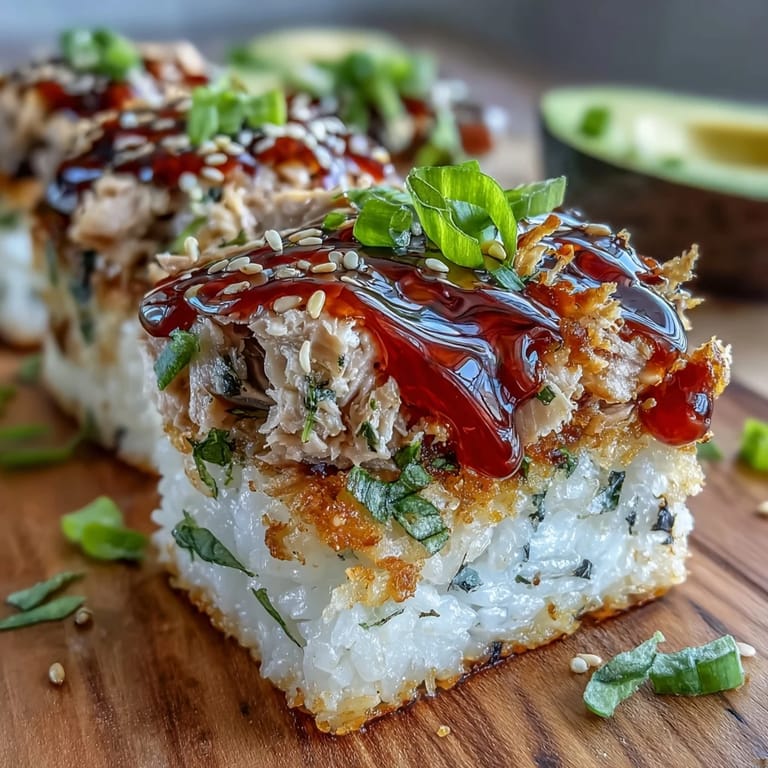
- Heat vegetable oil in a non-stick skillet; slide in the rice pieces and listen for their bubbly sizzle. Fry 2–3 minutes per side until deeply golden, draining each one on paper towels before moving on.
- Top and Garnish:
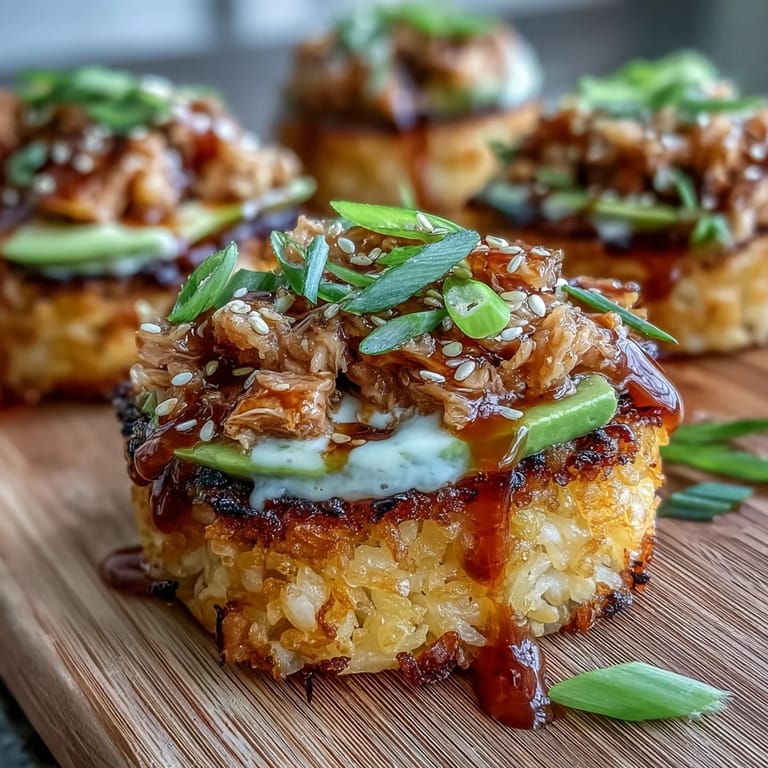
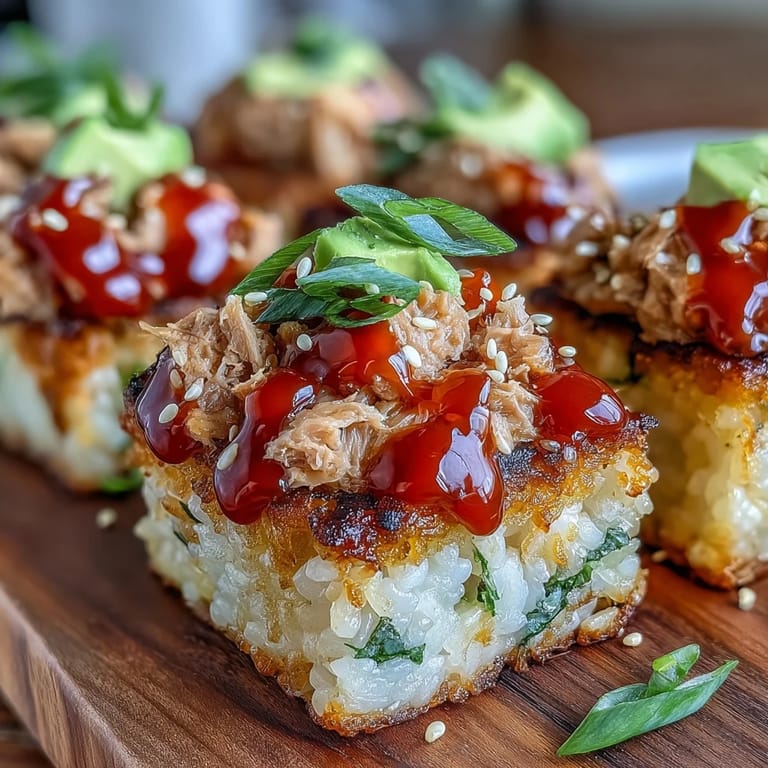
- Add a spoonful of spicy tuna to every crispy rice square, topping each with avocado, more green onion, and, if you like, a tuft of microgreens or a strip of nori. Serve immediately for the best contrast of texture and warmth.
 Save to Pinterest
 When my partner declared these ‘better than our favorite sushi spot’ over dinner, I realized sometimes, a little home effort turns expectations on their head. From then on, these crispy-topped bites signaled a night for sharing and a bit of culinary mischief.
Finding the Right Tuna
I learned that asking for sushi-grade tuna at the counter opens up friendly advice and fresher cuts. If you let the tuna get too warm while preparing, the texture takes a dive, so set out everything else before dicing.
Secrets for Crispy Rice
Let the rice slices fry undisturbed at first, even if you’re tempted to peek—turning too soon can wreck the crust. An even, medium-high heat means an audible crunch and zero burn marks.
When to Garnish and Serve
I used to assemble these too far in advance, but learned topping just before serving keeps everything lively and fresh.
- Use a small offset spatula or spoon for neater toppings.
- Prep garnishes while rice fries to avoid scrambling at the end.
- Serve fast so the rice stays crisp!
 Save to Pinterest
 Whether for a crowd or just a sushi craving at home, these spicy, crunchy bites are pure fun—enjoy every crispy, spicy, creamy mouthful!
Recipe FAQs
- → How do I keep the rice squares from falling apart?
Press the hot sushi rice into a compact, even slab and chill it until firm before cutting. Use short-grain sushi rice and a light touch when handling pieces. Pat fried squares on paper towel to remove excess oil so toppings don’t slide off.
- → What temperature and oil are best for pan-frying the rice?
Use a neutral oil with a high smoke point (vegetable or canola). Heat the pan over medium-high so the oil shimmers; the rice should sizzle on contact and take about 2–3 minutes per side to reach a deep golden crust without burning.
- → Is sushi-grade tuna required or are there safe alternatives?
Sushi-grade tuna is recommended for raw preparations to ensure freshness and safety. If you prefer not to use raw fish, substitute flaked cooked salmon or seared tuna for a similar flavor profile, and adjust seasoning to taste.
- → Can I make components ahead of time?
Yes. Cook and season the rice, press and chill it overnight. Prepare the tuna mixture up to a day ahead and keep it chilled. Fry the rice and assemble just before serving to preserve crispness and contrast.
- → How can I adjust the heat level?
Modify the sriracha amount or substitute a milder chili sauce. Stir in a touch of wasabi or extra chili for more kick. Taste and balance with mayo and soy to keep the topping creamy and flavorful.
- → Any allergen-friendly substitutions?
To avoid eggs, use an egg-free mayonnaise alternative; swap soy sauce for tamari if needed. For a pescatarian-friendly cooked option, use flaked cooked salmon. Always check labels for hidden allergens.