 Save to Pinterest
 My kitchen smelled like caramelized garlic for three days after I first made this soup, and honestly, I didn't mind one bit. A friend had mentioned that roasting garlic transforms it into something almost sweet and mellow, nothing like the sharp bite of raw cloves, and I was skeptical until that first spoonful hit my tongue. The velvety texture caught me off guard too—I'd expected something thin and watery, but instead I got this luxurious, almost cream-like warmth that made me forget it was just vegetables and broth. Now it's my go-to when someone needs comfort in a bowl, or when I'm feeling under the weather and want something that tastes like medicine but feels like a hug.
I made this for my dad during a particularly dreary November when he'd been under the weather, and watching him have a second bowl told me everything I needed to know. He said it tasted like someone had bottled up all the good parts of autumn and winter and poured them into his spoon, which was the nicest thing he'd said about any of my cooking in years. That bowl became a quiet ritual between us—whenever either of us felt tired or rundown, we'd text just the word 'soup,' and the other would know exactly what was needed.
Ingredients
- Garlic heads (3 large): This is where the magic happens—roasting transforms raw garlic's sharpness into something sweet and almost nutty, so don't skip the roasting step or use pre-minced garlic.
- Yellow onion (1 medium): The foundation that adds subtle sweetness and body without stealing the show from the garlic.
- Celery stalk and carrot (1 of each): These aromatics build depth and help create that velvety texture when blended, plus they're the holy trinity base that never steers you wrong.
- Unsalted butter (2 tablespoons): Use real butter here—it adds richness that vegetable oil simply can't match, and the flavor difference is worth every bit of effort.
- Heavy cream (1/2 cup): This is the final silky touch, but don't add it until after blending or you'll struggle to get a smooth consistency.
- Vegetable broth (4 cups): Quality matters more than you'd think—a flavorful broth makes the whole soup sing instead of taste watered down.
- Thyme, black pepper, salt: The thyme adds an earthy note that complements roasted garlic beautifully, while seasoning at the end lets you taste and adjust rather than guessing.
Tired of Takeout? 🥡
Get 10 meals you can make faster than delivery arrives. Seriously.
One email. No spam. Unsubscribe anytime.
Instructions
- Prepare and roast the garlic:
- Slice just the tops off your garlic heads to expose the cloves inside, drizzle generously with olive oil, wrap in foil, and let the oven work its magic at 400°F for 35–40 minutes. You'll know it's done when the cloves smell sweet and a fork slides through them like butter.
- Cool and extract:
- Give the garlic a few minutes to cool enough to handle, then squeeze the soft, golden cloves right out of their papery skins—they should slip out without any resistance. Set these precious roasted cloves aside somewhere safe where you won't accidentally knock them over.
- Build your flavor base:
- Melt the butter in a large pot over medium heat, then add your chopped onion, celery, and carrot, letting them soften and release their aromas for about 5–7 minutes. You want them tender but not browned, with the kitchen starting to smell like something good is happening.
- Add the roasted garlic and seasonings:
- Stir in all those roasted cloves along with the thyme, salt, and pepper, and let everything hang out together for 2 minutes so the flavors get to know each other. This short rest makes a real difference in how cohesive the final soup tastes.
- Simmer with broth:
- Pour in your vegetable broth, bring it to a gentle boil, then lower the heat and let it simmer quietly for about 10 minutes so all the flavors can meld. The soup will smell increasingly incredible as it bubbles away.
- Blend until silky:
- This is where the transformation happens—use an immersion blender to purée everything until completely smooth, or carefully transfer batches to a regular blender if that's what you have. The soup will go from chunky to velvety in what feels like magic.
- Finish with cream:
- Stir in the heavy cream and let it warm through gently for 2–3 minutes without boiling, then taste and adjust your salt and pepper because you're the boss. A pinch of cayenne at this point adds wonderful warmth if you're feeling adventurous.
- Plate and garnish:
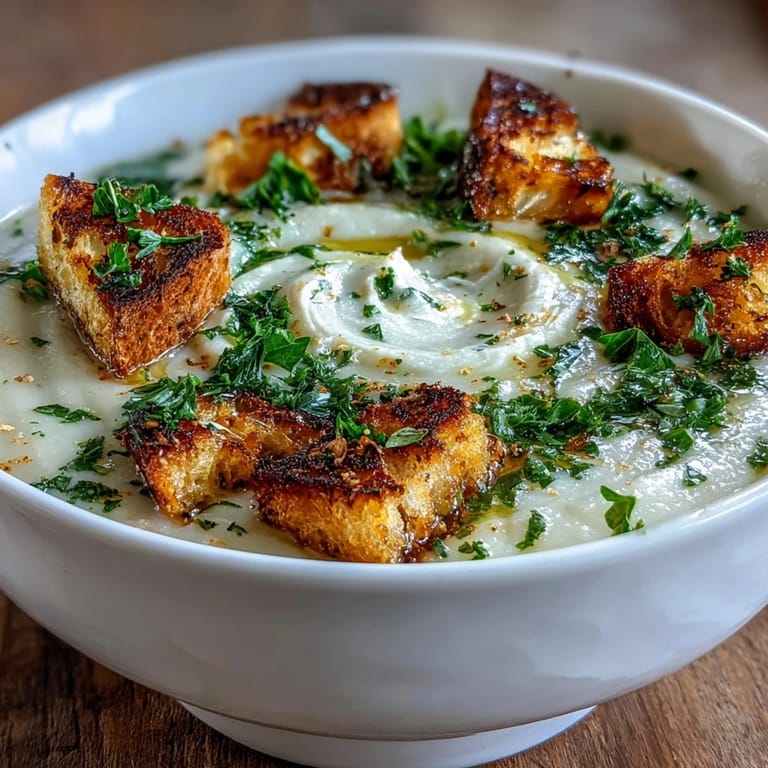
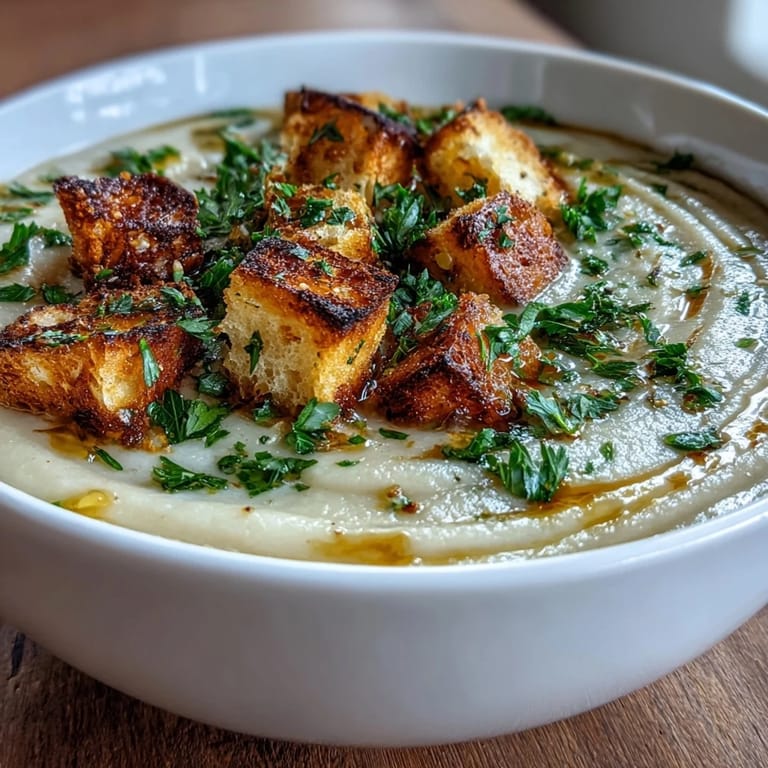
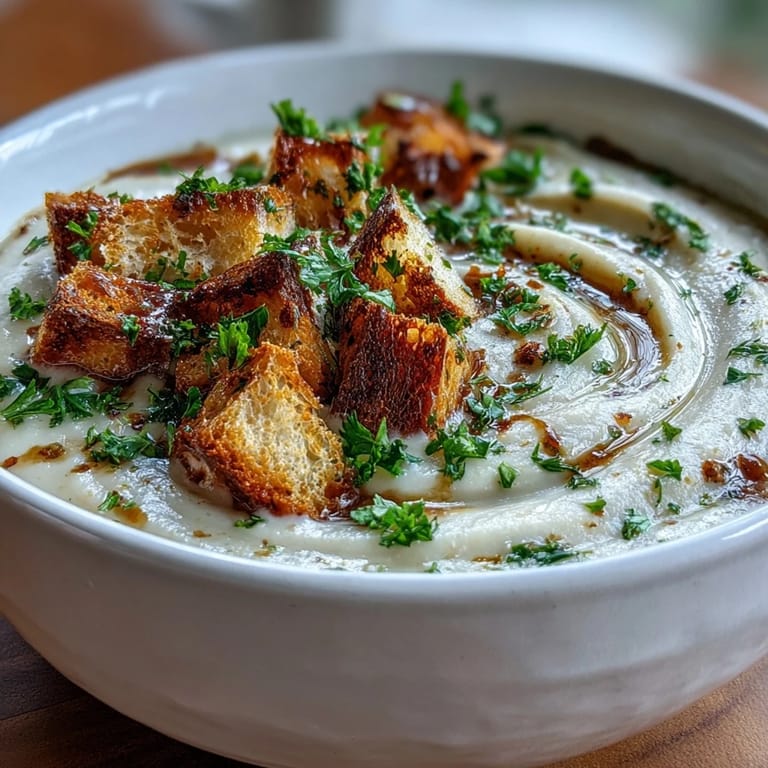
- Ladle the soup into bowls and finish with fresh parsley, croutons for crunch, or a drizzle of olive oil depending on your mood. Serve while it's still steaming and the flavors are singing.
 Save to Pinterest
 There's something almost ceremonial about how quiet people get when they're eating this soup—like they're too busy savoring to make small talk. I watched my neighbor literally close her eyes after the first spoonful, and that's when I realized this wasn't just a recipe, it was a moment in a bowl.
The Roasting Game-Changer
The entire soul of this soup lives in that roasting step, and I learned this the hard way when I once tried to make a 'quick version' by skipping it. The difference between raw garlic and roasted garlic is like the difference between a whisper and a song—roasting mellows the sulfur compounds that make garlic sharp and brings out natural sugars instead, creating something almost caramel-like in flavor. Now I always roast extra heads of garlic when I have the oven on for something else, because roasted garlic cloves are gold for spreading on bread, stirring into mashed potatoes, or just eating straight from the skin like a guilty pleasure.
Variations That Work
Once you understand how this soup works, you can play with it endlessly depending on what you have or what you're craving. I've added roasted red peppers for a subtle sweetness, stirred in white beans for protein, or finished with a splash of white wine for brightness, and every version felt like a discovery rather than a mistake. The base of roasted garlic and cream is flexible enough to handle additions, but simple enough that it never needs them.
Make It Work for Any Diet
This soup plays nicely with dietary needs because the star ingredient—roasted garlic—is naturally vegetarian, vegan-friendly, and gluten-free, so all you're swapping is the supporting players. For a vegan version, I use quality olive oil instead of butter and coconut cream instead of dairy, and honestly, the garlic is so delicious it doesn't miss the dairy at all. If you're making it for a gluten-free friend, just skip the regular croutons or use gluten-free bread for toasting, because the soup itself is already naturally free and clear.
- Vegan swap: Olive oil plus coconut cream makes it just as silky without any animal products.
- For gluten-free serving: Toast gluten-free bread cubes in olive oil with salt for croutons that won't break trust with your guest.
- Make it heartier: Stir in white beans, spinach, or roasted chickpeas if you want more substance and protein.
 Save to Pinterest
 Make this soup when someone you care about needs comfort, or when you need to remind yourself that the simplest ingredients can create something extraordinary. It's the kind of meal that gets requested again and again, not because it's complicated, but because it tastes like someone spent hours caring about the person eating it.
Recipe FAQs
- → How does roasting garlic change the flavor?
Roasting transforms sharp raw garlic into sweet, mellow cloves with caramelized notes. The slow heat breaks down compounds, creating a buttery texture and rich depth that forms the soul of this velvety preparation.
- → Can I make this ahead of time?
Absolutely. The flavors deepen after resting in the refrigerator for 1-2 days. Store in an airtight container and reheat gently, adding a splash of broth or cream if needed to restore consistency.
- → What makes this version special?
Using whole roasted heads instead of minced garlic creates exceptional depth. The slow-roasted cloves develop natural sweetness while infusing every spoonful with aromatic richness that quick-cooking methods cannot achieve.
- → Is this suitable for different dietary needs?
The base is naturally vegetarian and can be made vegan by swapping butter for olive oil and cream for coconut milk. Choose gluten-free bread for croutons to accommodate gluten sensitivities while maintaining the comforting texture.
- → What garnishes work best?
Fresh parsley adds bright contrast and color. Croutons or toasted bread provide satisfying crunch, while a final drizzle of olive oil enhances the velvety mouthfeel. A pinch of cayenne offers gentle warmth for those who enjoy subtle heat.
- → How do I achieve the smoothest texture?
An immersion blender works directly in the pot for convenience. For extra silkiness, pass the puréed mixture through a fine-mesh sieve. This step removes any remaining fibrous bits, ensuring restaurant-quality smoothness in every bowl.