 Save to Pinterest
 I discovered this recipe on a late evening, browsing through a food magazine while sipping espresso, and the audacious combination of dark figs, bittersweet chocolate, and briny black olives stopped me cold. There was something almost defiant about pairing olives with chocolate, a flavor clash that intrigued rather than repelled me. I made it that weekend on a whim, unsure if it would work, and my guests fell silent after their first bite—not in confusion, but in that particular kind of awe when something unexpected becomes unforgettable. The dessert earned its name from that night: a midnight mosaic of flavors that shouldn't work together but somehow do.
I remember bringing this to a dinner party where I knew exactly one person, and watching skeptical faces turn curious as plates circled the table. Someone asked if the olives were a mistake, and I almost lied before admitting they were entirely intentional. By the end of the evening, three people asked for the recipe, and I felt oddly proud of something that had started as pure experimentation in my kitchen.
Ingredients
- Dark chocolate (70% cocoa), chopped: The 200 grams of 70% cocoa is non-negotiable—it's bitter enough to stand up to the olives without being harsh, and it melts like silk when paired with butter.
- Unsalted butter, cubed: 60 grams keeps the texture glossy and prevents the chocolate from cracking as it sets; cold cubes melt more evenly than one large piece.
- Honey: Just 1 tablespoon rounds out the bitter notes and adds a subtle golden warmth that balances the briny elements.
- Sea salt, pinch: This tiny amount amplifies every other flavor, especially that olive brine—it's the secret that makes people wonder what they're tasting.
- Dried figs, finely sliced: Use 120 grams and remove the stems first; their natural sweetness and chewy texture create pockets of softness against the dense chocolate.
- Pitted black olives, thinly sliced: 80 grams of oil-cured olives are worth seeking out because they're saltier and more flavorful than canned, lending real depth to each bite.
- Roasted hazelnuts, chopped: 50 grams add a gentle crunch and earthiness that bridges the gap between sweet and savory.
- Cocoa nibs: The 30 grams intensify the chocolate notes and provide textural contrast without adding sugar.
- Flaky sea salt and edible garnish: Optional but transformative—they're the jewelry that catches light and promises something special on the plate.
Tired of Takeout? 🥡
Get 10 meals you can make faster than delivery arrives. Seriously.
One email. No spam. Unsubscribe anytime.
Instructions
- Prepare your vessel:
- Line your 20x20 cm square tin with parchment paper, letting the edges overhang the sides generously so you can lift the finished slab straight out without struggling. This single step saves frustration later.
- Melt the chocolate base:
- Set a heatproof bowl over barely simmering water—the water should barely whisper, not boil, or your chocolate will seize and become grainy. Watch the chocolate and butter soften together, stirring gently until completely smooth, then stir in the honey and salt off the heat so the salt crystals dissolve into the warm chocolate.
- Spread the foundation:
- Pour the melted mixture into your tin and use a spatula to create an even layer across the bottom. Don't overthink this; imperfections disappear beneath the mosaic.
- Build your mosaic:
- Scatter the figs, olives, hazelnuts, and cocoa nibs across the chocolate surface in roughly even distribution, then gently press each piece into the chocolate so nothing sits loose. The figs will soften slightly from the chocolate's warmth, helping them settle in seamlessly.
- Crown with garnish:
- Sprinkle flaky sea salt and your choice of edible gold leaf or dried rose petals across the top, creating visual interest and a hint of luxury.
- Let time do the work:
- Refrigerate for at least 2 hours until the chocolate is completely set and no longer yields to pressure when you press the surface. Patience here determines whether your slices look neat or crumbly.
- Slice and serve:
- Use the parchment handles to lift the entire slab onto a cutting board, then cut into small squares with a sharp knife dipped in hot water and wiped dry between each cut. Serve chilled or at room temperature—cold brings out the chocolate's depth, while room temperature lets the fig and olive flavors bloom.
 Save to Pinterest
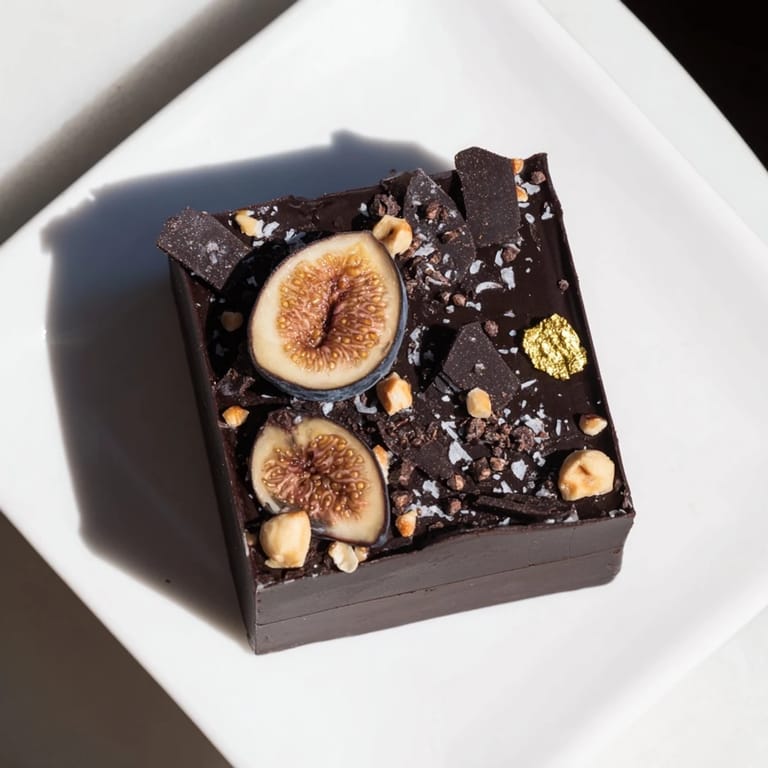
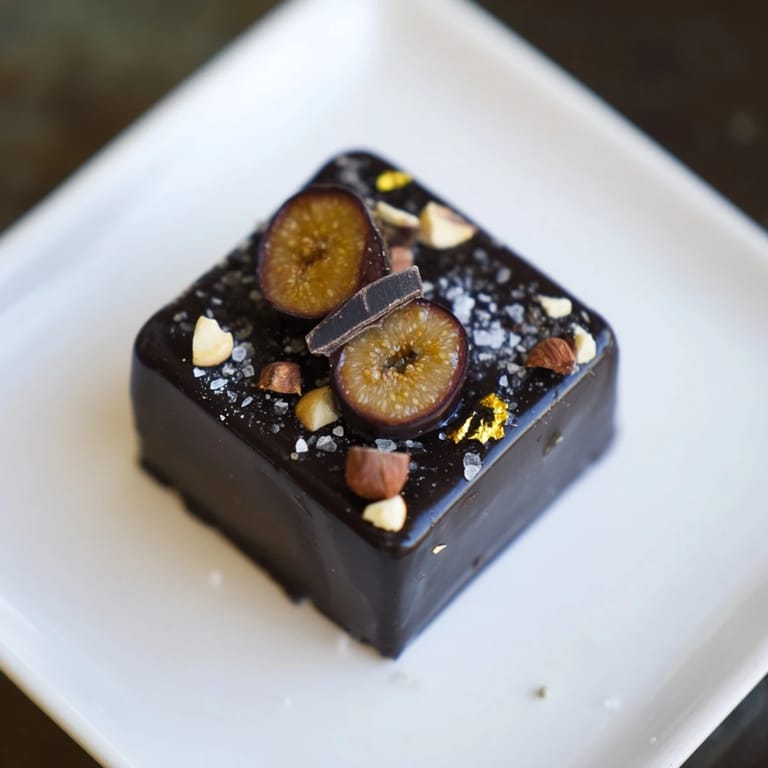
 There's a moment when you lift that first square onto a plate and see how perfectly the olives, figs, and nuts have settled into the chocolate, creating an almost jeweled surface, that you understand why this dessert demands to exist. It's not just food; it's a small piece of edible art that tastes like a conversation between sweet, savory, and bitter that finally found common ground.
The Mathematics of Flavor Balance
This recipe works because it honors the principle of contrast without chaos—each ingredient serves a specific purpose in a carefully constructed flavor hierarchy. The chocolate is the foundation and anchor, the figs and honey bring sweetness and texture, the olives contribute brine and funk, and the salt ties everything together by amplifying every other element. When something this unexpected becomes delicious, it's rarely by accident; it's because the proportions and ratios have been tested until they sing.
Variations That Tell Their Own Stories
I've made this recipe dozens of ways since that first night, swapping almonds for hazelnuts when a dinner guest mentioned a hazelnut allergy, replacing some figs with dried apricots for a brighter note, even trying pistachios once when I was feeling particularly indulgent. Each variation shifts the personality of the dessert while keeping its essential character intact. The beauty of a mosaic is that no two pieces are exactly alike, so there's room for your own kitchen preferences and seasonal discoveries without losing what makes it special.
Serving Moments That Matter
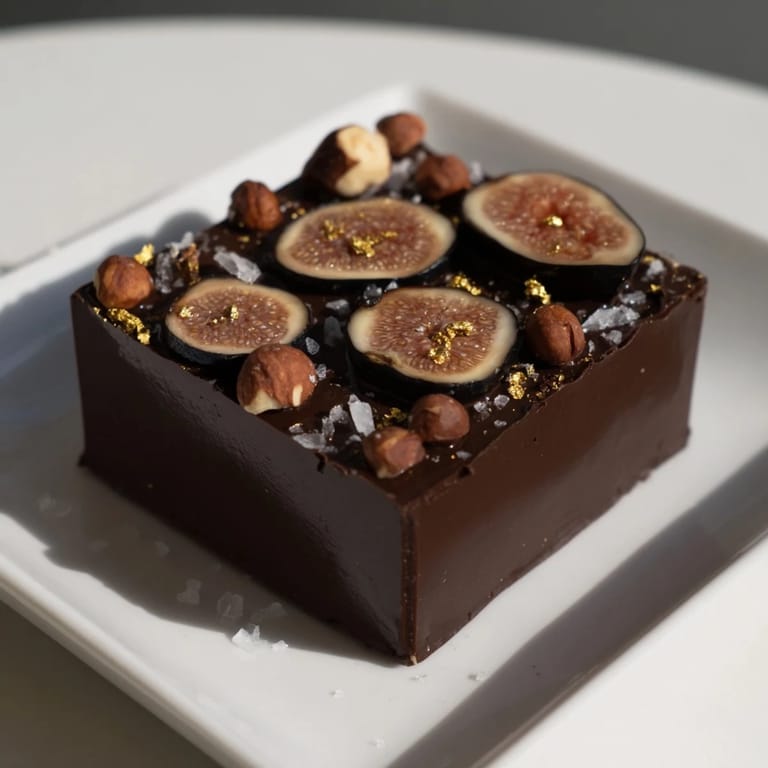
This dessert commands attention, so serve it in a way that acknowledges its presence—on a simple white plate where the colors can speak for themselves, or on a dark slate to make the gold leaf shimmer. It pairs with vintage port or dark-roast espresso, but I've also served it with a chilled glass of dessert wine and watched how the flavors deepened in conversation with each other. The small squares demand to be eaten slowly, savored, discussed—this is not a dessert to rush through.
- Slice pieces slightly larger than a typical brownie square so each bite contains multiple flavor elements.
- Keep your knife sharp and warm for clean cuts that make the mosaic look intentional rather than fractured.
- Store in an airtight container in the refrigerator for up to 5 days, and the flavors will actually deepen and become more integrated with time.
 Save to Pinterest
 This dessert taught me that the most memorable flavors are often the ones that shouldn't work but do, and that food's greatest gift is its ability to surprise us into wonder. Make it, serve it, watch people taste something they didn't know they needed.
Recipe FAQs
- → What gives the dessert its dense texture?
The smooth melted dark chocolate combined with butter and honey creates a firm yet rich base that sets densely after chilling.
- → How do the figs and olives contribute to the flavor?
Dried figs add natural sweetness and chewiness, while oil-cured black olives bring a briny, slightly savory contrast, enhancing complexity.
- → Can I substitute the hazelnuts with other nuts?
Yes, almonds or pistachios work well as alternatives, providing a different but complementary crunch and flavor.
- → What is the recommended chilling time for best results?
Chilling for at least two hours helps the chocolate set firmly and allows flavors to meld, resulting in a perfect sliceable slab.
- → How to make a vegan-friendly version?
Use plant-based butter and replace honey with maple syrup to keep similar texture and sweetness without animal products.
- → What tools are essential for preparing this dish?
A square baking tin lined with parchment paper, a heatproof bowl for melting chocolate, a spatula for spreading, and a sharp knife for slicing are needed.