 Save to Pinterest
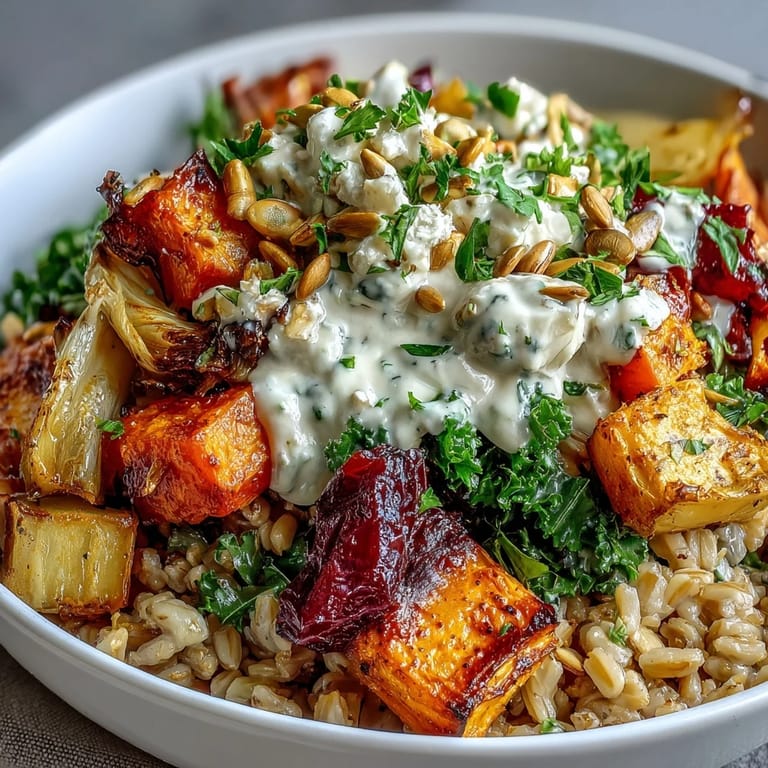
 There's something about November that makes me crave bowls filled with things pulled straight from the earth. One Tuesday evening, I stood at the farmers market watching someone arrange carrots and parsnips in a wooden crate, and it struck me that winter vegetables didn't need to be cooked into submission—they could be roasted until their edges caramelized and their insides turned silky. That's when I started building this grain bowl, layering warmth and texture in a way that felt both grounding and bright. It became my go-to meal when the days got shorter and the kitchen felt like the only warm room in the house.
I made this for my sister the first time she visited after moving upstate, and she sat at my kitchen counter quietly eating while snow started falling outside. She didn't say much, just kept asking for another spoonful of that dressing, and I realized then that some meals don't need conversation—they just need to taste like someone cared enough to roast vegetables properly. That bowl turned into three more bowls that week, each one slightly different depending on what was in my fridge, and she started making her own version at home.
Ingredients
- Farro or quinoa: Farro has a chewy texture and nutty flavor that holds up beautifully against roasted vegetables, but quinoa works if you need gluten-free and cooks faster—just watch it so it doesn't turn mushy.
- Vegetable broth or water: Broth adds flavor that plain water doesn't, and I've learned that even the simple grocery store kind makes a noticeable difference.
- Carrots, parsnips, and sweet potato: These three create layers of sweetness and earthiness when roasted—the parsnips especially turn almost caramel-like if you don't stir them too much.
- Olive oil: Use good oil here since it coats the vegetables and appears in the dressing too; cheap oil tastes flat against fresh greens.
- Dried thyme: It clings to the roasted vegetables and infuses the whole bowl with that understated warmth you taste in every bite.
- Kale or Swiss chard: Kale gets sweeter as the greens wilt, while chard is more tender—pick whichever you have or prefer, just remove those thick stems unless you want something to chew on.
- Tahini: This is the bowl's backbone, creating a dressing that's rich without dairy, though it can separate if your warm water is too hot.
- Lemon juice and maple syrup: They balance each other out perfectly—lemon keeps everything bright and maple adds just enough sweetness to soften the tahini's earthiness.
- Dijon mustard: A small amount emulsifies the dressing and adds tang that keeps it from tasting one-note.
- Pumpkin seeds and fresh parsley: These are the final flourish—seeds add crunch and parsley brings freshness that cuts through all that richness.
Tired of Takeout? 🥡
Get 10 meals you can make faster than delivery arrives. Seriously.
One email. No spam. Unsubscribe anytime.
Instructions
- Heat your oven:
- Set it to 400°F and let it fully preheat while you prep vegetables.
- Prepare and roast the vegetables:
- Toss your diced carrots, parsnips, and sweet potato with olive oil, thyme, salt, and pepper until they're evenly coated, then spread them on a baking sheet in a single layer. Roast for 25 to 30 minutes, stirring halfway through, until the edges turn golden and crispy and a fork slides through easily—this is when they taste best.
- Cook your grains:
- While vegetables roast, rinse your grains under cold water, then combine them with vegetable broth in a saucepan and bring to a boil. Cover, reduce the heat to low, and simmer gently—quinoa needs about 20 minutes, farro closer to 30—until the liquid is absorbed and each grain is tender but still holds its shape.
- Wilt the greens:
- Warm a tablespoon of olive oil in a skillet over medium heat, add minced garlic and let it perfume the oil for just 30 seconds, then add your chopped greens with a pinch of salt. Stir frequently until they've surrendered and darkened, usually 3 to 4 minutes.
- Make the dressing:
- In a small bowl, whisk together tahini, lemon juice, maple syrup, warm water, and Dijon mustard until smooth and creamy. If it seems too thick, add more warm water a splash at a time—the dressing should pour easily but still coat a spoon.
- Build your bowls:
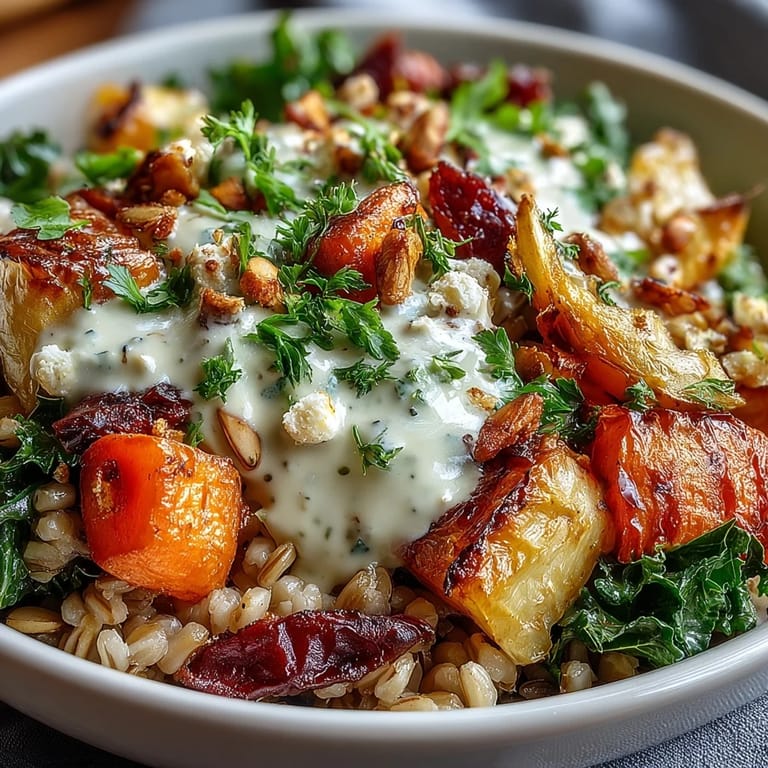
- Divide the warm grains among bowls, then top each with roasted vegetables and sautéed greens. Drizzle generously with tahini dressing, then finish with pumpkin seeds, crumbled feta if using, and fresh parsley.
 Save to Pinterest
 What started as a practical weeknight dinner turned into something my friends request, and I've realized it's because this bowl tastes like nourishment rather than restriction. There's no guilt here, just vegetables that taste like themselves amplified, grains that fill you properly, and a dressing that makes you slow down between bites.
Why This Bowl Works in Winter
Winter vegetables have something spring ones don't—a concentrated sweetness that develops as they sit in the ground through cold months. When you roast them, that sweetness caramelizes, and suddenly you don't need much else to make a meal feel complete. I've learned that the season itself tells you what to cook, and winter is definitely a roasted vegetable season.
Timing Your Prep
The beauty of this bowl is that everything can finish around the same time if you start the vegetables first. While they roast and the grains simmer, you have about 20 minutes to chop greens, make dressing, and set out toppings, which means you're actually eating within an hour with minimal stress. I've also found that assembling the bowl just before eating matters—warm components against cool dressing creates better flavor than letting everything sit together.
Variations and Flexibility
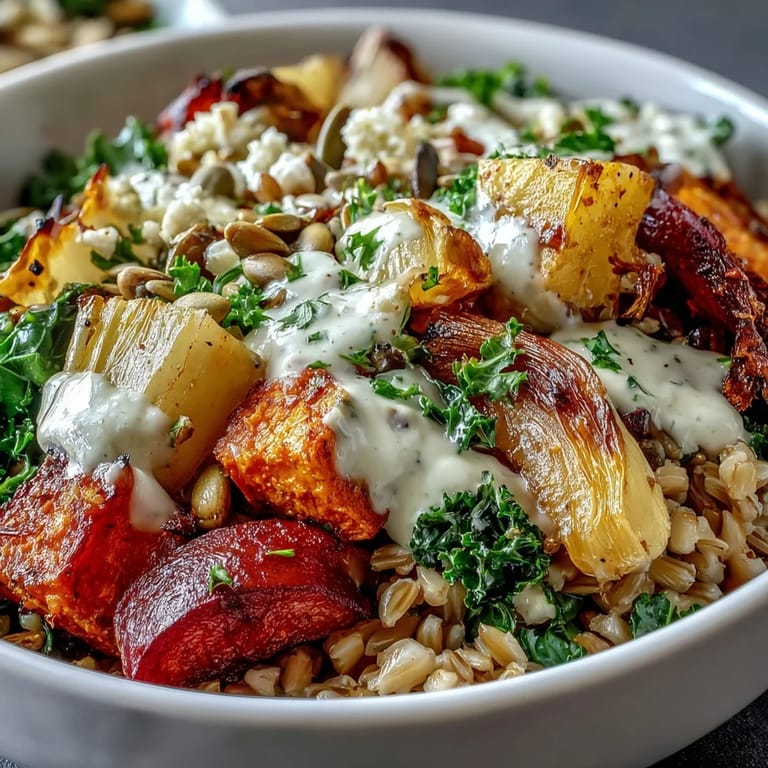
This bowl adapted itself to my life instead of the other way around, which is the mark of a recipe that actually gets made. Beets and turnips swap in for carrots some weeks, roasted chickpeas add protein when I'm vegetarian stretches, and honestly the greens change based on what looks good at the market. The foundation is solid enough that you can improvise freely.
- Try adding roasted chickpeas or grilled chicken if you want extra protein without changing the bowl's character.
- Swap in any root vegetables you like—beets turn everything pink but taste wonderful, and turnips add a peppery note.
- Make it vegan by using maple syrup in the dressing and skipping the feta, or use a plant-based cheese if you want that salty element.
 Save to Pinterest
 This bowl has become my answer to that question of what to make when you want something nourishing but not heavy, filling but not complicated. It's the kind of meal that makes you feel taken care of, whether you're taking care of yourself or someone else.
Recipe FAQs
- → Can I make this bowl ahead of time?
Yes, the grains, roasted vegetables, and dressing can be prepared up to 3 days in advance. Store components separately in airtight containers and assemble when ready to serve. Reheat grains and vegetables before adding fresh greens and dressing.
- → What other grains work well in this bowl?
Beyond farro and quinoa, try brown rice, wheat berries, barley, or sorghum. Adjust cooking times accordingly—most grains take 30-45 minutes to simmer until tender. For quicker options, use precooked grains or couscous.
- → How can I add more protein?
Roasted chickpeas, crispy baked tofu, grilled chicken, or poached eggs make excellent protein additions. Simply prepare your chosen protein separately and arrange on top of the assembled bowl.
- → Can I use different root vegetables?
Absolutely. Beets, turnips, rutabaga, or butternut squash all roast beautifully alongside carrots and parsnips. Keep cube sizes uniform for even cooking, and adjust roasting time as needed for denser vegetables.
- → Is the dressing customizable?
The tahini base is versatile—swap maple syrup for honey, add a clove of raw garlic, or stir in smoked paprika for depth. For a thinner consistency, add warm water one tablespoon at a time until desired texture is reached.
- → How do I store leftovers?
Keep assembled bowls refrigerated for up to 3 days, though the greens are best added fresh. If storing pre-assembled, the dressing may soften the greens over time. For best results, store components separately and combine just before eating.