 Save to Pinterest
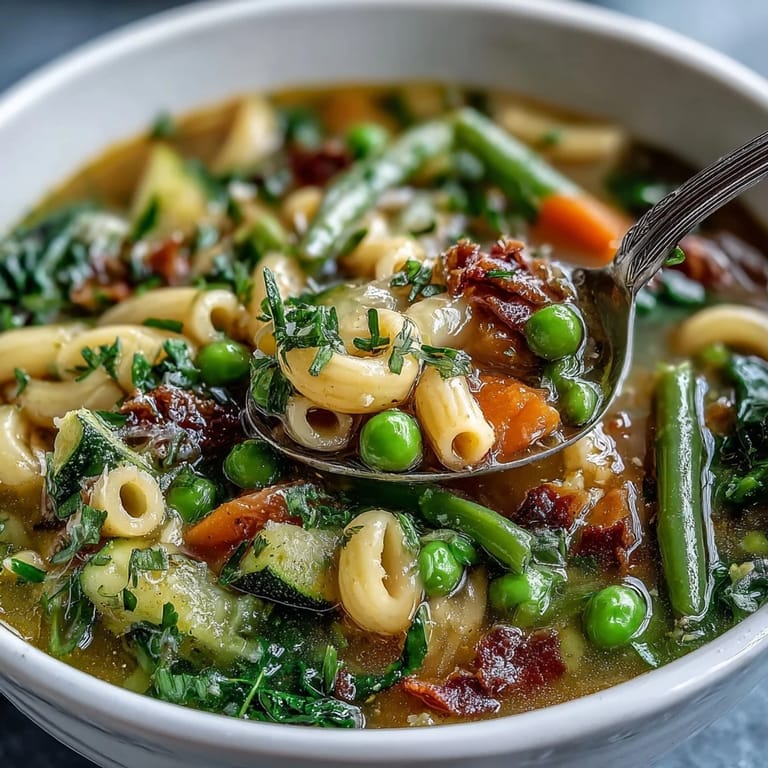
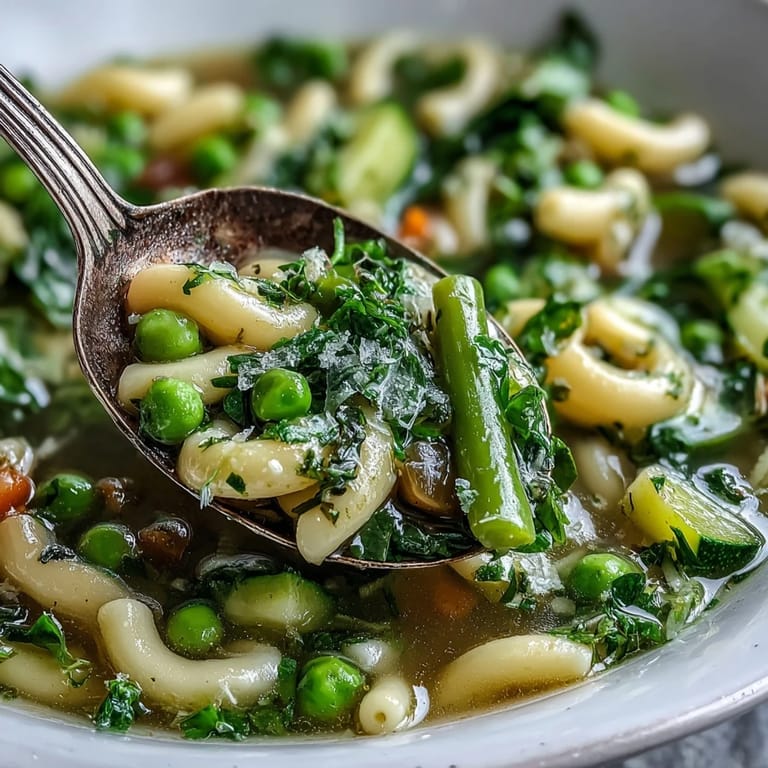
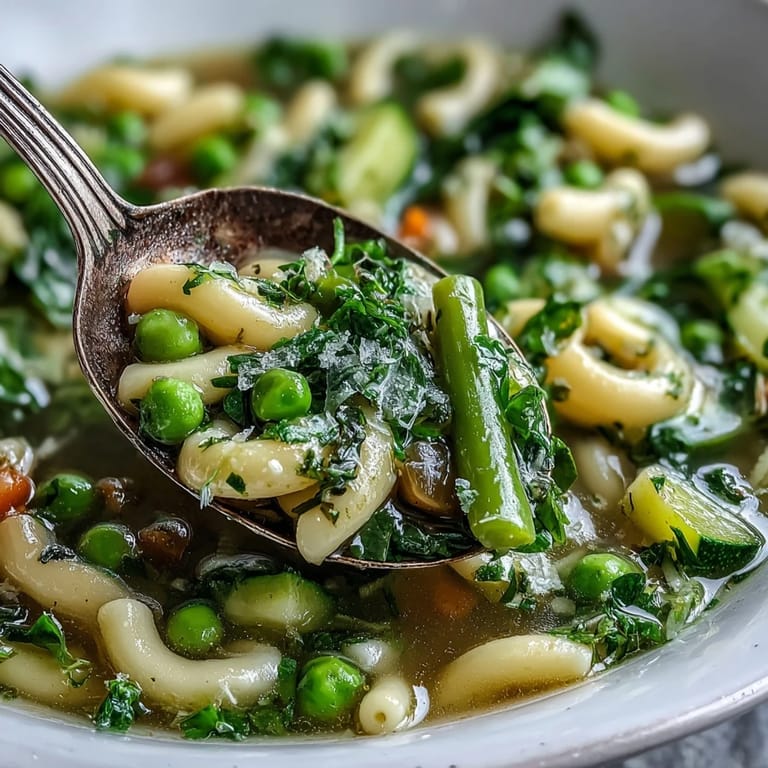
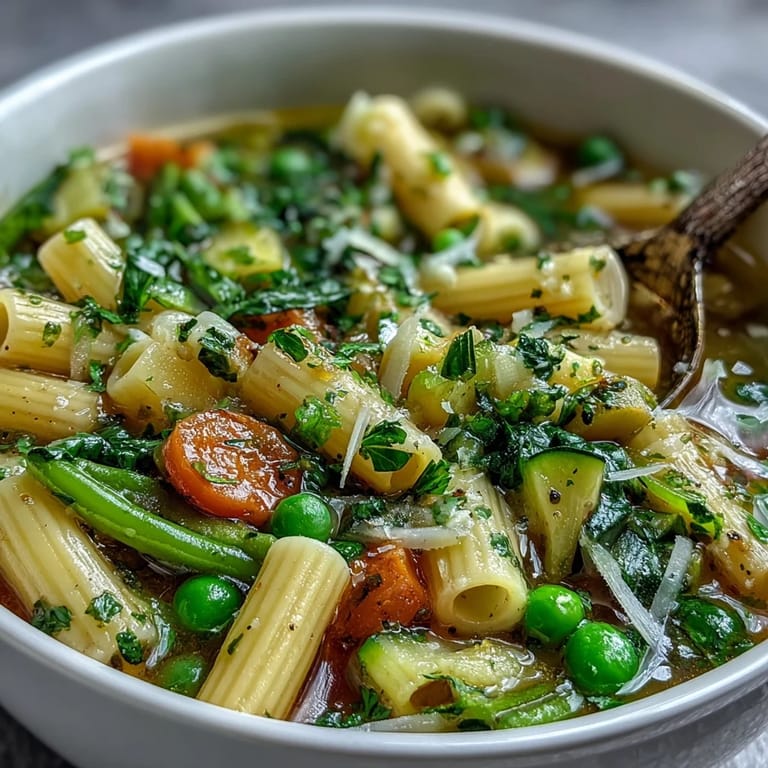
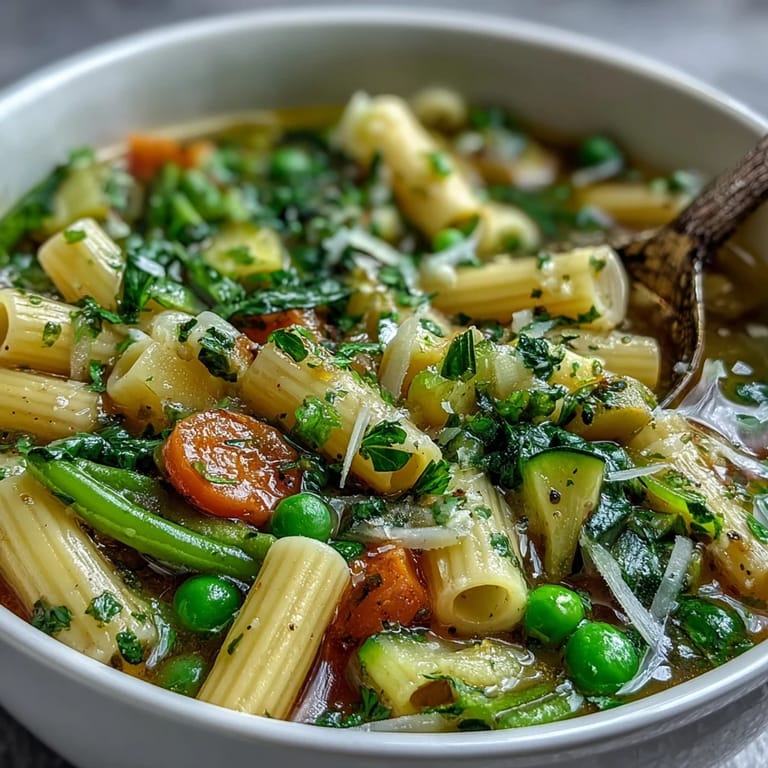
 The first time the scent of simmering minestrone filled my kitchen, it mingled with the distant sound of rain tapping at my window. It was an early spring day, and the fresh haul of vegetables from the market basket seemed to promise something lively. While chopping the green beans, I caught myself humming without realizing it—a sure sign that the meal would become more than just dinner. The soup’s colors struck me, too: gold carrots, leafy greens, peas tumbling into the pot. Maybe it was the season, or simply the warmth of that gentle broth, but this minestrone instantly felt like an invitation to savor spring.
I once made this soup for friends on a spontaneous weeknight, with everyone squeezed around a table meant for four—someone brought wine, and someone else misjudged the bread’s doneness in the oven. We laughed over burnt toast and ladled minestrone into mismatched bowls. Someone’s grandma called mid-meal, only for the conversation to turn into advice about ‘real’ Italian soup secrets. That night, even with all its quirks, the soup felt like the real centerpiece, and nobody missed the perfect bread.
Ingredients
- Olive oil: Don’t skip good olive oil—it’s the start of every great soup, helping coax out sweetness from the onions.
- Onion: I always chop mine as finely as patience allows; it nearly melts into the broth this way.
- Garlic: The kitchen comes alive as soon as garlic hits the pan, giving the soup irresistible aroma.
- Carrots: Their steady sweetness balances out the green notes—dice them evenly for bites that cook at the same pace.
- Celery: Don’t underestimate this; it disappears in the soup but gives backbone to the flavor.
- Zucchini: I love the way this softens but doesn’t lose its cheerful color.
- Green beans: Snap off the ends before slicing—tender-crisp bites are the goal.
- Peas: Frozen or fresh both work; add at just the right moment so they keep their pop.
- Spinach: Stir in right at the end so it wilts but keeps its green brightness.
- Vegetable broth: Go low-sodium so you can control the seasoning, and add a bay leaf for subtle dimension.
- Bay leaf: Remove before serving—nobody’ll thank you for fishing it out of their soup bowl!
- Small pasta shapes: I reach for ditalini or small shells; they nestle among the veggies playfully and don’t overtake each spoonful.
- Parsley: Fresh, peppery, and stirred in at the last minute for herby lift.
- Salt and black pepper: I add a pinch at a time, always tasting as I go—just like a grandma’s supervision.
- Parmesan, basil, extra olive oil (garnish): Parmesan’s nutty finish, a basil leaf’s fragrance, and a final drizzle of oil turn every bowl into a keeper.
Tired of Takeout? 🥡
Get 10 meals you can make faster than delivery arrives. Seriously.
One email. No spam. Unsubscribe anytime.
Instructions
- Get the pot ready:
- Heat olive oil in a large soup pot until it shimmers, letting the anticipation build as onions join in, sizzling softly.
- Soften the base:
- Toss in the garlic, carrots, and celery; keep things moving around for about four minutes, until everything gives off a gentle sweetness and colors start to deepen.
- Add the vibrant veggies:
- Stir in zucchini, green beans, and peas—their colors pop vividly and fragrance picks up as they mix with the aromatics.
- Broth time:
- Pour in the broth, tuck in the bay leaf, and watch as the soup comes to a lively boil before you lower the heat for a calm simmer.
- Drop in the pasta:
- Stir in the pasta, letting it cook according to package timing, so it ends up perfectly al dente and not too soft.
- Finish with greens and herbs:
- With just two minutes left, add the spinach and parsley; they’ll wilt dreamily into the soup, brightening things up.
- Final taste and serve:
- Season generously with salt and pepper, fish out the bay leaf, then ladle into bowls and finish with Parmesan, basil, and a splash of olive oil if you like.
 Save to Pinterest
  Save to Pinterest
 There’s something quietly triumphant about watching everyone go back for seconds, pausing only to wipe the steam from their glasses between spoonfuls. That’s when I knew this minestrone meant something more: a simple meal, transformed by hands and laughter into an occasion.
Making It Work for Any Season
Spring inspires this minestrone, but I’ve found myself adapting it for autumn with butternut squash and kale, or tossing in asparagus and snap peas the minute they hit the market come April. The template is forgiving—swap, change, and sneak in vegetables that you love or need to use up. That’s where the soup shines: you make it your own, every single time.
Pairing Ideas That Never Get Old
One of my favorite routines is to serve this soup with a generous hunk of sourdough, toasted just enough for the crust to crackle but not go stiff. There’s no shame in tearing bread straight into the bowl, letting it soak and become swoon-worthy. If you’re feeling indulgent, a drizzle of lemony olive oil or an extra twirl of black pepper at the table does wonders.
Simple Shortcuts and Extra Touches
Don’t worry if you’re in a rush: frozen mixed vegetables can step in for fresh, and the soup still tastes lively. Sometimes I toss in the rind from a Parmesan wedge during simmering, which creates a savory, rich backbone that’s hard to beat.
- Keep a pinch of chili flakes handy for those who like a gentle heat.
- Add a squeeze of fresh lemon before serving for a little tang.
- Small pasta shapes are perfect, but rice or farro make a fun change.
 Save to Pinterest
  Save to Pinterest
 Soup has a way of brightening the table and the mood—here’s to bowls brimming with color, comfort, and something new each time you stir the pot.
Recipe FAQs
- → Which pasta shapes work best?
Small shapes like ditalini, orzo or small shells are ideal because they cook evenly and distribute throughout the broth. Use gluten-free small pasta if needed.
- → How do I prevent the pasta from getting mushy?
Add the pasta late in the simmering time and cook until just al dente. Drain a little less broth if you plan to reheat, as pasta will continue to absorb liquid.
- → How can I make it vegan?
Omit grated Parmesan and finish with a squeeze of lemon or a drizzle of good olive oil for savory depth. Use vegetable broth as listed and choose a dairy-free topper.
- → What seasonal vegetables can I add?
Asparagus, fava beans, young leeks or spring peas work well. Add firmer vegetables earlier and delicate greens like spinach in the final minutes to preserve texture and color.
- → How should I store and reheat leftovers?
Cool quickly, refrigerate in an airtight container for up to 3 days. Reheat gently on the stove, adding a splash of broth or water to loosen the broth and refresh the pasta.
- → Any tips for seasoning and finishing?
Taste and adjust salt near the end of cooking. Finish with chopped parsley, fresh basil, a grind of black pepper and a drizzle of extra-virgin olive oil for a bright finish.