 Save to Pinterest
 There's something about spring that makes you crave flowers you can actually eat. I discovered dandelion honey quite by accident at a farmers market, where an elderly vendor was explaining how it captures the taste of early-season wildflowers. She suggested I bake with it, and weeks later, standing in my kitchen on a grey afternoon, I decided to make a cake that would taste like her enthusiasm. The result was this tender, fragrant cake that somehow manages to be both delicate and deeply satisfying, with lemon cutting through the honey's floral whisper like sunshine breaking through clouds.
I made this for my neighbor's birthday tea last April, and she was so moved by it that she asked for the recipe three times over the course of the afternoon. Watching her close her eyes after the first bite, I realized this cake does something special—it makes people slow down and actually taste what's in front of them, which feels like a small gift in a world that moves too fast.
Ingredients
- All-purpose flour (2 cups): The foundation that keeps everything tender; I always sift mine once because it breaks up any hidden clumps that can make the cake dense.
- Baking powder and baking soda (1 1/2 tsp and 1/2 tsp): These two work together, not against each other—the soda helps the honey brown slightly while the powder gives you lift.
- Fine sea salt (1/2 tsp): Don't skip this; it amplifies the floral notes and makes the lemon taste brighter.
- Unsalted butter (1/2 cup), room temperature: Room temperature is non-negotiable here because it creams into a pale, fluffy base that traps air and makes the cake light.
- Dandelion honey (1/2 cup): This is your star ingredient—if you can't find it, regular honey works, but dandelion has a subtle herbal quality that makes the cake memorable.
- Granulated sugar (1/2 cup): Combined with honey, it creates just enough sweetness without overwhelming the delicate flavors.
- Eggs (3 large), room temperature: Cold eggs refuse to incorporate smoothly, and you'll end up with a grainy batter that bakes differently.
- Pure vanilla extract (1 tsp): The real thing matters; imitation tastes harsh against the honey's softness.
- Whole milk (1/2 cup), room temperature: It keeps the crumb tender and helps distribute the honey evenly throughout the cake.
- Lemon zest and juice (2 tbsp each): Fresh lemon is everything here; bottled juice tastes metallic by comparison, and the zest carries more essential oils than anything that's been sitting around.
- Powdered sugar (1 cup): For the glaze; sifting it prevents lumps that would make your glaze grainy.
- Dandelion honey for glaze (1 tbsp): A touch of honey in the glaze adds depth and prevents the lemon from tasting too sharp.
Tired of Takeout? 🥡
Get 10 meals you can make faster than delivery arrives. Seriously.
One email. No spam. Unsubscribe anytime.
Instructions
- Set your stage:
- Preheat your oven to 350°F and prepare a 9-inch round cake pan with butter and flour or parchment paper. This quiet moment before baking is when you can gather your ingredients and arrange them so nothing surprises you mid-mix.
- Build your dry foundation:
- Whisk together flour, baking powder, baking soda, and salt in a medium bowl, then set it aside. This ensures the leavening agents are evenly distributed, which means your cake will rise predictably.
- Cream the beginning:
- In a large bowl, beat butter, dandelion honey, and sugar for about 3 minutes until pale and fluffy—you're looking for the mixture to almost double in volume and turn a noticeably lighter shade. This is where you're building the air pockets that make the cake light.
- Bring the eggs in slowly:
- Add eggs one at a time, beating well after each addition, then stir in vanilla extract. If you rush this, the batter separates and looks curdled, which sounds scary but actually recovers once you add the dry ingredients.
- Add lemon and zest:
- Stir in the lemon zest and freshly squeezed lemon juice, letting them distribute throughout the mixture. The zest adds texture and aroma that no extract can replicate.
- Weave in flour and milk:
- Add the flour mixture in three parts, alternating with milk and starting and ending with flour—this method prevents overmixing and keeps the cake from becoming tough. Mix until just combined; you want to see a few flour streaks disappear, then stop.
- Pour and smooth:
- Transfer the batter to your prepared pan and run a spatula across the top to even it out. A lumpy top will bake into an uneven cake.
- Bake until golden:
- Bake for 35 to 40 minutes, checking at 35 with a toothpick inserted in the center—it should come out clean or with just a few moist crumbs. Every oven is different, so trust your toothpick more than the clock.
- Cool with patience:
- Let the cake rest in the pan for 10 minutes so it sets slightly, then turn it out onto a wire rack to cool completely before glazing. Glazing a warm cake melts everything into a mess.
- Make the glaze:
- Whisk together sifted powdered sugar, lemon juice (add gradually to get the right consistency), and dandelion honey until smooth and pourable. If it gets too thick, add lemon juice by the teaspoon; too thin, add more powdered sugar.
- Finish with shine:
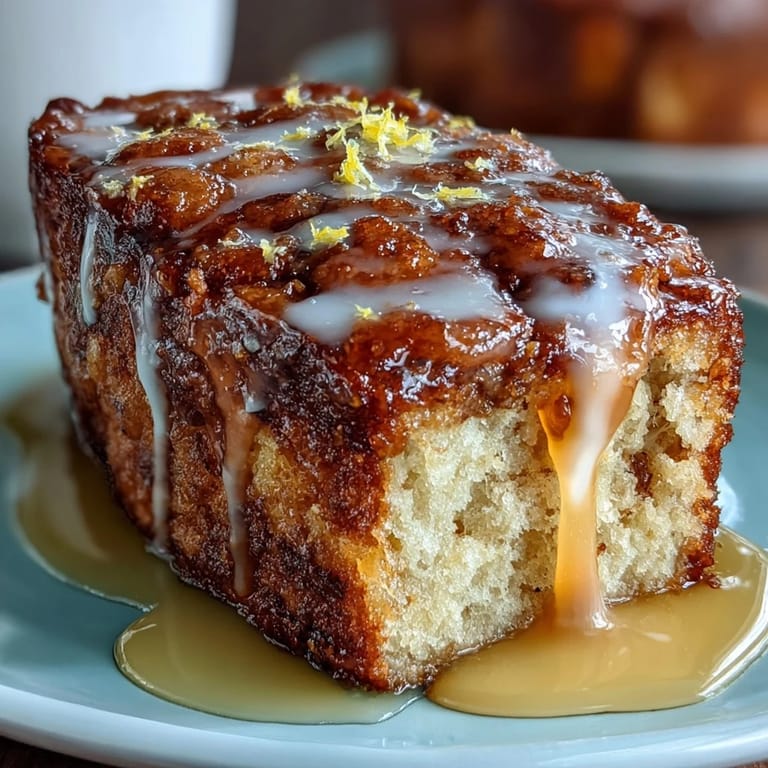
- Drizzle the glaze over the completely cooled cake and let it set for 10 to 15 minutes before slicing. The glaze firms up enough to not slide off, but stays glossy and inviting.
 Save to Pinterest
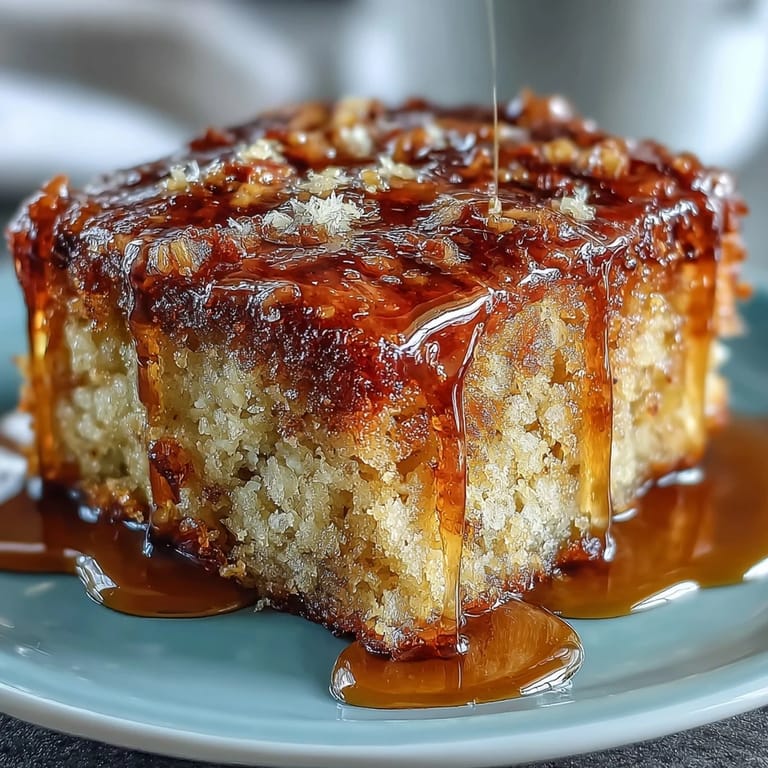
 What strikes me most about this cake is how it bridges seasons—it tastes spring-bright and delicate, but substantial enough that people actually feel satisfied. My sister asked me to make it for her book club, and she said her friends were amazed that something so elegant took less than an hour from start to glaze.
Why Dandelion Honey Changes Everything
Regular honey is sweet and one-dimensional, but dandelion honey has this subtle herbaceous undertone that makes people lean forward after a bite, trying to figure out what they're tasting. It's floral without being perfume-y, earthy without being heavy, and it ages gracefully—the flavors actually deepen slightly over the first day after baking. I've made this with clover honey and even with acacia, and while they're all delicious, dandelion honey is the one that makes people ask for the recipe.
The Lemon Glaze Is Your Final Word
The glaze isn't just decoration; it's where the honey and lemon have a moment together, and that moment matters. Without it, you have a beautiful cake, but with it, you have something that tastes bright and intentional, like someone cared about every detail. The dandelion honey in the glaze prevents it from tasting sour or one-note, rounding out the acidity of the lemon.
Storage, Variations & Small Moments
This cake actually improves slightly on day two when the honey has fully settled into the crumb and everything tastes more integrated. If you're feeling adventurous, stir in 2 tablespoons of finely chopped dandelion petals into the batter for an even more pronounced floral note—just make absolutely sure they're from an unsprayed garden or source you trust.
- Leftovers keep in an airtight container at room temperature for up to 3 days, and they pair beautifully with herbal tea or a light floral white wine if you're hosting.
- If your glaze sets too quickly, just whisk it with a tiny bit of warm water to loosen it up again.
- Don't overthink the lemon zest amount; those 2 tablespoons are exactly right to add brightness without making it taste like lemon cake instead of honey cake.
 Save to Pinterest
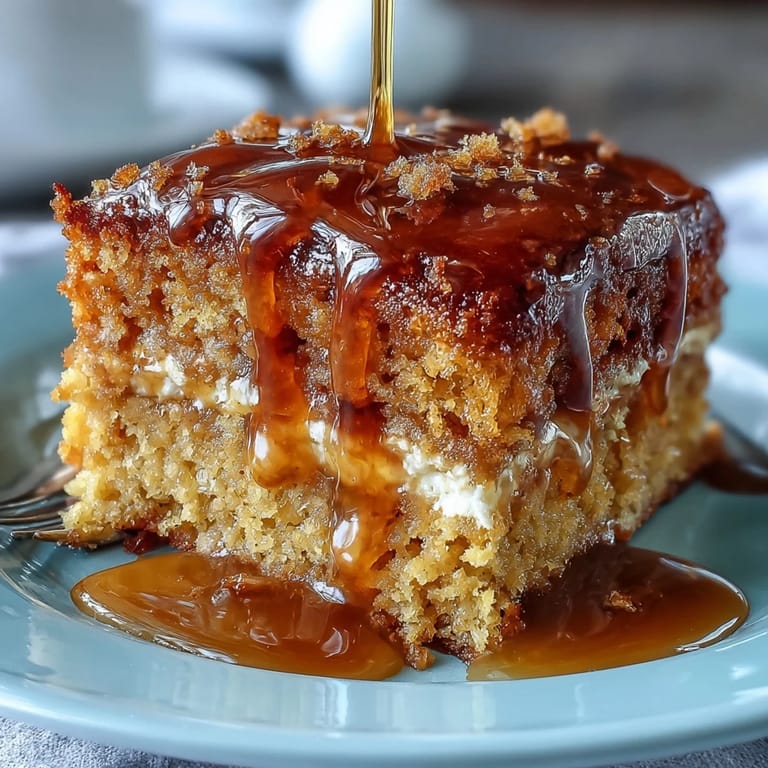
 This cake taught me that sometimes the best recipes aren't the complicated ones; they're the ones where a few really good ingredients do all the talking. Make this when you want to taste spring, or when you want to remind someone they matter.
Recipe FAQs
- → What does dandelion honey add to the cake?
Dandelion honey imparts a light floral sweetness that enhances the cake’s delicate flavor without overpowering it.
- → How is the lemon glaze prepared?
The glaze combines powdered sugar, freshly squeezed lemon juice, and dandelion honey for a smooth, tangy, and sweet topping that brightens the cake.
- → Can I substitute dandelion honey?
Yes, you can use regular honey if dandelion honey is unavailable; it will retain the sweetness but with a less floral profile.
- → How do I ensure the cake stays moist?
Careful mixing to avoid overmixing and baking until just done helps preserve a tender crumb and moist texture.
- → What serving suggestions complement this cake?
It pairs wonderfully with herbal teas or a light floral white wine, enhancing the cake’s fresh and sweet notes.